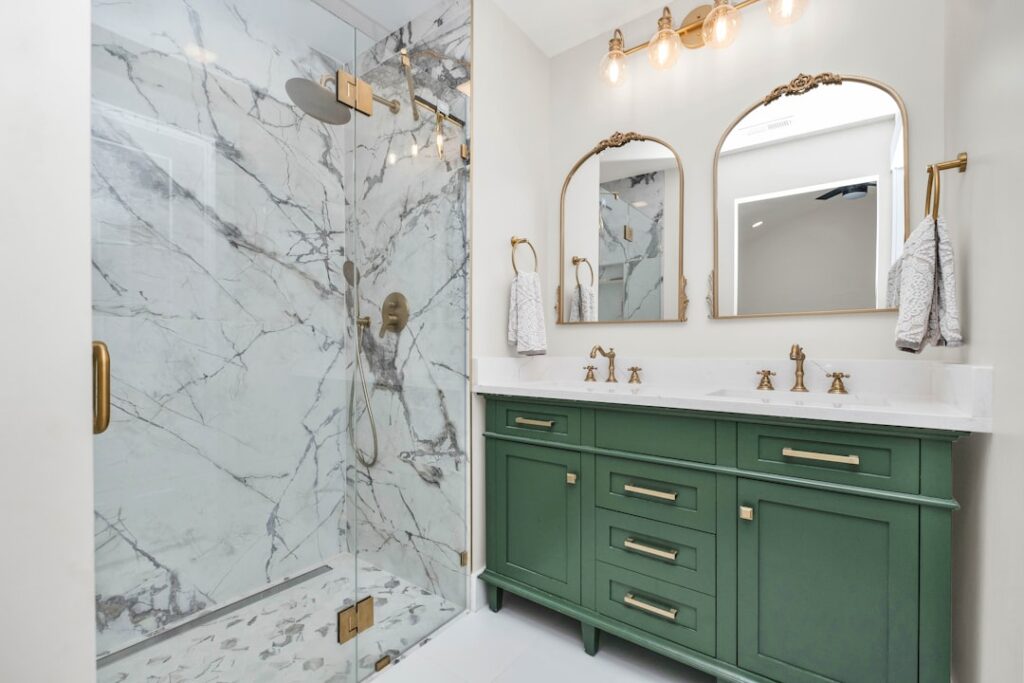
Finish choice affects both the look and upkeep of a shower, and one option consistently balances beauty with practicality. A brushed nickel shower head offers a warm, satiny finish that resists fingerprints and water spots far better than shiny chrome. This guide covers the finish’s advantages, flow rates, spray types, installation, and how to keep it looking new.
Part of our Bathroom Remodeling & Flooring guide — explore the full guide →
- What Brushed Nickel Is
- Why Choose Brushed Nickel
- Brushed Nickel vs. Chrome
- Brushed Nickel vs. Stainless and Satin Finishes
- Understanding Flow Rates
- Spray Types and Patterns
- Size and Style Options
- Installation Steps
- Water Pressure Considerations
- Cleaning and Maintenance
- Mistakes to Avoid
- Matching Bathroom Fixtures
- Handheld and Combo Options
- Durability and Longevity
- Choosing Between Fixed and Adjustable Arms
- Frequently Asked Questions
- Final Thoughts
What Brushed Nickel Is
Brushed nickel is a finish created by plating a fixture with nickel and then brushing it to produce a soft, matte, slightly textured surface with a warm silvery-gold tone. Unlike polished chrome’s mirror shine, brushed nickel diffuses light, giving a subtle, understated look. The finish is applied over brass or another base metal, and quality units seal it to resist corrosion and wear in the wet bathroom environment.
Why Choose Brushed Nickel
The finish’s biggest practical advantage is that it hides water spots, fingerprints, and soap film that would show plainly on chrome. Its warm tone complements a wide range of palettes, from traditional to transitional to modern farmhouse. It coordinates naturally with other brushed nickel bathroom fixtures like faucets and towel bars, creating a cohesive look. For busy bathrooms where constant polishing isn’t realistic, brushed nickel is a forgiving choice.
Brushed Nickel vs. Chrome
Chrome is brighter, cooler, and cheaper, giving a crisp, reflective look, but it shows every droplet and smudge. Brushed nickel is warmer, softer, and slightly pricier, and it masks spots beautifully. Chrome suits sleek modern and budget baths; brushed nickel suits warmer, low-maintenance spaces. Neither is objectively better; the choice comes down to whether you prefer a bright shine you must wipe often or a warm matte finish that stays presentable.
Brushed Nickel vs. Stainless and Satin Finishes
Brushed nickel is often confused with brushed stainless and satin nickel. Brushed stainless tends to be cooler and grayer, while brushed nickel is warmer. Satin nickel is very similar to brushed nickel, sometimes used interchangeably by manufacturers. When mixing fixtures, buy the same brand’s finish where possible, since subtle tone differences between makers can be noticeable side by side.
Understanding Flow Rates
Shower heads sold in the U.S. are federally limited to a maximum flow of 2.5 gallons per minute (GPM). Water-efficient models flow at 1.8 or 2.0 GPM, and WaterSense-certified heads cap at 2.0 GPM while maintaining good pressure through optimized nozzles. A lower GPM saves water and heating costs; a well-designed 1.8 GPM head can feel as strong as an old 2.5 GPM one thanks to pressure-compensating technology.
Spray Types and Patterns
Brushed nickel shower heads come in many spray styles. Rain heads mount overhead and deliver a gentle, drenching flow. Handheld units on a hose add flexibility for rinsing and cleaning. Fixed wall-mount heads are the standard. Many models offer multiple spray settings, from a full soaking spray to a concentrated massage pulse to a water-saving mist. Combo units pair a fixed rain head with a detachable handheld for the best of both.
Size and Style Options
Shower heads range from compact 4-inch heads to large 8-, 10-, or 12-inch rain heads. Bigger heads deliver a spa-like drench but need adequate water pressure and clearance. Consider your ceiling height and shower size; a large overhead rain head suits a roomy walk-in shower, while a standard 4-to-6-inch head fits most tub-showers. Choose a shape and size that matches your bathroom’s scale and style.
Installation Steps
Installing a shower head is one of the easiest bathroom upgrades, usually taking under 15 minutes. Unscrew the old head from the shower arm by hand or with a wrench, clean the threads, wrap them with plumber’s tape (PTFE thread tape) two or three times clockwise, and hand-tighten the new head, snugging it slightly with a wrench while protecting the finish with a cloth. Turn on the water and check for leaks at the connection.
Water Pressure Considerations
If your home has low water pressure, choose a shower head designed for it, often marketed as high-pressure or pressure-boosting, which uses smaller, angled nozzles to accelerate the water. Large rain heads can feel weak on low-pressure systems because the water spreads over a wide area. Removing a flow restrictor is possible on some models but reduces water efficiency and may violate local codes, so weigh that carefully.
Cleaning and Maintenance
Brushed nickel is easy to maintain. Wipe it with a soft, damp cloth and mild soap, then dry to prevent any spotting. Avoid abrasive pads and harsh acidic or ammonia-based cleaners, which can damage the finish over time. To clear mineral buildup that weakens the spray, unscrew the head or tie a bag of white vinegar around it, soak for an hour, then scrub the nozzles gently and rinse. Many rubber nozzles clean by simply rubbing them.
Mistakes to Avoid
Don’t overtighten the head, which can crack fittings or strip threads; hand-tight plus a slight turn is enough. Avoid harsh chemical cleaners that dull the brushed finish. Don’t buy an oversized rain head for a low-pressure system, or the spray will disappoint. And when mixing metals, resist assuming all brushed nickel matches; verify tones across brands before committing.
Matching Bathroom Fixtures
One of brushed nickel’s strengths is how easily it coordinates with a full bathroom scheme. Pairing a brushed nickel shower head with a brushed nickel faucet, towel bars, and cabinet hardware creates a cohesive, put-together look. Because brushed nickel is so widely available, matching pieces are easy to find across brands, though subtle tone differences exist, so buying a matched suite from one manufacturer ensures consistency. The warm, neutral finish also plays well with white, gray, and wood-toned bathrooms alike.
Handheld and Combo Options
Brushed nickel comes in every configuration, including handheld sprayers and combo units. A handheld on a flexible hose is invaluable for rinsing, bathing children or pets, and cleaning the shower walls. Combo units pair a fixed head with a detachable handheld on a diverter, giving you both a stationary spray and portable flexibility. The brushed finish carries through the handheld, hose fittings, and slide bar, keeping the whole assembly coordinated while resisting the water spots that plague chrome handhelds.
Durability and Longevity
A quality brushed nickel shower head made of solid brass with a proper plated and sealed finish resists corrosion and holds its appearance for many years. Because the brushed texture hides minor scratches and everyday wear better than polished finishes, it ages gracefully. Cheaper units with thin plating over plastic can flake or discolor over time, so investing in a solid-metal head pays off in longevity. With gentle care, a good brushed nickel head easily lasts a decade or more.
Choosing Between Fixed and Adjustable Arms
The shower arm affects both height and angle. A standard fixed arm sets the head at a preset height, while an adjustable or extended arm lets you raise the head for taller users or reposition it. Gooseneck arms extend the head outward for an overhead effect. In brushed nickel, matching the arm finish to the head keeps the look seamless. If household members vary in height, an adjustable arm or a head with a pivoting ball joint improves everyday comfort.
Frequently Asked Questions
Does brushed nickel show water spots? Far less than polished chrome, which is a key reason people choose it for low-maintenance bathrooms. Is it more expensive than chrome? Slightly, but the modest premium buys a warmer look and easier upkeep. Will it match my other fixtures? Brushed nickel coordinates with most schemes, though buying a matched suite from one brand ensures the tones align exactly, since finishes vary subtly between manufacturers.
Final Thoughts
A brushed nickel shower head combines warm, versatile style with the real-world benefit of hiding spots and fingerprints, making it a smart, low-maintenance choice for almost any bathroom. Match the spray type and size to your shower and water pressure, install it in minutes with plumber’s tape, and clean it gently to preserve the finish. The result is a shower that looks great every day without constant polishing.