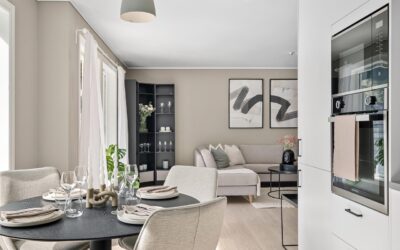
Wine spills, dragged dining chairs, and ten years of holiday dinners are the actual durability test for any dining room floor. Hardwood loses on all three — etched by red wine, scratched by chair legs, dented by dropped serving platters. Dining room tiles handle every one of those failure modes without complaint, which is why they appear in roughly 60% of new-build dining rooms in the South and West and an increasing share in the Midwest and Northeast. The trick is choosing tile that looks intentional rather than utilitarian, and getting the layout right relative to your table.
Part of our Tile & Grout guide — explore the full guide →
- Why Tile Outperforms Wood in Dining Rooms
- Best Tile Materials for Dining Rooms
- Slip Rating and Chair-Leg Durability
- Tile Layout Strategies for Dining Rooms
- Color and Pattern Choices
- Grout Specification
- Underlayment and Subfloor Prep
- Cost Example for a 180 Square Foot Dining Room
- Common Mistakes to Avoid
- Frequently Asked Questions
Why Tile Outperforms Wood in Dining Rooms
Dining rooms see a specific failure pattern: liquid spills (red wine, balsamic, hot sauce), dragged chair legs concentrated in a 4-foot radius around the table, and the occasional dropped wine glass or serving dish. Engineered hardwood can be sanded once or twice but cannot recover from deeply etched stain damage. Porcelain tile is impervious to all three.
Resale value tracks similarly. In Texas, Arizona, Florida, California, and the Carolinas, formal dining rooms with porcelain tile appraise as upmarket. In New England and the Upper Midwest, hardwood still leads on resale — though wood-look porcelain narrows the gap considerably in turn-of-decade renovations.
Best Tile Materials for Dining Rooms
- Through-body porcelain (large format): 24×24 or 24×48 in marble, travertine, concrete, or wood-look decors. The default modern dining room choice. $5 to $12 per square foot supplied.
- Wood-look porcelain plank: 8×48 or 9×60 planks in oak, walnut, or barn-wood decors. Reads warm and traditional while delivering tile durability. $5 to $9 per square foot.
- Marble-look porcelain: Captures Carrara, Calacatta, or Statuario at a fraction of the maintenance cost of real marble. $6 to $14 per square foot.
- Natural stone (travertine, slate): Beautiful, organic, but requires regular sealing — particularly in dining rooms where wine and acidic foods are common. $8 to $20 per square foot.
- Encaustic-look or patterned porcelain: For period homes or feature dining rooms. $7 to $16 per square foot.
Skip ceramic for dining rooms — chip resistance under dropped serving dishes is significantly worse than porcelain. The price savings disappear when the first chip happens.
Slip Rating and Chair-Leg Durability
Dining rooms do not need restaurant-grade slip ratings, but moderate slip resistance matters — especially in homes with elderly residents or for the occasional wine spill. Specify DCOF ≥ 0.42 or R10 minimum. Polished marble-look tiles often fall below this threshold; honed or matte finishes meet it comfortably.
Chair-leg drag is the under-discussed durability test. Porcelain handles it well; natural stone less so (limestone and travertine show micro-scratches over years of dragging). Either way, felt pads under every chair leg are non-negotiable. Replace pads every 12 to 18 months as the felt compresses and starts grinding rather than sliding.
Tile Layout Strategies for Dining Rooms
The dining table dominates the room visually. Tile layout should complement it, not compete.
Centered grid layout: Center the tile pattern under the table so cuts fall against perimeter walls. Works best with square tiles (24×24, 18×18) and a centered chandelier.
Random-stagger plank: Wood-look planks laid in random offsets (8-inch to 24-inch) read as natural and forgive uneven walls. Run planks parallel to the longest room dimension or perpendicular to the main entry.
Diagonal layout: Rotate the tile grid 45 degrees. Adds visual energy in square rooms but increases waste from cuts (15% to 20% versus 8% to 12% for straight layouts). Good for small dining rooms where the diagonal makes the space feel larger.
Herringbone or chevron: Premium look using rectangular tiles (12×24, 6×24). Visually rich but labor-intensive — adds 25% to 40% to installation costs. Best in formal dining rooms with simple architecture.
Color and Pattern Choices
The dining room is not a hallway — you want warmth and intimacy, not cold modern minimalism (unless that is your whole-house style). Mid-tone colors with subtle pattern variation tend to hide spills, chair-drag marks, and the occasional dropped breadcrumb without screaming for attention.
Cool-toned grays pair with bright white and modern furniture. Warm beiges and travertine looks pair with traditional wood furniture and warm metallics. Wood-look planks in honey oak or weathered walnut bridge traditional and contemporary styles. Marble-look tiles in white-and-gray veining suit formal traditional dining rooms in the $400K+ market.
Grout Specification
Use sanded cement grout for joints over 3mm and unsanded for tighter joints. Color-match to the tile body for a near-invisible look (large format especially benefits) or contrast slightly to define each tile. Sealed cement grout is fine for dining rooms — the spill volume and chemical exposure is far below what restaurant kitchens see.
For natural stone or premium installations, consider epoxy grout (Mapei Kerapoxy CQ, Laticrete SpectraLOCK Pro). It costs 2x to 3x more per linear foot but is fully sealed against red wine, balsamic, and acid spills. Worth it for white grout in marble-look layouts where staining would be obvious.
Underlayment and Subfloor Prep
Tile needs a stiff, level subfloor. Wood subfloors with significant deflection crack tile within a year or two. Required prep:
- Wood subfloors: Add a Schluter Ditra uncoupling membrane ($1.50 to $2.50/sq ft) or 1/4-inch cement backer board.
- Concrete subfloors: Inspect for cracks and apply crack-isolation membrane over any active cracks.
- Levelness: Check with a 10-foot straightedge — variation under 1/8 inch over 10 feet is required for large-format tile, 1/4 inch acceptable for smaller formats.
- Self-leveling compound: Apply where flatness exceeds tolerance. $4 to $8 per square foot installed.
Cost Example for a 180 Square Foot Dining Room
- 24×24 marble-look porcelain at $8/sq ft: $1,440
- Schluter Ditra membrane: $370
- Thinset and grout: $180
- Sealer (cement grout): $40
- Installation labor at $9/sq ft: $1,620
- Transition strips to adjacent rooms: $80
Total: roughly $3,730 — a similar-quality engineered hardwood install would run $3,400 to $4,800 with significantly shorter service life.
Common Mistakes to Avoid
- Polished tile in formal dining rooms. Looks elegant in photos, slippery and slip-hazard with wine spills.
- Skipping felt pads on chairs. Even porcelain shows visible scratch patterns under daily chair drag without pads.
- Mismatched scale. 12×12 tiles in a 200+ sq ft dining room look dated and busy. Go 18×18 minimum, ideally 24×24 or larger.
- Ignoring transitions to adjacent rooms. Tile-to-wood transitions need proper threshold profiles or they look unfinished.
- White grout with red-wine drinkers. Use stain-resistant epoxy grout or accept periodic regrouting.
Frequently Asked Questions
Is tile a good choice for a formal dining room?
Yes, particularly large-format marble-look or travertine-look porcelain. The look reads as upscale and the durability survives decades of holiday dinners, wine spills, and chair drag without the maintenance burden of natural stone.
Should dining room tiles match the kitchen or be different?
Open-plan kitchen-dining spaces benefit from continuous flooring — same tile, same direction, no transition strip. Closed-off formal dining rooms can use different tile from the kitchen, but the materials should harmonize in color temperature and finish.
Are wood-look tiles a good dining room choice?
Excellent — they deliver the warmth of hardwood with full resistance to wine, water, and chair-leg drag. Choose 8×48 or 9×60 plank formats with EIR texture for the most authentic look at conversational distance.
How long do dining room tiles last?
Quality porcelain dining room tile lasts 30 to 50 years with minimal maintenance. Grout typically needs refreshing or sealing every 5 to 10 years; the tile itself outlasts most homeowners’ time in the house.
Prefer to explore on your own?
See how new flooring looks in your actual room in seconds — free, no signup.
Try the free Floor Studio →