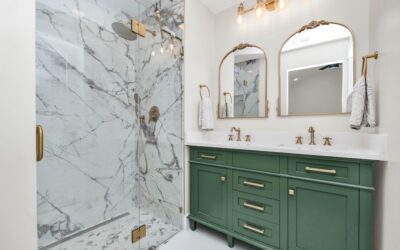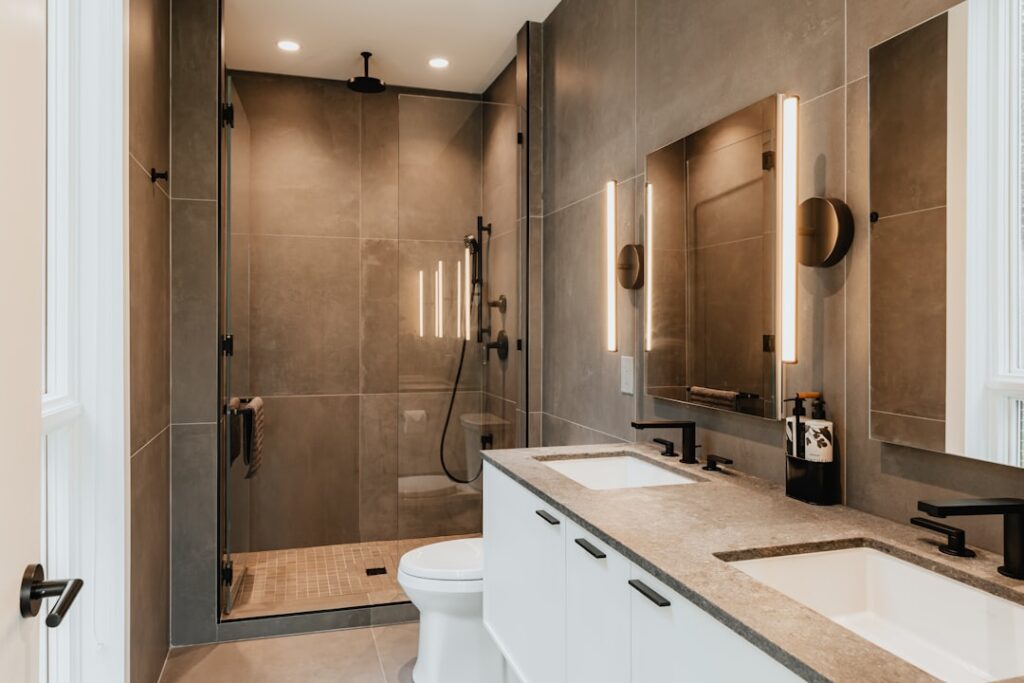
A shower with two heads turns a daily routine into something that feels like a spa, and it solves the morning bottleneck when two people are getting ready at once. The best double shower head ideas balance luxury with practical plumbing, pairing a fixed rainfall head with a handheld or putting two complete stations on opposite walls. Before you fall for a magazine photo, know that a dual setup roughly doubles water demand, so your supply lines and water heater have to keep up. Plan around that reality and you can build a shower that’s as functional as it is impressive.
Part of our Bathroom Remodeling & Flooring guide — explore the full guide →
Rainfall Plus Handheld Combination
The most popular and budget-friendly configuration mounts a large ceiling or wall rainfall head alongside a handheld sprayer on a slide bar. The overhead drenches you in an even, gentle cascade, while the handheld rinses hard-to-reach spots, cleans the shower walls, and bathes kids or pets.
This setup typically uses a single diverter valve so you run one head at a time, which keeps water demand and cost manageable. A quality rainfall-and-handheld combo from a brand like Moen or Delta runs $150 to $400 for the fixtures, plus installation if you’re adding a diverter to existing plumbing.
His-and-Hers Dual Stations
For a true luxury shower, install two complete shower stations on opposite or adjacent walls, each with its own valve and controls. Each person sets their own temperature and spray pattern without compromise, which is the headline appeal of a his-and-hers design.
This is the most demanding configuration to plumb. Running both heads simultaneously can call for 5 or more gallons per minute, so you may need a larger water heater or a tankless unit rated for high flow. Expect $1,500 to $4,000 in fixtures and labor, and confirm your home’s supply lines are 3/4-inch where possible to avoid pressure drop.
Dual Rainfall Ceiling Heads
A pair of matching rainfall heads mounted side by side in the ceiling creates a dramatic, symmetrical look that drenches the whole shower in soft, vertical water. This works best in a larger walk-in shower of at least 4 by 5 feet so both heads have room to spread without overlapping awkwardly.
Because two rainfall heads move a lot of water, pair them with a thermostatic valve that maintains a steady temperature even when a toilet flushes elsewhere in the house. Recessed flush-mount heads give the cleanest ceiling line, while drop-down arms make maintenance and aiming easier.
Body Sprays and Spa Features
Beyond two main heads, many homeowners add vertical body sprays or jets along the walls for a full-body massage effect. A panel of three to six body sprays, often called a shower tower or column, hits the back and shoulders while the overhead head runs.
These features push water demand even higher, so they’re best paired with a recirculating valve or a high-output tankless heater. Add a built-in steam unit and a teak bench and the shower becomes a genuine home spa. Budget accordingly, since a fully loaded multi-spray system can exceed $5,000 installed.
Plumbing and Pressure Requirements
The single most overlooked part of any of these double shower head ideas is whether the home can supply enough hot water and pressure. Standard residential water pressure runs 40 to 60 psi, and most code limits new shower heads to 2.5 gallons per minute each. Two heads running together can demand 5 gallons per minute of hot water.
A standard 40-gallon tank heater may run lukewarm fast under that load. A tankless unit rated for at least 7 gallons per minute, or a larger 50- to 75-gallon tank, keeps the water hot. Have a licensed plumber size the valves and supply lines before you commit to a simultaneous-flow design.
Layout and Style Tips
Think about glass and zones when planning the layout. A frameless glass enclosure shows off a dramatic dual-head design, while a curbless entry makes a large two-station shower feel seamless with the rest of the bath. Niches and benches positioned away from the spray keep toiletries and seating dry.
Coordinate finishes across both heads, valves, and accessories for a cohesive look, whether you choose matte black, brushed nickel, or polished chrome. With the plumbing sized correctly and the layout planned around how you actually shower, these double shower head ideas deliver an everyday upgrade that genuinely improves the start and end of your day.
Understanding Diverters and Valves
The valve setup determines whether your heads run separately or together, and it’s the part homeowners overlook most. A diverter valve sends water to one head at a time, which keeps demand low and works fine for a rainfall-and-handheld combo. A two-way or three-way diverter lets you switch among heads or run pairs.
If you want both main heads flowing at once, you need separate valves or a high-flow diverter rated for simultaneous use, plus a thermostatic valve to hold temperature steady. Thermostatic valves cost more, often $200 to $600, but they prevent the scalding swings that happen when a toilet flushes. Have your plumber confirm the valve body matches both the trim kit and your desired flow before the walls close up.
Costs and Return on Investment
Budgets span a wide range. A basic rainfall-and-handheld combo costs $150 to $400 in fixtures plus a few hundred in labor if you’re adding a diverter. A full his-and-hers system with two valves, two heads, and possible water-heater upgrades runs $1,500 to $4,000, and a loaded spa shower with body sprays and steam can exceed $5,000.
The payoff is both daily enjoyment and resale appeal. An updated, well-designed shower is one of the features buyers notice most in a bathroom, and a dual-head setup signals a higher-end space. Just keep the design proportional to the home; an extravagant multi-spray system in a modest house may not return its full cost, while a tasteful upgrade reliably adds value.
Factor in operating costs too. Two heads running at once use roughly double the hot water, which shows up on both your water and energy bills over time. A water-saving showerhead rated at 1.75 gallons per minute, paired with a recirculating hot-water system, trims that expense without sacrificing the experience. If you shower one head at a time through a diverter, the ongoing cost stays close to a standard single-head setup.