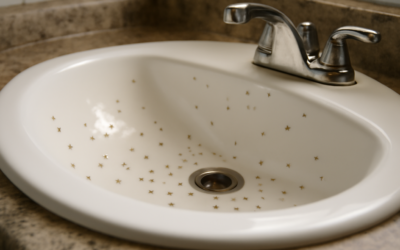
Those tiny fuzzy gnats hovering near your sink aren’t fruit flies, and pouring bleach down the drain rarely kills them. Drain floes, more commonly spelled drain flies, breed in the slimy gunk coating the inside of pipes, and you’ll keep seeing them until you scrub out that film. The good news: you can wipe out an infestation in about a week with cheap supplies and zero exterminator. Here’s exactly how to find the source and shut it down.
- What Drain Flies Actually Are
- Confirm the Source
- The Core Fix: Scrub the Pipe Film
- Kill the Adults Fast
- Don't Forget Hidden Breeding Spots
- Prevention That Sticks
- When to Call a Pro
- Why Bleach Fails and What Works Instead
- Drain Flies vs. Fruit Flies vs. Gnats
- Where They Hide in the Bathroom
- Safe vs. Risky Treatments
- The Bottom Line
What Drain Flies Actually Are
Drain flies, also called moth flies or sewer gnats, are small gray or tan insects with fuzzy, moth-like wings about 1/8 inch long. They are weak fliers that hop or flutter in short bursts rather than zip around like fruit flies. Adults live only a couple of weeks, but they lay dozens of eggs in the organic sludge inside drains, so a small problem multiplies fast.
Confirm the Source
Before you treat anything, find which drain is breeding them. Dry the area around each suspect drain at night, then tape a clear plastic cup or piece of tape loosely over the opening, sticky side down, leaving a small gap. Check in the morning: adults trying to emerge will get stuck, pinpointing the active drain. Run this test on bathroom sinks, tub overflows, floor drains, and basement utility drains, which are common culprits.
The Core Fix: Scrub the Pipe Film
Killing adults does nothing if the larvae and gunk remain. You have to physically remove the biofilm where they breed.
- Pour a kettle of near-boiling water down the drain to soften the sludge.
- Push a stiff metal pipe brush or a bent wire several inches into the drain and scrub the walls, working the brush around the full circumference.
- Follow with a cup of baking soda, then a cup of white vinegar; let it foam for 20 minutes.
- Flush again with boiling water to wash the loosened film away.
For tougher buildup, an enzyme drain cleaner like Bio-Clean or Green Gobbler digests the organic matter over several treatments. Skip bleach as a primary tool; it bounces off the greasy film without removing it.
Kill the Adults Fast
While you treat the pipe, knock down the visible swarm. A simple apple cider vinegar trap works well: fill a small bowl with vinegar, add a drop of dish soap to break the surface tension, and cover it with plastic wrap poked with a few holes. The flies enter and drown. A spray bottle of soapy water also drops adults on contact.
Don’t Forget Hidden Breeding Spots
If flies persist after cleaning the obvious drains, check less visible sources. A rarely used guest bathroom can dry out its P-trap, letting sewer gas and flies up; just run the water weekly to reseal it. Other hideouts include the overflow hole in sinks, condensate drains on AC units, and standing water under refrigerators or in mop buckets.
Prevention That Sticks
Once the swarm is gone, a little maintenance keeps it gone. Flush each drain with boiling water once a week, and run an enzyme treatment monthly in problem drains. Wipe out sink and tub stoppers regularly, since hair and soap scum collect there. Pour a cup of water down seldom-used floor and guest-bath drains every week or two to keep traps full.
When to Call a Pro
If you’ve cleaned every accessible drain and flies keep returning, you may have a cracked pipe, a broken sewer line, or sludge inside a wall cavity feeding them. A plumber can run a camera through the lines to find the hidden breeding site. That step is rarely needed, but it’s the move when DIY scrubbing simply won’t stop the cycle.
Why Bleach Fails and What Works Instead
The instinct to pour bleach down a drain is understandable but misguided for this pest. Bleach is a liquid that flows straight through the pipe and down the drain, barely contacting the greasy biofilm clinging to the pipe walls where the larvae actually live. It might kill a few organisms on contact, but it leaves the food source intact, so the population rebounds within days. The reason mechanical scrubbing and enzyme cleaners succeed is that they target and remove that film. Enzymes in particular keep working over hours, digesting the organic matter, and they’re safe for pipes and septic systems, making them the smarter long-term tool against recurring infestations.
Drain Flies vs. Fruit Flies vs. Gnats
Misidentifying the pest sends you chasing the wrong fix, so confirm what you’re dealing with. Drain flies are fuzzy, moth-like, gray, and cling to walls near drains, flying in short clumsy bursts. Fruit flies are smooth, tan to reddish, with red eyes, and hover around ripe produce and trash, not drains. Fungus gnats are slender, black, mosquito-like insects drawn to the damp soil of overwatered houseplants. If your flies congregate on the bathroom wall and breed in drain slime, they’re drain flies; if they swarm the fruit bowl or the potted plant, your strategy needs to target those sources instead.
Where They Hide in the Bathroom
Bathrooms are the most common stronghold because of their many wet, gunk-collecting nooks. Beyond the obvious sink and shower drains, check the overflow holes in the sink and tub, the gap under the toilet base if the wax ring has failed, and the silicone caulk lines where mold and biofilm build up. Floor drains in basements and laundry rooms are frequent culprits because they rarely get used and their traps dry out. Treat every potential breeding site, not just the one you noticed first, or survivors will simply repopulate from the spot you missed.
Safe vs. Risky Treatments
Reach for the gentlest effective method before escalating. Boiling water, mechanical scrubbing, enzyme cleaners, and vinegar traps handle nearly every infestation and pose no risk to your pipes or family. Avoid dumping bleach or harsh chemical drain openers as a routine response: they rarely remove the greasy biofilm that feeds the larvae, can damage older pipes and septic systems, and create fumes if mixed with other cleaners. If you ever combine products, never mix bleach with ammonia or vinegar, which releases toxic gas. The mechanical and enzymatic approach is both safer and more effective for this particular pest.
The Bottom Line
Drain flies are a sanitation problem, not a pesticide problem. Find the active drain, physically scrub out the biofilm that feeds the larvae, trap the adults, and keep traps full going forward. Do that and the swarm disappears within a week, no chemicals or exterminator required.