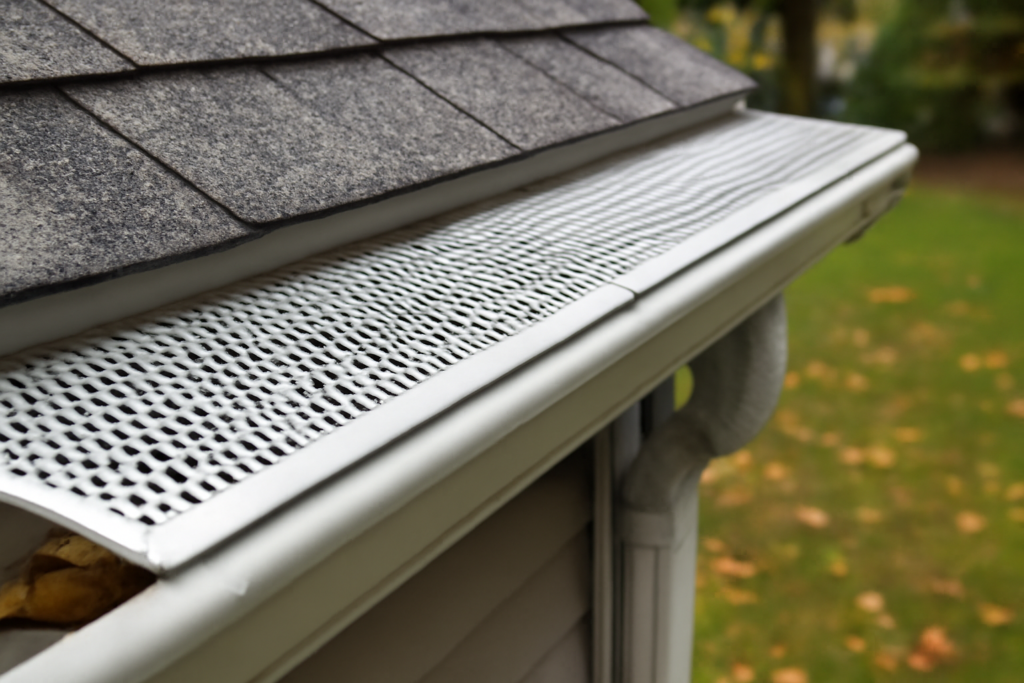
Shur Flo gutter guards are a long-running aluminum gutter protection system designed to keep leaves, pine needles, and debris out of your gutters while letting rainwater flow through. For homeowners tired of climbing a ladder every fall to scoop out soggy leaves, gutter guards promise to end the chore. This guide explains how the Shur Flo system works, what it costs, how to install it, and how it stacks up against the many other gutter guard styles on the market.
Part of our Roofing guide — explore the full guide →
- How Shur Flo Gutter Guards Work
- Key Benefits
- Potential Drawbacks
- What Shur Flo Gutter Guards Cost
- DIY vs. Professional Installation
- Prep Your Gutters First
- How Shur Flo Compares to Other Guard Types
- Maintenance Expectations
- Common Mistakes to Avoid
- Why Clean Gutters Protect Your Whole Home
- Matching the Guard to Your Trees
- Seasonal Care and Longevity
How Shur Flo Gutter Guards Work
Shur Flo is a screen-and-louver style aluminum guard. It installs over the top of your existing gutter, creating a solid or perforated cover that debris slides off while water passes through openings into the trough below. Because it is made of heavy-gauge aluminum rather than flimsy plastic, it resists warping in the sun and does not become brittle in cold weather the way some vinyl guards do. Aluminum also will not rust, which matters for a product exposed to constant moisture.
The system is designed to be strong enough to support snow load and foot traffic in some configurations, and its low profile keeps it from being an eyesore from the ground. The goal is simple: keep the gutter channel clear so water always has a path to the downspout.
Key Benefits
- Durable aluminum construction: Will not rust, crack, or become brittle like plastic guards.
- Reduced maintenance: Dramatically cuts how often you need to clean gutters.
- Prevents clogs and overflow: Keeps water flowing to protect your foundation, fascia, and landscaping.
- Discourages pests: A covered gutter is far less attractive to mosquitoes, birds, and rodents that nest in debris.
- Fire resistance: Metal guards resist embers better than plastic, a consideration in wildfire-prone regions.
Potential Drawbacks
No gutter guard is truly maintenance-free, and honesty about limitations helps set expectations. Fine debris like pine needles, shingle grit, and seed pods can still accumulate on top of any screen-style guard and occasionally work through. In heavy leaf areas you may still need to brush debris off the top of the guards once or twice a year, though that is far easier than scooping out packed gutters. In extreme downpours, some water can sheet over any guard rather than entering, though quality designs minimize this. And upfront cost is significant compared with doing nothing.
What Shur Flo Gutter Guards Cost
Gutter guard pricing is usually quoted per linear foot, matching the length of your gutters:
- Material only (DIY): roughly $2 to $5 per linear foot for aluminum screen guards.
- Professionally installed: roughly $5 to $12 per linear foot including labor.
An average single-story home has 150 to 200 linear feet of gutter. That puts a DIY material cost around $400 to $1,000 and a professional installation around $1,000 to $2,400. Two-story homes and complex rooflines cost more because of added labor and safety equipment. Always measure your actual gutter run to estimate accurately.
DIY vs. Professional Installation
Screen-style aluminum guards like Shur Flo are among the more DIY-friendly gutter protection products. Many versions snap or screw onto the front lip of the gutter and slide under the first course of roof shingles or attach to the gutter itself. A handy homeowner comfortable and safe on a ladder can install them over a weekend with basic tools. The critical caution is ladder safety; falls from gutter height cause serious injury every year, so use a stabilizer, work with a helper, and never overreach.
Professional installation makes sense for two-story homes, steep roofs, or homeowners uncomfortable working at height. Pros also inspect and can re-pitch or repair the underlying gutters, which is worth doing before capping them with any guard.
Prep Your Gutters First
Installing guards over dirty or failing gutters just hides problems. Before adding Shur Flo guards:
- Thoroughly clean out all existing debris from the gutters and downspouts.
- Flush with a hose to confirm water flows freely to the downspouts.
- Check and correct the gutter pitch so water drains toward the downspouts.
- Reseal any leaking seams and re-secure loose hangers.
- Repair or replace any rusted or sagging sections.
How Shur Flo Compares to Other Guard Types
- Mesh and micro-mesh guards: Fine stainless mesh blocks even small debris and pollen but can clog with grit over time and often costs more. Best for pine-heavy properties.
- Reverse-curve (surface tension) guards: Water clings around a curved nose while debris falls off. Effective but bulky and pricey, usually pro-installed.
- Foam inserts: Cheap sponge-like inserts that sit in the gutter. Easy to install but degrade and clog quickly; a short-term fix.
- Screen guards like Shur Flo: A durable, mid-priced middle ground that handles leaves well and installs easily.
Maintenance Expectations
Even the best guards benefit from an annual look. Once or twice a year, ideally after peak leaf drop, brush or blow accumulated debris off the top of the guards and check that downspouts run clear. This quick pass from a ladder or even from the ground with a blower attachment is a fraction of the work of cleaning open gutters. Think of guards as reducing the chore by roughly 80 to 90 percent rather than eliminating it entirely.
Common Mistakes to Avoid
The biggest mistake is installing guards over gutters that are the wrong pitch or already damaged, which locks in drainage problems. Another is assuming any guard means never touching the gutters again; fine debris still needs occasional clearing. Homeowners in pine-needle country sometimes choose a large-opening screen that lets needles through, when a finer micro-mesh would serve better. And ignoring ladder safety to save time is a costly gamble.
Why Clean Gutters Protect Your Whole Home
It is easy to view gutters as a minor nuisance, but they do serious work protecting your home’s structure. When gutters clog and overflow, water cascades down the exterior walls and pools at the foundation. Over time this leads to basement leaks, cracked and settling foundations, rotted fascia and soffit boards, ruined landscaping, and even eroded walkways. In winter, clogged gutters contribute to ice dams that force water under the roof shingles. A single foundation repair can cost tens of thousands of dollars, which puts the price of gutter guards in perspective. By keeping water flowing freely to the downspouts and away from the house, guards like Shur Flo protect the most expensive parts of your property.
Matching the Guard to Your Trees
The right gutter guard depends heavily on what falls on your roof. Homes surrounded by large deciduous trees that drop broad leaves are well served by a screen-style aluminum guard, which sheds leaves easily while letting rain through. Properties under pine trees face a tougher challenge, because thin pine needles can slip through or lodge in the openings of coarser screens; those homes may benefit from a finer micro-mesh guard. Homes with maple trees that drop tiny helicopter seeds and heavy pollen also do better with finer mesh. Before buying, watch what actually accumulates in your gutters through a full season so you match the opening size of the guard to the debris you truly face.
Seasonal Care and Longevity
Aluminum guards like Shur Flo are built to last many years because the metal will not rot, rust, or grow brittle the way plastic and vinyl guards do under UV exposure and temperature swings. To get the most from them, plan a simple seasonal routine. In late fall after the leaves have dropped, and again in spring after pollen and seed season, take a few minutes to brush or blow accumulated debris off the top of the guards and confirm the downspouts run clear. From the ground, a leaf blower with an extension or a soft brush on a telescoping pole often does the job without a ladder. This light upkeep keeps the guards performing and lets you spot any loose sections or gutter issues early, before they become expensive problems.
Shur Flo gutter guards offer a durable, reasonably priced way to slash gutter cleaning while protecting your home’s foundation and fascia from overflow damage. Clean and repair your gutters first, match the guard opening to the kind of debris your trees drop, and stay realistic that a quick annual brush-off is still part of the deal. Handle those points and you will spend far fewer weekends on a ladder while keeping water flowing safely away from your home.