The idea of a battery-powered two-stage snow blower used to draw laughs from anyone who’d fought a heavy, wet driveway. The EGO 24 inch snow blower silenced most of those doubts, delivering a self-propelled, two-stage machine that clears deep snow and throws it 40-plus feet on batteries alone, no gas, no pull cord, no cold-weather starting struggles. This guide covers its specs, real runtime, how it handles serious snow, and whether it can genuinely replace a gas machine.
- Two-Stage Power Without Gas
- The Battery System
- Real-World Runtime
- Throw Distance and Chute Control
- Self-Propelled Drive
- Why Cordless Beats Gas for Many Homeowners
- Setup and Operating Tips
- Maintenance and Winter Care
- Is the EGO 24 Inch Snow Blower Worth It?
- Sizing Your Battery Setup Correctly
- Storage and Off-Season Care
Two-Stage Power Without Gas
The headline is that EGO built a true two-stage snow blower on its 56-volt battery platform. Two-stage means a serrated auger pulls snow in and feeds it to a separate high-speed impeller that flings it out the chute. This is the design that handles deep, heavy, wet snow and end-of-driveway plow ridges, the stuff single-stage blowers choke on.
The 24-inch clearing width strikes a practical balance: wide enough to clear a two-car driveway in reasonable passes, narrow enough to remain maneuverable and store in a garage. Paired with a 21-inch intake height on the two-stage model, it swallows snow that would stall lighter machines.
The Battery System
Power comes from EGO’s Peak Power 56-volt batteries, and the 24-inch two-stage model uses multiple packs at once to draw the current a two-stage machine demands:
- Dual-port or quad-port design: Runs on two to four batteries simultaneously for the amperage needed to power the auger and impeller.
- Battery compatibility: The same 56V packs run EGO mowers, blowers, trimmers, and chainsaws, so the investment carries across seasons.
- Fast charging: EGO’s rapid chargers top off packs quickly between uses.
Using several batteries is how EGO delivers gas-rivaling power. It also means the runtime scales with how many packs, and what capacity, you feed it.
Real-World Runtime
Runtime is the question every skeptic asks, and the honest answer depends on snow conditions and battery capacity. With a full set of high-capacity packs, expect to clear a typical suburban driveway, or a good chunk of a larger one, on a charge. Real figures depend heavily on:
- Snow depth and moisture: Light, dry powder sips power; deep, wet, heavy snow drains batteries far faster.
- Battery amp-hours: Larger packs like 10.0Ah or two 7.5Ah units run substantially longer than smaller ones.
- Self-propel use: The drive motor adds draw but saves your back.
For most storms on an average driveway, a full battery complement finishes the job. For big properties or heavy wet snow, keep a second set of packs charged and ready to swap, which takes seconds versus refueling and restarting a cold gas engine.
Throw Distance and Chute Control
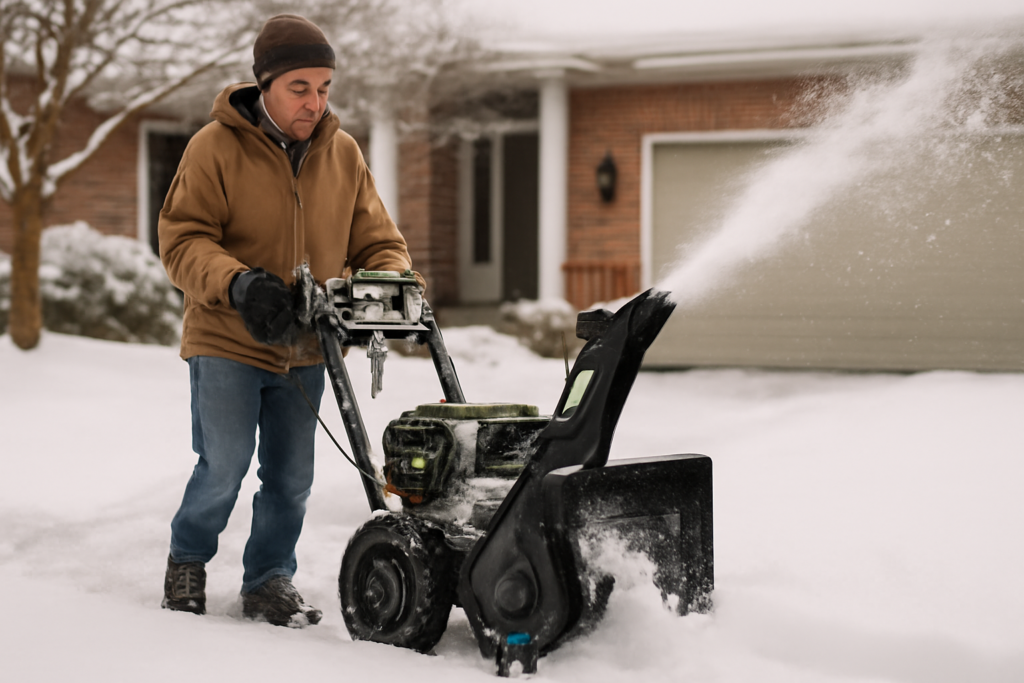
A two-stage EGO throws snow up to around 40 to 50 feet, competitive with gas machines and far beyond any single-stage unit. That distance matters on wide driveways where you don’t want to re-clear snow you just tossed. Control features make it usable:
- Electric chute rotation: Redirect the discharge with the push of a control, no hand crank.
- Adjustable deflector: Set how high or low the snow throws.
- LED headlights: Genuinely useful for early-morning or evening clearing in winter darkness.
Self-Propelled Drive
The 24-inch model is self-propelled with variable speed, so you’re not muscling a heavy machine through deep snow. Variable-speed control lets you slow down in heavy drifts and speed up on light snow. This makes a real difference in fatigue; a two-stage snow blower is heavy, and self-propulsion turns an exhausting chore into a walk behind the machine.
Steering-assist or trigger-controlled turning on some configurations helps maneuver around obstacles and back into the garage. For anyone with back concerns or a large area to clear, the drive system is as valuable as the clearing power.
Why Cordless Beats Gas for Many Homeowners
The advantages over a gas two-stage go beyond convenience:
- Instant starting: Push a button and it runs, even at 10°F, no choke, no pull cord, no fussing with a cold carburetor.
- No fuel or oil: No gas cans, no stale-fuel problems, no oil changes, no spark plugs.
- Quiet operation: Far less noise than a gas engine, so early clearing won’t wake the neighborhood.
- No emissions: Safe to start and stage in an attached garage without exhaust fumes.
- Low maintenance: Beyond clearing packed snow and occasional shear-pin checks, there’s little upkeep.
The no-start frustration alone converts a lot of homeowners. A gas snow blower that won’t start during a storm is worse than useless; the EGO simply runs.
Setup and Operating Tips
Getting the most from the machine comes down to a few habits:
- Charge all batteries fully before an expected storm so you’re ready.
- Clear snow before it gets deeply packed or icy when possible; fresh snow is easier on batteries.
- Take slightly narrower passes in heavy wet snow to avoid bogging the auger.
- Point the chute downwind and away from where you’ll walk or drive.
- Store batteries indoors; lithium-ion loses output in extreme cold, so bring packs inside between uses.
Maintenance and Winter Care
Cordless snow blowers need far less upkeep than gas, but a little care helps:
- Clear packed snow and ice from the auger and chute after each use so nothing freezes solid.
- Check the shear pins periodically; they protect the auger if it hits an object.
- Store batteries indoors at partial charge during the off-season.
- Wipe the machine down and keep it dry to prevent rust on metal components.
Is the EGO 24 Inch Snow Blower Worth It?
For homeowners tired of gas hassles, the EGO 24 inch snow blower is a genuine gas replacement, not a compromise. It delivers real two-stage clearing power, 40-plus feet of throw, self-propelled drive, and instant push-button starting, all without fuel, oil, or cold-weather starting drama. The battery platform shares with EGO’s whole cordless lineup, spreading the cost across your yard tools.
The honest caveats are runtime on very large properties with heavy wet snow, where you’ll want backup batteries, and the upfront cost, which is comparable to a quality gas two-stage. But for the typical suburban driveway in a real snow region, this machine clears storms reliably and quietly, starts every time, and needs almost no maintenance. If those advantages appeal to you, the EGO is one of the most satisfying winter tools you can own.
Sizing Your Battery Setup Correctly
The most important buying decision beyond the machine itself is how much battery capacity you pair with it. Because the 24-inch two-stage draws heavily, matching your battery complement to your driveway prevents mid-storm frustration. Think about your worst-case snow, not your average.
Use these guidelines to plan your battery investment:
- Small to average driveway: A full set of the included or two large packs typically clears a storm on one charge.
- Long or wide driveway: Add a second set of high-capacity packs so you can swap in seconds and keep going.
- Heavy wet-snow region: Lean toward the largest available amp-hours, since dense snow drains batteries fastest.
- Multi-tool household: Buy larger packs that also power your EGO mower and blower, spreading the cost across seasons.
Buying enough capacity up front is cheaper than the frustration of running dry halfway through clearing during a blizzard. Batteries are the real fuel of this machine, so plan them like you’d plan a full gas can.
Storage and Off-Season Care
A cordless snow blower asks very little between winters, but a bit of end-of-season care keeps it ready for the next storm. After the final snow, clear all packed snow and ice from the auger, impeller, and chute so nothing corrodes or freezes into the mechanism over the warm months. Wipe the machine down and let it dry fully before storing.
Battery care matters most for longevity. Store the packs indoors at a partial charge, ideally somewhere between 30 and 70 percent, rather than fully drained or fully charged, and keep them out of extreme heat. A conditioned indoor space beats a hot garage or a freezing shed for preserving capacity. When winter returns, top the packs off, run a quick function check of the chute controls and lights, and confirm the shear pins are intact. This handful of habits, none of them the oil changes and fuel-stabilizing chores a gas machine demands, keeps the EGO starting instantly and clearing reliably season after season. That freedom from engine maintenance, paired with genuine two-stage power, is exactly what makes cordless snow clearing so appealing to homeowners who’ve had enough of gas.