Green has stormed back into interior design, and no shade feels more luxurious than deep, jewel-toned emerald. Emerald tile brings rich, saturated color to kitchens and bathrooms, turning a backsplash or shower wall into a focal point that reads both vintage and thoroughly modern. Whether you want a glossy zellige-style accent or a moody full-wall statement, this color delivers drama that neutral tile simply cannot. Here is how to use it well, where it works, and what to expect.
Part of our Tile & Grout guide — explore the full guide →
The Appeal of Emerald Green
Emerald sits in a sweet spot among greens. It is deep and sophisticated without tipping into the darkness of forest or the brightness of lime. The color reads as confident and a little luxurious, which is why designers reach for it when a space needs personality.
It also pairs surprisingly well with a wide range of materials. Against warm brass, white marble, natural wood, and matte black, emerald tile looks intentional and high-end rather than loud. That versatility makes it easier to live with than many bold colors.
Shades and Finishes
Not all emerald tile looks the same, and the finish changes the entire mood of the installation.
- Glossy glazed: A high-shine surface that reflects light, deepens the color, and feels glamorous, ideal for backsplashes.
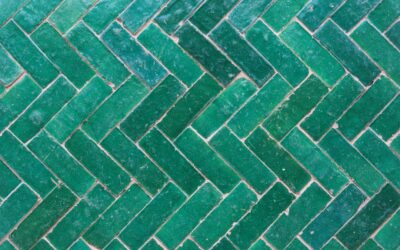
- Zellige and handmade: Moroccan-style tiles with subtle color variation, uneven edges, and a glassy glaze that catches light differently across the wall.
- Matte: A softer, more understated finish that tones down the drama and hides water spots.
- Glass and mosaic: Small emerald glass tiles add sparkle and work beautifully as an accent strip or niche.
The variation in handmade and zellige tiles is a feature, not a flaw; the slight differences from tile to tile give the wall depth and an artisanal feel.
Where Emerald Tile Works Best
Because the color is bold, placement matters. Used thoughtfully, emerald elevates a space; overused, it can overwhelm.
Kitchen Backsplash
A glossy emerald backsplash behind a stove or sink is a showstopper. Paired with white or cream cabinets and brass hardware, it anchors the whole kitchen.
Bathroom Walls and Showers
Emerald shines in bathrooms, where a full shower surround or a vanity backsplash creates a spa-like, jewel-box feel. Vertical stack or herringbone layouts add modern polish.
Accent Features
If a full wall feels like too much, use emerald in a niche, a fireplace surround, or a single feature strip. A little goes a long way.
Pairing and Design Tips
Emerald is a rich color, so balance it with calmer companions. Crisp white grout makes glossy emerald pop and feel fresh, while a tonal green grout creates a more seamless, immersive wall.
For hardware and fixtures, warm metals are the classic match; brass and gold against emerald is a timeless combination. Natural wood vanities and shelving soften the look, and white marble countertops keep it from feeling heavy. If your space gets limited natural light, lean toward glossy finishes that bounce what light you have. Cool metals work too: matte black faucets and frames give emerald a sharper, more contemporary edge, while polished chrome keeps things crisp and clean. As a rough rule, pick one metal finish and carry it through the whole room so the emerald stays the star rather than competing with three different hardware tones.
Cost Considerations
Price depends heavily on the type of tile. Standard glazed ceramic emerald tiles are affordable, often $5 to $15 per square foot, while authentic handmade zellige and glass mosaics climb to $20 to $50 per square foot or more.
Handmade tiles also take more skill and time to install because of their irregular edges and the careful spacing they require, which adds to labor. Budget for that if you choose the artisanal look. For a small accent area, even premium emerald tile stays affordable because you need so little of it.
Installation Notes
Glazed ceramic emerald installs like any standard wall tile, but handmade and zellige varieties need a steadier hand. Their uneven surfaces and color shifts mean you should dry-lay several tiles first to blend the variation evenly across the wall.
Use a white thinset under translucent or glass tiles so the adhesive does not ghost through and dull the color. Wipe glossy and glass tiles carefully during grouting, since haze shows easily on a reflective surface. Seal the grout to keep moisture and stains out in wet areas.
Caring for Emerald Tile
Glazed and glass emerald tile is easy to maintain and keeps its color for years. A simple routine preserves the shine.
- Wipe regularly with a soft cloth and mild cleaner to keep glossy surfaces sparkling.
- Avoid abrasive pads and harsh chemicals that can scratch or dull the glaze.
- Keep grout lines sealed in showers and backsplashes to resist mildew and staining.
- Dry glass and high-gloss tiles after cleaning to prevent water spots.
Tile Shapes and Layout Patterns
Emerald color carries even more impact when you pair it with the right shape and layout, and the format you choose shifts the whole feel of the wall. Classic 3-by-6-inch subway tile in emerald gives a familiar shape an unexpected jolt of color and works in nearly any home. Elongated 2-by-8 or 3-by-12 planks set in a vertical stack pull the eye upward and read distinctly modern. Square zellige laid in a straight grid leans traditional and artisanal, while a herringbone or chevron run adds movement and a custom feel that suits a feature wall. For small accents, penny rounds, fish-scale, and hexagon mosaics in emerald glass turn a niche or border into a jewel-like detail. Match a busier layout with a simpler tile, and a plainer layout with a more textured handmade tile, so the wall has one clear point of interest rather than two competing ones.
Lighting Emerald Tile Effectively
Deep colors absorb light, so how you illuminate emerald tile decides whether it looks rich or simply dark. Warm-white bulbs in the 2700K to 3000K range flatter emerald and bring out its golden undertones, while very cool daylight bulbs can push it toward a flat, bluish gray. In a windowless powder room or an interior shower, layer the light: an overhead fixture for general brightness plus sconces or a lighted mirror to wash the tile from the side and reveal the gloss and surface variation. Aim a small accent or picture light at a feature wall and the glaze comes alive, catching highlights that flat lighting flattens out. If the emerald sits behind a vanity or counter, undercabinet or toe-kick lighting grazes the tile and emphasizes its depth. Plan the lighting alongside the tile rather than as an afterthought, and the color will look as luxurious in the evening as it does at midday.
The Verdict
For homeowners ready to move past beige, emerald tile offers a rich, timeless way to inject color and character into a kitchen or bath. Choose the finish that suits your light and style, pair it with warm metals and calm neutrals, and use it where it can shine as a focal point. The result is a space that feels luxurious, personal, and anything but ordinary.
Prefer to explore on your own?
See how new flooring looks in your actual room in seconds — free, no signup.
Try the free Floor Studio →