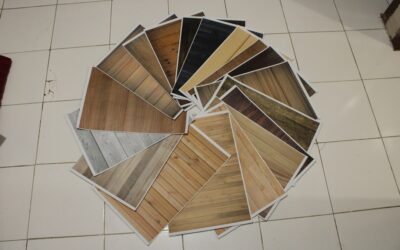
Flooring marketing invents a new acronym every few years, and this one stuck because the product deserved it. Engineered vinyl plank flooring, or EVP, is the umbrella term for rigid-core luxury vinyl: planks built in layers around a stiff waterproof core, the way engineered hardwood is built in layers around a plywood core. The term was popularized by COREtec, whose original WPC plank essentially created the category, and today EVP covers both WPC and SPC constructions. If you have been confused about how EVP relates to LVP, WPC, and SPC, the short version is that EVP is rigid-core LVP, and everything else in this guide flows from that.
The Acronym Family Tree, Untangled
Luxury vinyl plank (LVP) is the broad category: any plank-format vinyl floor with a printed design layer under a clear wear layer. Within LVP there are two structural camps.
- Flexible (traditional) LVP: solid vinyl through its thickness, 2 to 4 mm thick, bendable by hand. Usually glued down, sometimes loose-lay.
- Rigid-core LVP = EVP: a layered, engineered plank, typically 4 to 8 mm, with a stiff composite core, click-lock edges, and often an attached underlayment pad. It floats over the subfloor like laminate.
Inside the EVP umbrella sit the two core recipes:
- WPC (wood plastic composite): vinyl and stabilizers foamed with a wood-flour or plasticizer blend. The foaming makes WPC thicker, softer underfoot, warmer, and quieter.
- SPC (stone plastic composite): vinyl blended with limestone powder into a dense, thin, extremely hard core. SPC resists dents better and handles temperature swings well, at the cost of a firmer, colder feel.
So when a retailer says EVP, they mean a rigid-core click plank that is either WPC or SPC. COREtec (now part of Shaw) built the category with WPC; brands across every price tier now sell both constructions under the EVP banner. A separate guide on this site digs into SPC specifically; here we stay at the umbrella level.
How an EVP Plank Is Built
Cut an EVP plank in half and you will find four to five layers. On top, a urethane finish coat, often infused with ceramic bead or aluminum oxide, over a clear wear layer measured in mils (12 mil residential, 20 mil commercial-grade). Below that, the printed design film, where modern EVP earns its realism with embossed-in-register texture that aligns the surface grain with the printed grain. Then the rigid core, WPC or SPC, which carries the click-lock profile milled into its edges. Many planks finish with an attached pad of cork or foam that softens footfall and cuts hollow noise. The engineering payoff: dimensional stability. Rigid cores do not telegraph every subfloor flaw the way flexible glue-down vinyl does, and they shrug off humidity swings that make laminate and hardwood move.
EVP vs Flexible Glue-Down LVP
Because both are waterproof vinyl with the same photographic realism, the buying decision usually comes down to structure.
- Subfloor forgiveness: EVP floats over minor imperfections; flexible glue-down telegraphs bumps and voids and demands near-perfect prep.
- Installation: EVP clicks together DIY-style with no adhesive. Glue-down needs troweled adhesive, more skill, and cure time, but pros can install it fast in big open spaces.
- Feel and sound: EVP with an attached pad sounds and feels more like a real wood floor. Thin glue-down feels harder and can sound slappy without a good subfloor.
- Repairs and height: Glue-down wins in two places: a damaged plank can be heat-lifted and replaced individually without disassembly, and its low 2-3 mm profile suits transitions and commercial door clearances. EVP repairs mid-floor mean unclicking from the wall inward, and its 5-8 mm build raises floor height.
- Rolling loads: heavy commercial rolling traffic often favors glue-down, which cannot shift because it is bonded.
For most residential rooms, EVP’s easier install and better feel win. For basements with rolling gym equipment or sub-par height clearance, flexible glue-down still earns its keep.
What EVP Costs in 2026
Materials run about $2.50 to $7 per square foot. Entry SPC lines from home centers sit at $2.50 to $3.50; mid-tier products with 20 mil wear layers, attached pads, and realistic visuals cluster at $3.50 to $5; premium lines like COREtec Plus, Shaw Paragon, and Karndean Korlok reach $5 to $8. Professional installation adds $2 to $4 per square foot, but the click-lock format makes DIY genuinely practical: a competent homeowner lays 300 to 500 sq ft over a weekend with a tapping block, spacers, and a saw or even a utility-knife score-and-snap on SPC. Budget for transition strips, stair nosings (surprisingly pricey at $30 to $80 each), and 10 percent waste.
Strengths That Sell EVP
- Waterproof through the core: pet accidents, dishwasher leaks, and wet boots do not swell it, unlike laminate.
- Realistic looks: current print and texture technology is convincing at conversation distance, in wood and stone visuals alike.
- Quiet, comfortable floating floor: attached pads and thick cores beat both laminate and thin vinyl on sound.
- DIY installation over most existing floors: tile, old vinyl, wood, and flat concrete all work with minimal prep.
- Easy maintenance: vacuum, damp mop, done. No refinishing, no sealing.
Weaknesses to Weigh
- It is still vinyl: sharp point loads can dent it, dragged appliances can gouge it, and it cannot be sanded or refinished. Damage means plank replacement.
- Sunlight: strong UV through big windows can fade or discolor some products; check the warranty’s UV language for sunrooms.
- Temperature limits: WPC especially dislikes unconditioned spaces; SPC tolerates swings better, but most warranties still exclude non-climate-controlled rooms and many cap radiant heat at 80 to 85°F.
- Resale perception: EVP is respected, but it is not hardwood, and in upper-bracket homes buyers still notice the difference.
- Plastics: vinyl is PVC; buyers minimizing plastics in the home may prefer wood or tile despite EVP’s practicality. Look for FloorScore certification for air-quality assurance.
Buying Checklist
- Match the core to the room: WPC for comfort in bedrooms and living areas, SPC for dent resistance in kitchens, entries, and sun-swung spaces.
- Insist on a 20 mil wear layer for busy households; 12 mil is fine for quiet rooms.
- Check total thickness (5 mm+ feels best), attached pad, and a licensed locking system.
- Read the warranty for commercial coverage, UV terms, and radiant-heat limits.
- Order from one dye lot and buy an extra box for future repairs.
Bottom line: engineered vinyl plank flooring is the umbrella name for the rigid-core click vinyl that has taken over American remodels, and for good reason. It delivers waterproof, wood-look floors at a fraction of hardwood’s cost and fuss, provided you pick the right core and wear layer for the way your household actually lives.
Prefer to explore on your own?
See how new flooring looks in your actual room in seconds — free, no signup.
Try the free Floor Studio →