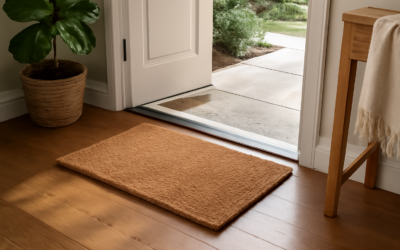
The square footage right inside your door takes more abuse than almost any other spot in the house. The right rug there does real work, not just decoration. A good entrance rug traps dirt, water, and grit before they spread across your floors, protects the surface underneath from wear, and sets the tone for everyone who walks in. Choosing one well means balancing function, durability, and style. This guide breaks down materials, sizes, placement, and care so your entryway stays clean, safe, and welcoming.
Why an Entrance Rug Matters
Most of the dirt in a home arrives on the bottoms of shoes. Studies and common experience both show that a large share of tracked-in soil gets stopped within the first several steps inside a door. A well-placed rug intercepts that grime, which means less grit grinding into your flooring, fewer water stains, and less frequent deep cleaning. It also adds traction on what is often a slick transition from outdoor surfaces to indoor floors, reducing slip risk when shoes are wet. Protecting hardwood, tile, or laminate at the entry extends the life of an expensive floor.
Indoor vs. Outdoor Placement
A complete entry system often uses two rugs working together:
- Outdoor mat: Placed just outside the door, usually a coarse, scraper-style mat that knocks off heavy mud and debris.
- Indoor rug: Placed inside the threshold, designed to absorb remaining moisture and fine dirt while looking good in your space.
Using both catches grime in two stages, dramatically reducing what reaches your floors. If you can only have one, an absorbent indoor rug with a non-slip backing does the most good.
Material Choices
Material drives both performance and look. The main options:
- Natural coir (coconut fiber): Stiff and scrapy, excellent at removing mud, classic for exterior doors. It does shed and is best kept under cover from heavy rain.
- Polypropylene and other synthetics: Durable, fade-resistant, quick-drying, and easy to clean, making them a workhorse for both indoor and covered outdoor use.
- Nylon: Highly resilient and good at bouncing back from heavy foot traffic, often used in busy indoor entries.
- Cotton: Soft and absorbent, machine-washable, ideal for an indoor mat that soaks up water, though it gets dirty faster.
- Rubber or recycled-rubber: Often used as backing or as scraper mats, providing grip and water containment.
- Wool: A premium, naturally stain-resistant option for a more decorative indoor entry, at a higher price.
Choosing the Right Size
An entrance rug that is too small looks like an afterthought and stops doing its job. Scale it to the space. For a standard single door, a rug around 2 by 3 feet is a common minimum, while wider runners suit double doors and long foyers. As a rule, aim for a rug that lets both feet land on it as someone steps inside, which means at least a couple of strides of coverage. Always confirm the door clears the rug’s thickness so it does not catch when it swings. A low-profile rug avoids that problem at busy doors.
Non-Slip Backing and Safety
A rug that slides is a hazard, especially at a doorway where people enter quickly and floors may be wet. Look for a built-in rubber or latex non-slip backing, or add a separate gripper pad underneath, particularly on hard floors like tile, hardwood, and laminate. The backing also protects the floor from scratches and keeps the rug flat so edges do not curl into a tripping point. For households with kids or older adults, this detail is not optional.
Style and First Impressions
Beyond function, the entry rug is the first design statement guests notice. A few approaches that work:
- Choose a pattern that hides dirt between cleanings, such as darker tones, heathered blends, or busy geometric prints.
- Coordinate the color with your door, walls, or nearby flooring for a pulled-together look.
- Use a bold pattern or color to add personality to an otherwise plain entry.
- Keep the scale proportional to the space so the rug grounds the area without overwhelming it.
Seasonal Considerations
Your entry takes a different beating depending on the time of year, and adjusting your rug strategy helps. In winter and rainy seasons, moisture, salt, and mud are the enemy, so an absorbent indoor rug with strong water-holding fibers and a waterproof backing earns its keep, ideally paired with a tray for wet boots. Cotton and thick synthetic mats that you can wash frequently shine here, since salt and slush get tracked in constantly.
In drier months, the bigger issues are dust, pollen, and fine grit, where a tighter-weave rug that is easy to shake out works well. Many homeowners keep two rugs and swap them seasonally, washing and storing the off-season one. It also pays to upgrade the outdoor scraper mat before winter, since a coarse mat that strips off snow and mud outside dramatically cuts what reaches your floors. Matching the rug to the season keeps your entry both cleaner and safer year-round.
Cleaning and Care
An entry rug only helps if you keep it clean, since a saturated, dirty mat just redistributes grime. Maintenance is straightforward:
- Shake out or vacuum regularly to remove loose grit before it embeds in the fibers.
- Spot-clean spills promptly with a mild cleaner suited to the material.
- Machine-wash cotton and many synthetic mats per the label; hose down and air-dry coir and rubber mats.
- Rotate or flip reversible rugs occasionally to even out wear.
- Replace the rug when it becomes matted, frayed, or permanently stained, since a worn mat stops trapping dirt effectively.
Making the Right Choice
The best entrance rug is the one matched to your door’s exposure, your traffic level, and your floors. For a covered exterior door, lean toward coir or tough synthetics that scrape and shed water. Inside the threshold, choose an absorbent, washable rug with a secure non-slip backing sized so people fully step onto it. Pair an outdoor scraper with an indoor absorber for the best protection, keep both clean, and you will cut down on tracked-in dirt, protect your flooring investment, and give every visitor a tidy, welcoming first step into your home.