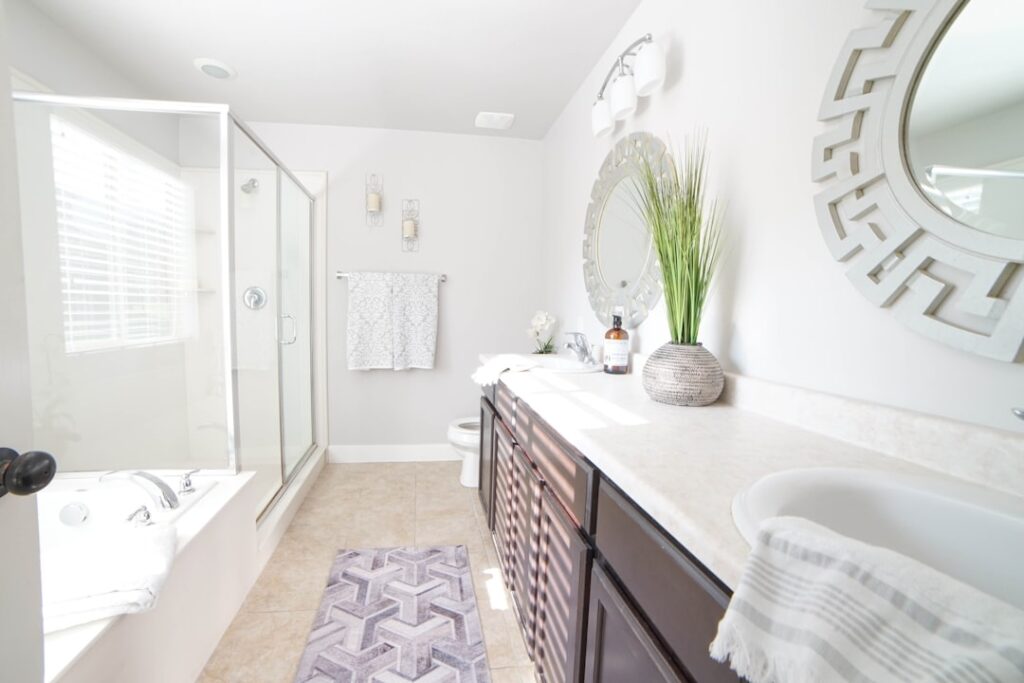
When a standard 20-by-30-inch bath mat leaves cold tile exposed on either side of a double vanity, a long bathroom rug solves the problem in one clean move. These extended runners, often called bathroom runner rugs, stretch anywhere from 47 to 72 inches or more, delivering soft footing along the full length of a vanity, galley bath, or narrow powder room. Choosing the right long bathroom rug comes down to matching its dimensions to your space and picking a material that shrugs off constant moisture.
Part of our Bathroom Remodeling & Flooring guide — explore the full guide →
Where a Long Rug Makes Sense
Not every bathroom needs a runner, but several layouts practically demand one. Double vanities are the classic case, since a single small mat cannot span two sinks. Galley or corridor bathrooms, where fixtures line one or both walls, benefit from a continuous soft path down the middle.
Long rugs also shine in front of a freestanding tub, along a shower-to-toilet walkway, and in master baths where you want a hotel-like sense of comfort underfoot. Anywhere your feet travel a long, straight line across cold or slick flooring is a candidate.
Common Sizes and How to Measure
Long bathroom rugs come in fairly predictable dimensions, but measuring your own space beats guessing every time.
- 24 x 60 inches: a versatile runner length that fits most single-wall vanities and galley baths.
- 20 x 48 inches: a compact long option for smaller powder rooms.
- 27 x 72 inches: generous coverage for wide double vanities and larger master baths.
- Custom lengths: some brands offer up to 96 inches for expansive layouts.
Measure the open floor length where you plan to place the rug, then subtract 4 to 6 inches so the rug does not crowd cabinet doors, the toilet base, or the swing of the shower door. Leave a few inches of visible flooring on each side for a balanced, intentional look.
Best Materials for a Wet Room
Moisture is the defining challenge in any bathroom, so fiber choice matters more here than in a living room. The rug needs to absorb splashes, dry quickly, and resist the mildew that thrives in damp, warm spaces.
- Cotton: soft, highly absorbent, and machine-washable. The go-to choice for most bathrooms, though it dries slower than synthetics.
- Microfiber and chenille: plush, fast-drying, and excellent at pulling water off wet feet. A favorite for that spa-soft feel.
- Memory foam core: not a fiber itself but a cushioned base topped with microfiber, prized for comfort during long grooming routines.
- Bamboo or teak slats: water-shedding wood runners for a natural, quick-drying look, though harder underfoot.
- Polyester: durable and fade-resistant but less absorbent, so best where quick drying outweighs softness.
Why Non-Slip Backing Is Essential
A rug that slides on wet tile is a genuine fall hazard, so backing is not a detail to overlook. Quality long bathroom rugs feature a latex, TPR, or PVC grip backing molded into a dotted or waffle pattern that clings to hard flooring even when the top gets damp.
Inspect the backing before buying and re-check it over time, since latex can dry out and crack after repeated hot washes. If a favorite rug loses its grip, add a thin non-slip rug pad cut to size underneath to restore safety. Households with elderly members or young children should treat secure backing as a top priority rather than an afterthought.
Keeping It Clean and Fresh
Bathroom rugs collect moisture, dead skin, hair, and humidity, so regular washing keeps them hygienic and odor-free.
- Shake the rug outdoors weekly to release loose hair and grit.
- Machine wash cotton and microfiber rugs every one to two weeks in cold or warm water on a gentle cycle.
- Skip fabric softener, which coats fibers and reduces absorbency over time.
- Air dry or tumble on low heat to protect the non-slip backing from cracking under high heat.
- Hang the rug to dry between uses in humid bathrooms to discourage mildew.
Always confirm the care label, since some memory-foam and bamboo styles are spot-clean only. Running a bathroom exhaust fan during and after showers also cuts ambient moisture and helps rugs dry faster.
Odor is usually a moisture problem, not a cleanliness one. If a rug smells musty even after washing, it likely is not drying fully between uses. Rotate two runners so each gets a full drying window, drape the off-duty rug over a towel bar or tub edge, and check that the non-slip backing is not sealing dampness against the floor. A rug that never fully dries will grow mildew on the backing long before the top shows any wear, so airflow underneath matters as much as the wash cycle itself.
One Rug or a Coordinated Set?
Many homeowners stop at a single runner, but a coordinated approach often works better in a full bathroom. Pair the long runner along the vanity with a smaller contour or U-shaped mat that hugs the toilet base, plus a plush mat at the tub or shower exit. Buying pieces in the same color and texture ties the room together while placing cushioning exactly where feet actually land.
If you prefer a single rug, position it where you stand most, typically the full length of the vanity where brushing teeth, shaving, and grooming happen. Skip covering the entire floor wall to wall, since exposed tile borders help the room feel clean and keep the rug from trapping moisture underneath against the flooring.
Coordinating Style and Color
A long runner covers significant floor real estate, so its color and pattern carry visual weight. Light neutrals like white, gray, and sand keep small bathrooms feeling open and airy, while deep navy, charcoal, or sage add grounding contrast against pale tile.
Patterns hide splashes and footprints better than solids, making them practical for busy family baths. Coordinate the runner with your towels and shower curtain for a pulled-together look, but avoid matching everything too precisely, which can read flat. A subtle texture like waffle weave, chevron, or ribbing adds interest without shouting for attention.
Budget and Buying Tips
Long bathroom rugs are an affordable upgrade. Expect to pay $15 to $30 for a basic cotton or polyester runner, $30 to $60 for plush microfiber or chenille with quality backing, and $60 to $120 for memory-foam or premium teak options. Because bathroom rugs wear out faster than living-room rugs, many homeowners keep two so one can be in the wash while the other stays down.
It also pays to keep the receipt and check return terms, since a rug that photographs well online can arrive a shade off from your tile or an inch too long for the floor. Before you buy, confirm the exact length fits your floor, verify a secure non-slip backing, and choose a machine-washable fiber unless you specifically want a wood slat style. Get those three factors right and a long bathroom rug will deliver warmth, safety, and a finished, spa-like feel to a room that too often gets left as cold, bare tile.