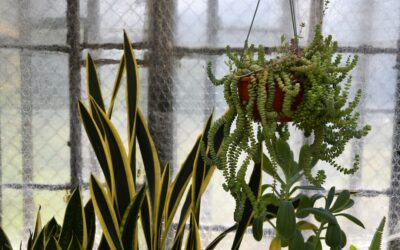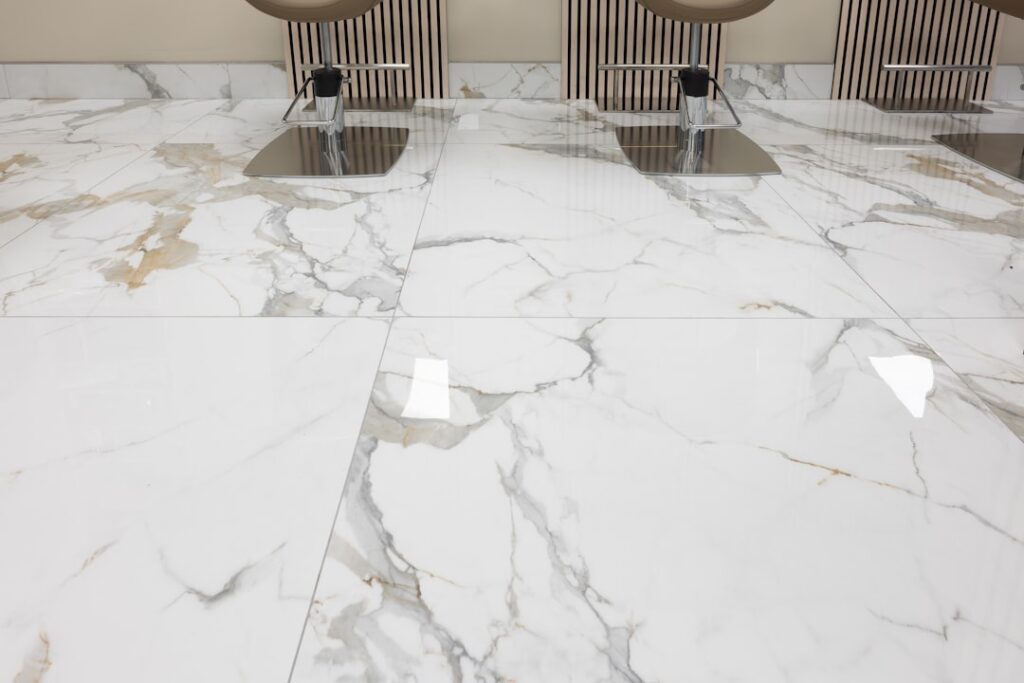
Most homeowners type “epi marble” into a search bar expecting countertop slabs and end up at the plant nursery world, where the epi marble plant, more accurately called the Epipremnum Marble Queen pothos, has become one of the most requested variegated houseplants in the country. The confusion is fair, because the same buyers who care about Cambria, Silestone, and Caesarstone slabs in their kitchens are styling their countertops with this exact plant. Here is the practical care guide plus how to use one as a living counterpoint to your stone surfaces.
Part of our Countertops guide — explore the full guide →
What the Plant Actually Is
Marble Queen is a variegated cultivar of Epipremnum aureum, native to the Solomon Islands and the most forgiving member of the pothos family. The white marbling comes from sectors of the leaf that lack chlorophyll, which means the plant photosynthesizes less efficiently than a solid green pothos and grows roughly 30 percent slower. Healthy specimens have a near 50/50 ratio of white to green per leaf.
Plants sold as “epi marble” at big-box stores like Lowe’s and Home Depot usually run $12 to $18 in a 6 inch pot. Specialty growers and Etsy sellers charge $25 to $60 for a well-rooted, heavily variegated specimen in a 6 to 8 inch hanger.
Light Requirements
Bright indirect light is non-negotiable. The variegation reverts to solid green within 8 to 12 weeks under low light, and once a vine reverts you cannot bring the pattern back on those leaves. Place the plant within 4 to 6 feet of a north-facing window, or 6 to 10 feet from a south or west window with sheer curtains.
If your kitchen has dark cabinets and limited natural light, a small grow light makes the difference. A Soltech Aspect at 24 watts ($199) or a budget Sansi 15W LED ($35) on a timer for 10 to 12 hours a day will hold variegation indefinitely.
Watering Without Killing It
Marble Queen tolerates underwatering far better than overwatering. The number one cause of death is root rot from a saucer that stays wet. Stick your finger 2 inches into the soil, water deeply only when it feels dry, and let the pot drain completely before returning it to the saucer.
In a typical heated home at 68 to 74 degrees F with 35 to 45 percent humidity, this means watering every 7 to 10 days in summer and every 12 to 18 days in winter. Use room-temperature water. Tap water sits fine for this species, but if your municipal water is heavily chlorinated, let it sit uncovered for 24 hours before pouring.
Soil, Pot, and Repotting
Skip generic potting mix. The pothos family rots in dense, peat-heavy soil. Mix your own with these ratios:
- 2 parts indoor potting soil (Fox Farm Happy Frog or Espoma Organic)
- 1 part orchid bark or fine pine bark
- 1 part perlite or pumice
- 1 handful of horticultural charcoal per gallon of mix
Use a terracotta or glazed ceramic pot with at least one drainage hole. Repot every 18 to 24 months, going up only one pot size (a 6 inch to an 8 inch). Oversized pots hold too much moisture and stall growth.
Propagation in Six Weeks
Cut a vine just below a node, the small bump where a leaf meets the stem, leaving at least 2 leaves on the cutting. Drop it in a jar of water on a windowsill out of direct sun. Roots emerge in 10 to 14 days, and the cutting is ready to pot up at 1.5 inch root length, usually around week 5 or 6.
For a fuller plant, root 4 to 6 cuttings together in the same pot rather than potting them individually. This is how nurseries get the dense, cascading look you see in styled photos.
Styling on Stone Countertops
The marble plant earns its place on a countertop because the leaf variegation echoes the veining in natural and engineered stone. A long trailing vine over the edge of a waterfall island, in a matte black or unglazed terracotta pot, works against Calacatta Laza quartz, Carrara marble, or Cambria Brittanicca beautifully.
Keep one rule in mind: never set the pot directly on a porous stone like honed marble or limestone. Even a moisture-resistant glaze will leave a ring if condensation collects under the pot. Use a cork or felt-bottom saucer, and lift the pot once a week to check for moisture transfer.
Common Problems and Quick Fixes
- Yellow leaves at the base: usually overwatering. Let soil dry completely and check for root rot.
- Brown crispy leaf edges: low humidity or fluoride buildup. Run a humidifier or switch to filtered water.
- New leaves emerging solid green: not enough light. Move closer to a window or add a grow light.
- Pale, washed-out variegation: too much direct sun. Pull back from the window.
- Sticky residue on leaves: scale insects. Wipe with a 70% isopropyl alcohol swab.
Long-Term Value
A well-maintained Marble Queen will live 10 plus years indoors and can reach 8 to 10 feet in trailing length. Mature specimens with thick, heavily variegated leaves sell on the secondary market for $80 to $200, which makes propagation a low-key way to recoup the cost of your initial plant.
For homeowners who love stone, the epi marble plant is the rare houseplant that genuinely belongs next to your countertops rather than competing with them.
Pet and Child Safety Note
Like all pothos varieties, Marble Queen contains insoluble calcium oxalate crystals that cause mouth irritation, vomiting, and drooling if chewed by cats, dogs, or small children. Place the plant on a high shelf or hanging hook out of reach. The toxicity is not life-threatening at typical exposure levels but is uncomfortable and worth avoiding. If a pet or child does ingest leaves, rinse the mouth with cool water and call ASPCA Poison Control (888-426-4435) or Poison Control (1-800-222-1222) for guidance.
For nurseries, kitchens, and high-traffic homes, consider variegated Hoya, prayer plant, or Calathea instead. They deliver similar marbled leaf aesthetics without the calcium oxalate concern.