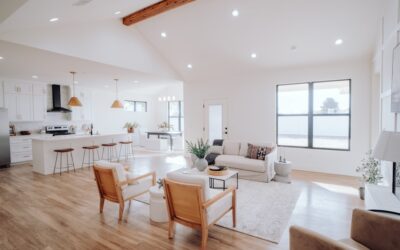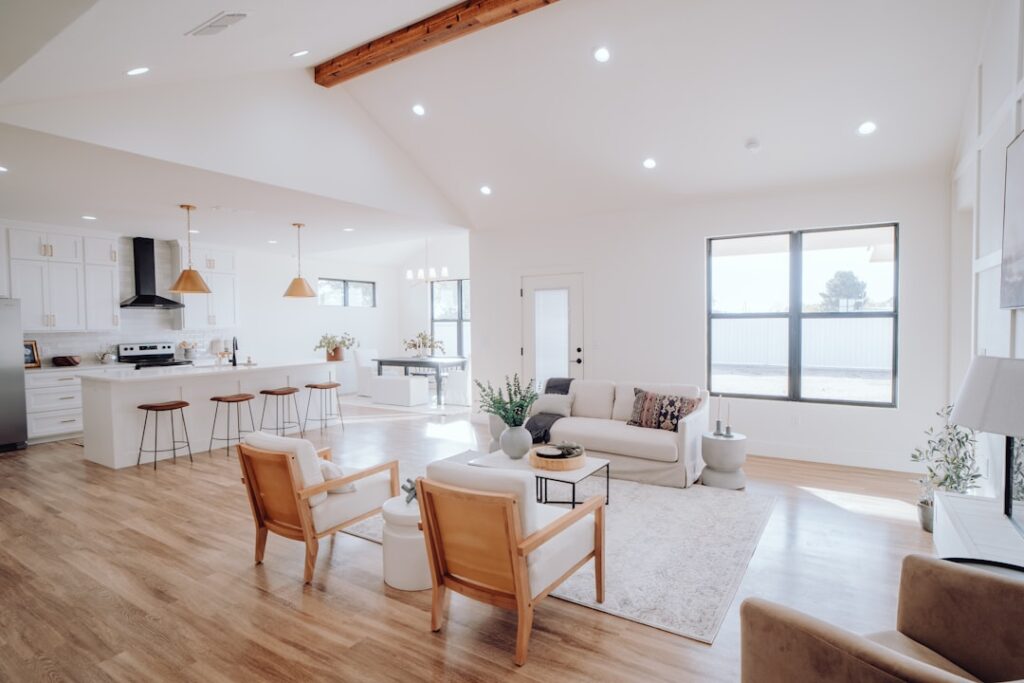
Walk into any C-suite, law firm partner’s office, or boutique hotel lobby and you’ll notice the floor immediately — wide planks of rift-sawn white oak, herringbone walnut, or honed travertine instead of the builder-grade carpet tile down the hall. Executive flooring is a category defined more by performance and aesthetics than by a single product type, covering premium hardwood, top-tier LVT, large-format porcelain, and natural stone built to handle heavy foot traffic while reading as architectural. This guide walks through what actually qualifies, what it costs, and how to specify materials that hold up for 20 years in a corner office or executive suite.
- What Defines Executive-Grade Flooring
- Premium Hardwood for Executive Spaces
- Luxury Vinyl in the Executive Tier
- Large-Format Porcelain and Natural Stone
- Carpet and Carpet Tile for Executive Comfort
- Installation Standards That Matter
- Acoustics and Underlayment
- Lighting and Material Interaction
- Budget Planning
What Defines Executive-Grade Flooring
The term is industry shorthand for the top 15 to 20 percent of the residential and light-commercial market. Hardwood in this tier carries a minimum 4-mm sawn-face engineered construction or a 3/4-inch solid build, often with rift-and-quartered grain and a Janka hardness above 1,200 lbf. LVT must hit a 22-mil or 28-mil wear layer with an attached acoustic underlayment. Porcelain runs in 24×48 or 30×60 large-format with rectified edges and a PEI rating of IV or V.
Below that bar, the product reads commercial-grade or builder-grade no matter what the brochure says. The look, the underfoot feel, and the longevity all telegraph the price tier within a few years of installation.
Premium Hardwood for Executive Spaces
Wide-plank engineered white oak from Du Chateau, Carlisle Wide Plank, or Hakwood dominates this segment. Plank widths of 7 to 10 inches and lengths up to 12 feet read substantial in a large office. Expect $14 to $28 per square foot for the material and $7 to $11 installed labor.
European oak with a wire-brushed or live-sawn surface and a Rubio Monocoat or Pallmann Magic Oil finish gives a matte, hand-finished look that hides foot traffic and allows spot repairs. Avoid high-gloss aluminum-oxide finishes in executive settings — they scuff visibly and read suburban.
Luxury Vinyl in the Executive Tier
The top of LVT — Karndean Knight Tile and Korlok Select, Amtico Signature, Mannington ADURA Apex — uses a 22 to 30-mil commercial wear layer, photographic films pressed to 1/16-inch register depth, and microbeveled edges that read as real wood from three feet away. Material runs $5 to $10 per square foot installed with glue-down. The advantages over hardwood are silence underfoot (with a cork or felt back), full waterproofing, and the ability to install over uneven concrete with self-leveler.
The downside is resale signaling. In a top-floor C-suite, the controller will see LVT for what it is, no matter how good the print. Reserve it for break rooms, hallways, and IT closets adjacent to the executive suite.
Large-Format Porcelain and Natural Stone
Porcelain panels from Florim Magnum Oversize, Atlas Plan, or Stone Source come in 60×120 inch slabs at 6 mm thickness. Material costs $18 to $40 per square foot, and installation requires a leveling system, large-format thinset like Mapei Ultralite S2, and a two-person crew. Total installed price commonly hits $35 to $55 per square foot.
Natural stone — honed limestone, leathered marble, or quartzite — adds visual weight and warmth. Carrara marble at $20 to $35 per square foot for material is still the C-suite benchmark, though the porosity and etching potential require an enhanced penetrating sealer like Aqua Mix Sealer’s Choice Gold reapplied every 24 months.
Carpet and Carpet Tile for Executive Comfort
For private offices, conference rooms, and boardroom suites, broadloom Axminster or Wilton wool carpet from Brintons, Tai Ping, or Stanton hits the executive bar at $40 to $90 per square yard. Carpet tile for the same role works when sourced from Interface Tournament Collection, Shaw Contract, or Milliken at $8 to $15 per square foot installed.
Look for an 80/20 wool-nylon blend or a high-twist solution-dyed nylon Type 6,6 for stain resistance. Pile heights of 1/4 to 5/16 inch with a dense low-loop construction handle rolling chairs without crushing.
Installation Standards That Matter
An executive installation is only as good as the prep work underneath. Concrete substrates need ASTM F2170 RH testing at 75 percent or lower for engineered wood and 80 percent for most LVT systems. Wood subfloors should be flattened to 3/16 inch in 10 feet for any large-format material.
Hire NWFA-certified installers for hardwood and CTEF-certified Certified Tile Installers for stone and porcelain. The $1 to $3 per square foot premium they charge over a generic GC’s subcontractor is the cheapest insurance in the project.
Acoustics and Underlayment
High-end executive spaces care about footfall sound. For wood floors over occupied space, specify an IIC 60 or higher underlayment like Maxxon Acousti-Mat or QT Sound Mat. LVT-attached underlayments rarely hit those numbers; add a separate 5-mm cork or rubber underlayment if the floor below is sensitive. Concrete floors with stone or porcelain should sit on a crack-isolation membrane like Schluter Ditra-HEAT or Custom Strataflex.
Lighting and Material Interaction
Executive spaces typically have layered lighting — daylight from large windows, downlights, decorative pendants, and accent uplights. Each interaction with the floor finish matters. High-gloss surfaces telegraph every imperfection under raking light from windows; matte and satin finishes hide minor wear and read more sophisticated in mixed-lighting environments.
For natural stone, leathered finishes diffuse light better than polished, which is why honed or leathered surfaces dominate top-tier specifications. For LVT and wood, look for finishes with a 5 to 15 gloss-unit rating measured at 60 degrees — that’s the matte to low-satin range that reads premium under any lighting condition.
Budget Planning
For a 1,500 sq ft executive suite, a realistic all-in budget runs $45,000 to $90,000 depending on material mix. Wood floors carry the highest amortized value; stone is the longest-lasting; LVT delivers the best dollar-for-dollar performance in support spaces. Mix materials by use — wood in main offices, stone or porcelain in entry areas, carpet in conference rooms — to balance impact and cost without compromising the executive look.
Prefer to explore on your own?
See how new flooring looks in your actual room in seconds — free, no signup.
Try the free Floor Studio →