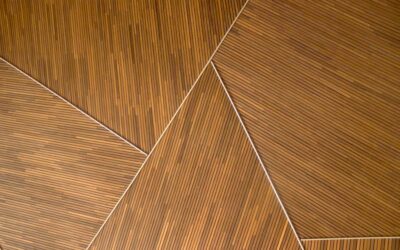
Walking into a home with truly exquisite flooring is unmistakable. The boards stretch 8, 10, or even 14 inches wide. The wood species carries character — fumed white oak with figure, rift-and-quartered walnut, or end-grain teak laid in herringbone. The finish is hand-applied oil, not factory polyurethane. Exquisite flooring sits in a category most homeowners never explore because the price tag starts at $18 per square foot and climbs past $50 for custom work. This guide explains what separates premium flooring from the mass-market product and whether the investment makes sense for your home.
What Makes Flooring Truly Exquisite
The four pillars of premium flooring are species rarity, plank dimension, finish quality, and installation craft. Standard 3-1/4 inch oak strip flooring with factory polyurethane is not exquisite no matter how expensive. A 10-inch-wide rift-sawn European white oak plank, hand-scraped, fumed with ammonia, then finished with Rubio Monocoat hardwax oil, applied by a NWFA-certified installer using cleat nailing into a moisture-tested subfloor — that is exquisite.
The key differentiator is not always cost. It is intention. Each layer — species, cut, dimension, finish, install — was chosen rather than defaulted. Mass-market flooring optimizes for affordability and predictability. Premium flooring optimizes for visual character, longevity, and the way light moves across the surface throughout the day.
Species That Command Premium Prices
Domestic and imported hardwoods set the high-end market. Most carry a Janka hardness rating that signals durability, but durability is only part of the value proposition.
- European white oak (Janka 1360): The current design favorite, available in wide planks up to 14 inches, accepts every finish beautifully — $12 to $25 per sq ft.
- American black walnut (Janka 1010): Chocolate tones with purple undertones, $10 to $18 per sq ft, softer than oak so plan for character marks.
- Brazilian cherry / Jatoba (Janka 2350): Deep red color deepens over time, extremely durable, $7 to $14 per sq ft.
- Reclaimed heart pine (Janka 870 to 1225): Salvaged from 19th-century mills, $14 to $30 per sq ft, every board unique.
- End-grain teak blocks: Set like pavers, ultimate moisture stability, $25 to $50+ per sq ft installed.
Plank Width and Length Drive Cost
Mill yield is the reason wide boards cost so much. A 14-inch-wide plank requires a tree with a usable cross-section 16 inches or wider. Trees that large represent less than 5 percent of harvested oak in most US forests, so the lumber commands a premium that compounds with every inch of width.
Length matters too. Premium European mills like Stuga and Carlisle supply boards in mixed lengths up to 12 feet. Mass-market product caps at 5 to 7 feet. Long boards reduce visible end joints across a room, which is what creates the visual flow that reads as exquisite. Plan to spend 20 to 40 percent more for mixed lengths over 7 feet.
Cut and Grade Matter as Much as Species
Three sawing patterns yield wildly different results from the same log. Plain-sawn boards display the classic cathedral grain pattern and represent the lowest cost cut. Rift-sawn boards show straight vertical grain and dimensional stability that resists cupping. Quarter-sawn boards display ray flake — the iridescent shimmer that defines true white oak character — and cost 60 to 100 percent more than plain-sawn.
Grade further filters the lumber. NOFMA Select and Better grade contains minimal knots and color variation. Character grade welcomes knots, mineral streaks, and sapwood for a rustic aesthetic. Custom mills like Carlisle and Sawmill Hollow grade to client specification, accepting only boards that meet exact figure and color criteria.
Finishes That Define Premium
Factory aluminum-oxide urethane finishes deliver durability and a plastic-looking sheen that screams mass-market. Premium flooring uses penetrating oils or hand-applied site-finished urethane. Rubio Monocoat hardwax oil applies in a single coat, cures in 5 to 7 days, and creates a surface that can be spot-repaired without sanding entire rooms. WOCA Diamond Oil and Loba 2K Supra AT are alternative finishes used by premium installers.
Fumed finishes deepen color chemically. Ammonia gas reacts with tannin in white oak, turning the wood from blond to medium brown without stain. The result is a finish where color exists throughout the board, not just on top. A fumed and oil-finished European white oak floor reads visibly different from stained product even at a glance.
Installation Craft
NWFA-certified installers charge $7 to $15 per square foot for premium hardwood installation versus $3 to $5 for generic crews. The difference shows in every joint. Premium installers check subfloor moisture with a Wagner Rapid RH probe to 4 percent or below before any board lands. They rack the entire floor before nailing to balance color and character distribution. They use cleats spaced exactly to manufacturer specs and pre-mark every joist to prevent floating fasteners.
The post-install detailing separates trades. Premium work includes hand-scribed transitions at thresholds, custom-milled vents from the same lumber, and stair treads that match the field flooring grain direction. Generic crews use stock vents and standard transition strips.
The Realistic Budget
For a 1,000-square-foot installation of truly exquisite flooring, plan on $25,000 to $60,000 total project cost. Materials at $15 to $30 per square foot land in $15,000 to $30,000. Premium installation at $8 to $15 per square foot adds $8,000 to $15,000. Site-finished oil application adds another $3 to $6 per square foot. Custom milled trims, transitions, and stair treads can add $2,000 to $8,000.
The number sounds extreme until you compare it to the cost of a luxury kitchen renovation or a high-end primary bath. Floors cover more square footage and influence more daily experience than any other interior surface. For homeowners staying long-term in a quality home, exquisite flooring delivers character, durability, and resale appreciation that mass-market product cannot match.
Where to Source Premium Material
The premium flooring supply chain runs through specialty mills, not big-box retailers. Carlisle Wide Plank Floors, Stuga, Vermont Plank Flooring, Aged Woods, and Sawmill Hollow all produce custom-grade lumber to client specification. European brands like Dinesen, Boen, and Junckers ship to US importers. For reclaimed material, TerraMai and Trestlewood salvage from authenticated 19th-century buildings with documented provenance. Visit showrooms in person before specifying — exquisite flooring has to be seen and touched to be understood.
Prefer to explore on your own?
See how new flooring looks in your actual room in seconds — free, no signup.
Try the free Floor Studio →