Drive through almost any neighborhood and you will spot shutters that are too skinny, too short, or hung on a window three times their width. They look like stickers rather than shutters. The fix is simple math. Getting exterior shutter sizes right means each shutter should be about half the width of the window and match the full height of the window opening, so the pair looks as if it could swing closed and cover the glass.
That rule is what designers call looking “operable.” Even if your shutters are fixed decorative panels that never move, proportioning them as if they work makes a house look balanced and authentic. Most stock vinyl shutters come in widths from about 12 to 18 inches and heights from roughly 35 to 80 inches, so you can match most windows with a standard size and order custom only for unusual openings.
Plan on roughly $50 to $150 per pair for stock vinyl and $200 to $600 or more per pair for composite or wood, plus installation.
The Basic Math Behind Exterior Shutter Sizes
Width
Measure the width of the window from the outside edge of the trim on one side to the outside edge on the other, or of the glass opening if there is no trim. Divide by two. That is your ideal shutter width. For a 32 inch window, each shutter should be about 16 inches wide.
If your window is wider than the largest stock size allows, round down to the nearest available width rather than choosing something drastically narrower. A shutter that is an inch or two shy of half the window still reads well. One that is a third of the window width looks like an afterthought.
Height
Measure from the top of the window trim or sash to the bottom, including the sill if it sits flush with the trim. The shutter should match that height. If the sill projects, many installers align the shutter bottom with the top of the sill instead. Stock heights often come in 4 inch increments, so pick the closest size and keep the shutter within about an inch of the window height.
Shape
Arched windows should have arch-top shutters or shutters that follow the arch line. Wide picture windows rarely suit shutters at all unless they are split into a center window and side lights, in which case the shutters are sized to the full unit only if they could plausibly cover it.
Standard Sizes and Styles
Stock widths commonly include 12, 14.5, 15 and 18 inches. Common heights run in steps such as 35, 39, 43, 47, 51, 55, 59, 63, 67, 71, 75 and 80 inches. Exact increments vary by style and maker.
- Louvered: Classic slatted look, popular on Colonial and traditional homes.
- Raised panel: Solid panels with a raised center, common on Federal and Cape Cod styles.
- Board and batten: Vertical boards with cross battens, typical of farmhouse and cottage designs. Widths can vary more because they mimic real plank construction.
- Bahama (top-hinged): Hang from the top and prop open at an angle; sized to the full window width rather than half.
Exterior vinyl shutters are the most affordable and come in the widest range of standard sizes. Composite and wood shutters can be cut or ordered to exact measurements, which helps on windows that fall between stock sizes.
How to Measure Each Window
Tools
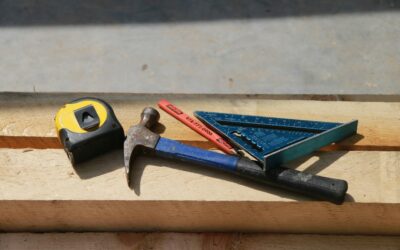
- Steel tape measure (25 foot)
- Notepad or phone to record each window
- Binoculars or a camera with zoom for upper windows, if you prefer to estimate before climbing
- A sturdy extension ladder, leveled and positioned for second-story windows
Steps
- Number each window on a simple sketch of the house front so measurements do not get mixed up.
- Measure the width across the window trim (or the opening if there is none). Record it to the nearest eighth of an inch.
- Measure the height from the top of the trim to the bottom, noting whether you are aligning to the bottom trim or the top of the sill.
- Check the space beside the window. You need at least the shutter width plus about an inch of flat siding on each side. Downspouts, light fixtures, hose bibs and corners can block placement.
- Repeat for every window. Similar-looking windows often differ in height between the first and second floor.
Measuring every window may reveal that a few need different sizes. That is normal. Matching the shutter to each window looks better than forcing one size across the front.
Ladder Safety for Second-Story Windows
Measuring and installing upper-floor shutters means working on a ladder, and falls from ladders are among the most common serious home injuries.
- Use an extension ladder rated for your weight plus tools, and extend it at least 3 feet above the point where you step off or work.
- Set the base out about 1 foot for every 4 feet of height, on firm, level ground. Use ladder levelers on slopes rather than stacking boards.
- Keep three points of contact and keep your belt buckle between the rails. Move the ladder rather than leaning out.
- Have a helper steady the base and hand up tools and shutters.
- Stay well clear of overhead power lines, and do not work in wind or on wet rungs.
- For windows on a third story, over a steep slope, or above a roof, hire a pro with scaffolding or staging.
Mounting Height, Spacing and Hardware
Shutters should sit right against the window trim, not several inches away. A gap of about a quarter inch to an inch from the trim edge reads as natural. Mount them so the tops line up with the top of the window and the bottoms line up with the sill or bottom trim.
For decorative installs, most vinyl shutters attach with plastic shutter fasteners or screws through the stiles into the wall. Before drilling into exterior walls, turn off the breaker for exterior lights and nearby outlets if wiring could run near the window, and scan the interior wall side with a stud finder to locate hidden wires. Use fasteners suited to your siding: masonry anchors for brick and stone, and screws long enough to reach sheathing for wood or fiber cement. Avoid crushing vinyl siding by leaving fasteners slightly loose so the siding can expand and contract.
Functional shutters use hinges and holdbacks (often called shutter dogs). They should be sized precisely so the pair closes over the window without overlapping too far or leaving a gap.
Common Sizing Mistakes
- Too narrow: The most frequent error. A 12 inch shutter beside a 48 inch window looks decorative in the worst way.
- Too short: Shutters that stop several inches above the sill draw the eye to the gap.
- Shutters on picture windows: If the pair could never cover the glass, skip them and use window boxes or trim instead.
- Mismatched heights: A first-floor window and the window above it may differ; size each separately.
- Wrong orientation: Louvers should point up when the shutter is open against the wall, as they would to shed rain if closed.
A Quick Sizing Example
Picture a two-story Colonial with six front windows. The first-floor windows measure 34 inches wide and 63 inches tall across the trim, and the second-floor windows measure 34 inches wide and 55 inches tall. Half of 34 is 17, so the closest stock width is 18 inches if the siding beside each window has room, or 15 inches if it does not. Heights follow each floor: 63 inch shutters on the ground floor and 55 inch shutters upstairs. Ordering one height for every window would leave the upstairs shutters hanging past the sill or the downstairs ones stopping short.
Now take a 60 inch wide double window on the same house. Half of 60 is 30, which no stock size covers. You could order custom 30 inch composite shutters, or treat the unit as a pair of windows and skip shutters on it entirely. Writing out each window this way, with the window width, half-width, nearest stock width and height, gives you a clean order list and makes it easy to compare exterior shutter sizes across styles before you buy.
Cost and When to Hire a Pro
Stock vinyl shutters are inexpensive and easy to install on a one-story house. Composite and wood shutters cost more but can be made to exact dimensions and painted any color. Professional installation often runs $50 to $150 per pair, depending on height and siding type.
Hire a professional for two-story or taller homes, brick or stone walls that need masonry drilling, functional hinged shutters that must close precisely, or when windows require custom sizes. A pro can also advise when a window is better left without shutters.
Frequently Asked Questions
How wide should exterior shutters be?
Each shutter should be about half the window width, so the pair could cover the window if closed. Round down to the nearest available size if needed.
Should shutters match the window height exactly?
Aim for within about an inch of the window height, measured from the top of the trim to the sill or bottom trim.
What are standard shutter widths?
Common stock widths include 12, 14.5, 15 and 18 inches, with heights offered in steps from about 35 to 80 inches.
Do decorative shutters need to follow sizing rules?
Yes. Even fixed shutters look best when sized as if they could close over the window.
Can I install upper-floor shutters myself?
Only if you are comfortable with extension ladder safety and have a helper. For tall homes or steep ground, hire a pro.