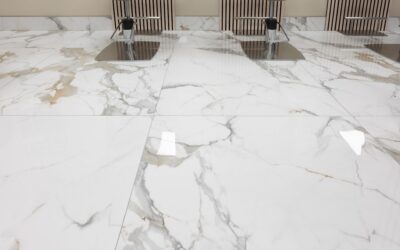
Extra large format porcelain tile has transformed what a tiled surface can look like, trading the familiar grid of small squares for expansive, near-seamless panels that read like solid stone. These oversized tiles and slabs, ranging from big 24×48 pieces up to enormous gauged panels several feet across, create the clean, uninterrupted look that defines contemporary high-end design. They deliver drama and easy maintenance in equal measure, but they also demand more from the installer and the subfloor than a standard tile. This guide covers the benefits, the honest challenges, the cost, and where these big formats genuinely pay off.
Part of our Tile & Grout guide — explore the full guide →
What Counts as Extra Large Format
The industry generally considers any tile with at least one side of 24 inches or more to be large format, and extra large format pushes well beyond that into panels of 48 inches, 60 inches, and larger. At the extreme end sit gauged porcelain panels measuring four by eight feet or more, thin sheets engineered to cover walls and floors with minimal joints. All of them share the porcelain body’s core strengths: extreme hardness, near-zero water absorption, and resistance to stains, scratches, and heat.
The defining appeal is the reduction in grout lines. A floor set with extra large format porcelain tile has a fraction of the joints of a conventional tile floor, which makes the surface look more like a continuous slab of stone and dramatically cuts the amount of grout you have to clean and maintain over the years.
The Benefits That Drive Demand
Homeowners and designers reach for these big formats for several concrete reasons:
- Fewer grout lines: a cleaner look and far less grout to scrub and reseal.
- Seamless, spacious feel: minimal joints trick the eye into reading a larger, more open room.
- Continuous patterns: book-matched marble and stone looks flow across panels for a true solid-stone illusion.
- Durability: porcelain resists water, stains, scratches, and heat for decades.
- Versatility: the same material works on floors, walls, showers, countertops, and fireplace surrounds.
In wet areas especially, the reduced grout is a real practical win. Grout is the part of any tiled surface that discolors and needs the most attention, so a shower or floor with few joints stays cleaner and looks luxurious for far longer.
The Real Installation Challenges
It is important to be honest that these are not casual DIY projects. The larger the tile, the flatter the substrate must be, because a big rigid panel cannot bend to follow a dip or high spot the way a small tile can. Installers must bring the subfloor within tight flatness tolerances, often using a self-leveling underlayment, before setting a single piece. Lippage, where the edge of one tile sits higher than its neighbor, is far more visible and problematic on large formats.
Handling the tiles also requires care and often specialized equipment. Big panels need suction-cup lifting frames and two or more installers working together to move and set them without cracking. Cutting demands proper large-format scoring rails and diamond tooling. For these reasons, hiring an installer experienced specifically with large and extra large format is strongly advised.
Where Big Formats Work Best
Extra large format porcelain shines in open, generous spaces where its seamless character can breathe. Large open-plan floors, expansive bathroom walls, walk-in showers, and dramatic feature walls all showcase the format beautifully. It also makes striking waterfall island countertops and fireplace surrounds where continuous veining wraps around edges.
The advantage shrinks in small, choppy rooms full of corners, niches, and fixtures, because you end up cutting the big pieces down and losing the seamless benefit while still paying for the demanding installation. So concentrate these tiles where the uninterrupted expanse matters most, and consider a standard format for tight utility spaces where durability, not drama, is the goal.
Cost and What to Budget
These are premium products with premium installation costs. Material typically runs $5 to $15 per square foot for large formats, climbing higher for extra large gauged panels and book-matched marble looks. Installation is the bigger variable because of the skill, labor, and equipment involved, often $12 to $25 per square foot or more, plus the cost of substrate leveling.
All in, an extra large format installation frequently lands in the $20 to $45 per square foot range. That makes it a considered investment best directed at the spaces where the payoff is greatest, such as a primary bath, an open living floor, or a statement wall. Always order about ten percent extra material from the same batch to cover cuts and any future repairs.
Preparing the Substrate the Right Way
If there is one factor that makes or breaks an extra large format installation, it is the flatness of the surface underneath. The industry standard for large format calls for a substrate flat to within about an eighth of an inch over ten feet, and even tighter for the biggest panels. A small tile can ride over a minor hump or dip because each piece only spans a few inches, but a rigid panel several feet across cannot flex to follow the floor, so any deviation shows up as lippage or, worse, as a stress crack down the line.
Achieving that flatness usually means more than eyeballing the floor. Installers check it with a long straightedge, then apply a self-leveling underlayment to fill low spots or grind down high ones over concrete. On wood subfloors, adequate stiffness matters too, since deflection under load can crack big tiles, so additional bracing or an uncoupling membrane is often added. This preparation is unglamorous and adds time and cost, but skipping or shortcutting it is the single most common cause of failed large-format jobs. When you budget for these tiles, budget for the substrate prep just as seriously as for the material itself.
Maintenance and Long-Term Value
Once installed, extra large format porcelain is wonderfully low-maintenance. The surface needs only regular sweeping and a damp mop with a neutral cleaner, and it never requires sealing. The handful of grout joints that remain are the sole maintenance point, and there are so few that keeping them clean is trivial compared with a conventional tile floor.
Because porcelain is so hard and non-porous, a well-installed floor or wall resists staining, fading, and wear for decades, and the seamless look does not date the way trendy patterns can. The single biggest factor in long-term success is the quality of the installation, so the investment you make in an experienced installer and proper substrate prep protects the far larger investment in the tile itself. Get that right, and extra large format porcelain tile delivers a sophisticated, durable surface that looks custom for a generation.
Prefer to explore on your own?
See how new flooring looks in your actual room in seconds — free, no signup.
Try the free Floor Studio →