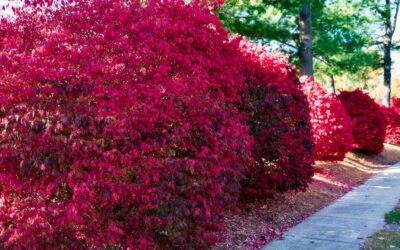
Most homeowners who plant a hedge for privacy want two things at once: a wall of green that blocks the neighbor’s view within a couple of seasons, and something prettier than a row of plain evergreens. The fastest growing flowering bush options, such as forsythia, rose of Sharon, lilac and the larger viburnums, can add 1 to 3 feet of height per year once their roots settle in, and they bloom while they do it. The catch is that nearly all of them drop their leaves in fall, so a flowering screen that looks solid in July can turn see-through in January.
The short answer is this: if you want the quickest summer screen, plant forsythia or rose of Sharon. If you want fragrance and a dense, long-lived hedge, choose lilac or arrowwood-type viburnum and accept a slightly slower start. If you need year-round coverage, mix flowering shrubs with a few evergreens in a staggered double row. We also walk through growth rates, bloom timing, spacing, planting steps and how to keep the screen thick for decades.
- Choosing the Fastest Growing Flowering Bush for Your Yard
- Bloom Seasons and the Winter Gap
- Mixed Hedge Layouts That Fill In Faster
- Spacing, Mature Size and Safe Placement
- How to Plant a Flowering Privacy Hedge
- Watering, Feeding and Pruning for Density
- Troubleshooting a Slow or Thin Screen
- Climate Suitability
- Cost Ranges and When to Hire a Pro
- Frequently Asked Questions
Before you shop, measure the space you actually have. A privacy shrub that matures 10 feet wide will not stay politely in a 4-foot strip along the driveway, and constant hard pruning cuts off the flowers you planted it for.
Choosing the Fastest Growing Flowering Bush for Your Yard
Growth speed depends on the plant, but also on sun, water and soil. A shrub rated at 2 feet per year in full sun and loamy soil may manage half that in clay with afternoon shade. Use these numbers as typical ranges for established plants in decent conditions, not promises.
Forsythia
Forsythia is often the quickest of the common flowering hedges, putting on 2 to 3 feet a year and reaching 8 to 10 feet tall and wide. Bright yellow blooms open in early spring before the leaves, which means the screen is thinnest exactly when it is most colorful. It tolerates a wide range of soils and is very forgiving of pruning mistakes. Plan on an informal, arching shape rather than a crisp wall.
Rose of Sharon
Rose of Sharon grows upright, about 1 to 2 feet per year, to 8 to 12 feet tall but only 4 to 6 feet wide. That narrow, vase-like habit makes it one of the better flowering bushes for privacy along a side yard. It blooms late, from midsummer into early fall, when many other shrubs have finished. It leafs out late in spring, so expect a bare look until May in many regions. Some varieties drop a lot of seed and pop up seedlings, so look for low-seed or sterile selections if you want less weeding.
Lilac
Common lilac grows roughly 1 to 2 feet a year to 8 to 15 feet tall, and it spreads slowly by suckers into a dense thicket. Lilac bushes for privacy are a classic choice in colder climates because they handle hard winters well and reward you with fragrant spring flowers. They need full sun and good air circulation to stay healthy and bloom heavily. Compact cultivars stay closer to 5 or 6 feet, which suits a low screen but not a tall one.
Viburnum
The larger viburnums, including arrowwood and similar types, typically add 1 to 2 feet a year and mature at 8 to 12 feet. They offer white spring flowers, berries that birds love and good fall color. Several kinds keep a dense, multi-stem form all the way to the ground, which is exactly what a screen needs. A few viburnums hold leaves well into winter in mild climates, giving you a bit more coverage than forsythia or lilac.
Other Quick Options
- Weigela: 1 to 2 feet per year, 5 to 8 feet tall, pink or red trumpet flowers in late spring with some rebloom.
- Mock orange: fast, 8 to 10 feet, fragrant white flowers in early summer.
- Ninebark: tough and quick, 5 to 10 feet, peeling bark and white flower clusters.
- Butterfly bush: very fast in warm regions, but it can spread aggressively in some states, so check local guidance before planting.
Bloom Seasons and the Winter Gap
Flowering shrubs for privacy come with one built-in trade-off: most are deciduous. From late fall through early spring you will see branches, not leaves. Dense, twiggy species like lilac and viburnum still break up sight lines in winter, maybe 40 to 60 percent coverage, while open, arching shrubs like forsythia let more through.
Ask yourself when you most need privacy. If the goal is screening a patio or pool you use from May to September, deciduous flowering bushes are a great fit. If you need to block a streetlight or a neighbor’s window year-round, you need some evergreen in the mix.
Staggering bloom times also keeps the hedge interesting. A simple sequence might be forsythia in early spring, lilac and viburnum in mid spring, weigela and mock orange in late spring, then rose of Sharon carrying color from July into September.
Mixed Hedge Layouts That Fill In Faster
A single straight row of one species is the most common design and often the least effective. A staggered double row fills in quicker, looks more natural and protects you if one plant dies.
- Back row: tall, upright shrubs such as rose of Sharon or a few evergreens, spaced at about two-thirds of their mature width.
- Front row: offset into the gaps of the back row with medium shrubs such as lilac, viburnum or weigela.
- Accent clusters: groups of three of the same plant read better than a random one-of-each mix.
- Row spacing: keep the two rows 3 to 5 feet apart so each shrub gets light and air.
For a mixed screen, figure on a planting bed 8 to 12 feet deep. That sounds like a lot, but it is the space these shrubs will occupy at maturity whether you plan for it or not.
Spacing, Mature Size and Safe Placement
Spacing is where most privacy hedges go wrong. Planting too close gives you a screen in two years and a crowded, diseased tangle in eight. As a rule, space shrubs at roughly half to two-thirds of their mature width for a hedge that touches at maturity. For forsythia at 8 to 10 feet wide, that means 4 to 6 feet apart. For rose of Sharon at 5 feet wide, 3 to 4 feet apart works.
Placement matters for your house and property, too:
- Foundations: keep the center of each shrub at least half its mature width from the house, and never less than 3 feet, so you can paint, inspect and keep moisture away from siding.
- Property lines: plant far enough inside your line that the mature spread stays on your side. Many towns and HOAs have rules on hedge height near streets and lot lines.
- Septic systems: keep shrubs off the drain field and away from the tank; aggressive roots can clog lines. Check with your local health department or septic pro for recommended clearances.
- Utilities: stay clear of overhead lines, transformer boxes and meters so crews have access.
- Call 811: always call 811 a few business days before you dig. Buried gas, electric and communication lines are often shallower than people expect.
- Sight lines: keep tall shrubs back from driveway ends and corners so you can see traffic when pulling out.
How to Plant a Flowering Privacy Hedge
Tools and Materials
- Spade and round-point shovel
- String line and stakes to mark rows
- Compost for amending heavy or sandy soil
- Shredded hardwood mulch
- Soaker hose or drip line
- Hand pruners, and later a cordless hedge trimmer for shaping
Steps
- Call 811 and mark utilities. Wait for the locate marks before digging anything.
- Lay out the rows. Run a string line, then mark each planting spot with a stake at your chosen spacing.
- Dig wide, not deep. Make each hole two to three times as wide as the root ball and only as deep as the ball, so the plant sits at the same level it grew in the pot.
- Loosen the roots. Tease apart circling roots on container plants. Cut through any that wrap tightly around the ball.
- Backfill with native soil. Mix in a modest amount of compost if your soil is poor, but avoid filling the hole with pure potting mix, which discourages roots from spreading.
- Water deeply. Soak each plant right after planting to settle the soil.
- Mulch 2 to 3 inches deep. Keep mulch a few inches away from the stems to prevent rot.
- Set up irrigation. A soaker hose along the row makes the first two summers much easier.
Plant in spring or early fall when temperatures are mild. Fall planting gives roots several cool months to establish before summer heat.
Watering, Feeding and Pruning for Density
Fast growth only happens when the plant is not stressed. During the first two years, give each shrub about an inch of water a week, more in hot, dry spells. Water deeply and less often rather than a light daily sprinkle. After establishment, most of these shrubs handle normal dry periods on their own.
Go easy on fertilizer. A light application of balanced slow-release fertilizer in spring is plenty. Heavy nitrogen pushes leafy growth at the expense of flowers.
Pruning timing is the single biggest factor in whether your hedge blooms. Spring bloomers like forsythia, lilac and most viburnums set next year’s buds in summer, so prune them right after they flower. Summer bloomers like rose of Sharon flower on new growth, so prune them in late winter. Each year, remove a few of the oldest stems at the base to keep the shrub producing young, leafy growth low down. Shape the hedge slightly wider at the bottom than the top so sunlight reaches the lower branches; a top-heavy hedge goes bare at the base.
When you trim, wear safety glasses and gloves. Use a stable stepladder on level ground for the top of a tall hedge, and never reach far out to the side from the ladder.
Troubleshooting a Slow or Thin Screen
- Little growth in year one: normal. The old saying “sleep, creep, leap” applies; roots establish first, then top growth speeds up in years two and three.
- Few or no flowers: usually pruning at the wrong time, too much shade or too much nitrogen.
- Bare lower branches: the hedge is shaded at the base or trimmed narrower at the bottom. Renew by cutting a third of the oldest stems to the ground.
- White powder on leaves: powdery mildew is common on lilac in humid weather. Improve air flow and avoid overhead watering; it is mostly cosmetic.
- Gaps from a dead plant: replace with a larger container plant, or let neighbors fill in if the gap is small.
Climate Suitability
Lilac and forsythia generally prefer areas with real winters and can struggle to bloom in hot, humid regions with mild winters. Rose of Sharon and weigela handle summer heat well across much of the country. Viburnums cover a wide range of climates depending on the type. Check the hardiness range on the plant tag and ask a local nursery or your county extension office which flowering shrubs perform reliably in your area.
Cost Ranges and When to Hire a Pro
Small 1-gallon shrubs often run around $10 to $25 each, 3-gallon plants roughly $25 to $60 and larger 5- to 7-gallon specimens $50 to $150 or more depending on species and region. A 50-foot single row might cost a couple hundred dollars in small plants, while a staggered double row with larger stock can run well over $1,000 before labor. Professional installation typically adds a significant amount for digging, amendments and mulch.
Hire a landscaper if you are planting a long run, working on a slope, dealing with heavy clay or rock, or planting near septic fields or utilities where placement needs care. A pro can also help you pick the fastest growing flowering bush that suits your soil and sun so you are not replacing failed plants in year two.
Frequently Asked Questions
What is the fastest growing flowering bush for privacy?
Forsythia is usually the quickest, adding 2 to 3 feet a year in good conditions. Rose of Sharon is close behind and has a narrower, more upright shape for tight spaces.
Will flowering bushes give privacy in winter?
Most lose their leaves, so winter coverage is partial. Dense shrubs like lilac and viburnum still block some views, and mixing in a few evergreens fills the gap.
How far apart should I plant privacy shrubs?
Space them at about half to two-thirds of their mature width. For most 8- to 10-foot-wide shrubs, that means 4 to 6 feet apart.
How long until a flowering hedge fills in?
Expect a solid summer screen in about 3 to 4 years from small plants, or sooner if you start with larger container shrubs and water consistently.
When should I prune a flowering privacy hedge?
Prune spring bloomers right after they flower and summer bloomers like rose of Sharon in late winter. Pruning at the wrong time removes next season’s flowers.