When a new neighbor’s second-story window looks straight into your backyard, “plant a tree and wait ten years” is not the answer you want. The good news is that the right fast growing shrubs can put up a living screen of dense greenery in just two to three growing seasons, often adding 2 to 3 feet of height per year. The catch is that fast growth is a double-edged sword — the same vigor that gives you quick privacy also means more pruning, and a few popular speed-demons are invasive or fragile. This guide covers the best performers for privacy and screening, how fast each one actually grows, and how to plant them so they fill in quickly without becoming a maintenance headache.
What “Fast Growing” Actually Means
In horticulture, a fast-growing shrub adds roughly 2 feet or more of height per year, versus about 1 foot for a medium grower and under a foot for a slow one. That growth rate is what lets a young plant become a functional privacy screen in a couple of seasons rather than a decade. But growth rate isn’t the only thing that matters for a screen — you also want density (so you can’t see through it), evergreen foliage (so it screens year-round), and a mature size that fits your space without constant cutting back.
The ideal privacy shrub combines quick growth with dense, evergreen foliage and a manageable mature height. Pure speed without density gives you a tall, see-through hedge; density without the right mature size means endless pruning. The picks below balance those factors.
Top Evergreen Shrubs for Year-Round Privacy
For a screen that works in winter as well as summer, evergreens are essential. These are the standouts:
- Green Giant Arborvitae: The gold standard for fast privacy. Grows 3 to 5 feet per year when young, matures at 40 to 60 feet tall and 12 to 20 feet wide, and forms a dense, deer-resistant wall. Hardy in USDA zones 5 to 8. Space 5 to 6 feet apart for a solid screen.
- Emerald Green Arborvitae: A narrower, tidier cousin growing about 1 to 2 feet per year to a mature 12 to 14 feet tall and just 3 to 4 feet wide. Ideal for tight spaces and smaller yards.
- Wax Myrtle: A fast, adaptable Southern favorite adding 3 to 5 feet a year, reaching 10 to 15 feet, tolerant of wet soil and salt. Great for zones 7 to 11.
- Cherry Laurel (Schip Laurel): Glossy evergreen growing about 2 feet per year to 10 to 18 feet, with fragrant spring flowers. Handles shade better than most.
- Leyland Cypress: Extremely fast at 3 to 4 feet per year, but prone to disease and root problems in crowded plantings — plant with caution and good spacing.
Fast Flowering and Deciduous Shrubs
If you want quick screening plus seasonal color, several deciduous shrubs grow fast and bloom generously, though they lose their leaves in winter:
- Forsythia: Explodes with yellow flowers in early spring and grows 2 to 4 feet per year to about 8 to 10 feet. Tough, adaptable, and cheap.
- Rose of Sharon (Hardy Hibiscus): Adds 1 to 2 feet a year, blooms mid to late summer, and reaches 8 to 12 feet. Handles heat and poor soil.
- Butterfly Bush: Grows 2 to 3 feet per year, blooms all summer, and draws pollinators — but choose sterile cultivars, as some types are invasive.
- Weigela: Fast, showy, and hummingbird-friendly, growing to 6 to 10 feet with pink or red blooms.
- Ninebark: Vigorous native with colorful foliage, growing 1 to 2 feet a year to about 5 to 8 feet.
A Warning on the Fastest Growers
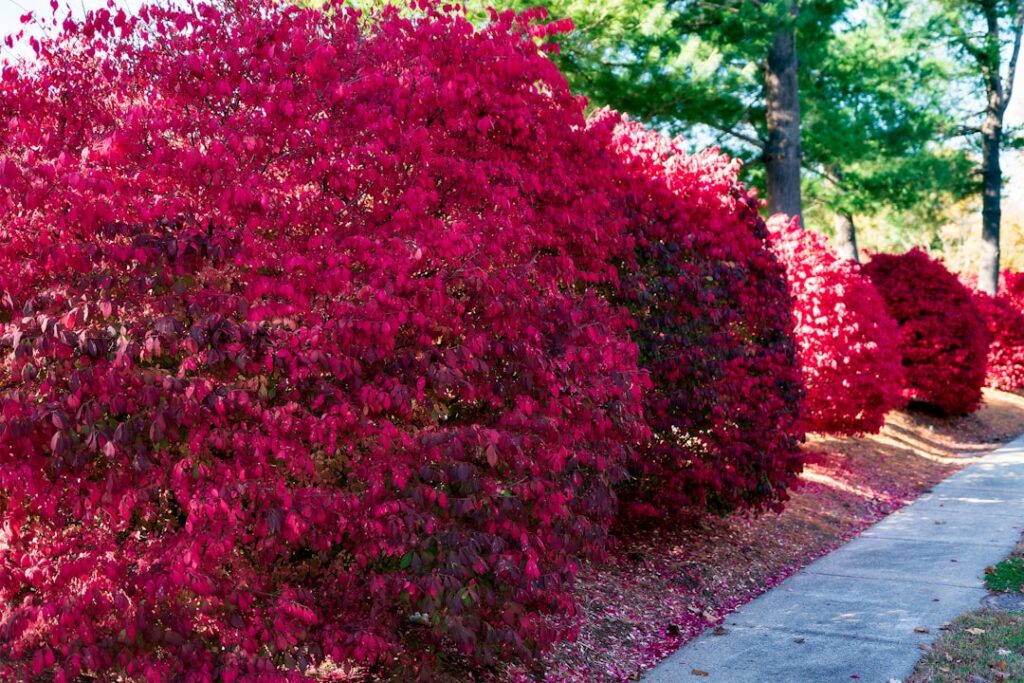
The temptation with a privacy problem is to grab the absolute fastest plant on the shelf, but several of those come with serious baggage. Leyland Cypress grows incredibly fast but is notoriously prone to bagworms, canker diseases, and root rot, and mature specimens often blow over or die out in patches, leaving gaps in your screen. Some fast bamboo species are wildly invasive and can take over a whole neighborhood; if you plant bamboo, use only clumping (not running) types and install a root barrier. Certain privets and burning bush are invasive in many US regions and are best avoided. Before planting anything for its speed, check whether it’s invasive in your state — a plant that grows 5 feet a year in your yard grows 5 feet a year in the wild too.
How to Plant for the Fastest Fill-In
Getting a screen to fill in quickly is as much about planting technique as plant choice. Follow these steps:
- Space correctly: Plant at the spacing recommended for a hedge, usually closer than the plant’s mature width — for Green Giants, about 5 to 6 feet apart. Too far and it takes years to close the gaps; too close and they compete and thin out.
- Prep the soil: Dig holes twice as wide as the root ball, loosen the surrounding soil, and amend heavy clay or poor soil with compost so young roots spread fast.
- Plant at the right depth: Set the top of the root ball level with or slightly above the surrounding grade. Planting too deep stalls growth.
- Water deeply and consistently: Fast growth demands steady moisture the first two years. Deep weekly watering beats frequent shallow sprinkling. Mulch 2 to 3 inches deep to hold moisture.
- Fertilize in spring: A balanced slow-release fertilizer in early spring fuels the vigorous growth these shrubs are capable of.
Keeping Fast Shrubs in Bounds
Vigorous growth means these plants will outgrow their space if you let them, so a pruning plan is part of the deal. Most fast-growing evergreens take well to shearing once or twice a year to keep them dense and at your target height — sheared regularly, they thicken up and screen better. Prune flowering shrubs at the right time: spring bloomers like forsythia flower on old wood, so prune them right after they bloom, while summer bloomers like Rose of Sharon and butterfly bush flower on new growth and can be cut back in late winter. Don’t let a fast grower get away from you; a Green Giant left unpruned hits 50 feet, and topping an overgrown hedge later looks far worse than shaping it annually from the start.
Matching Shrubs to Your Situation
Choose based on your specific need. For a tall, solid, year-round privacy wall, Green Giant Arborvitae is hard to beat. For a narrow side yard, Emerald Green Arborvitae fits without crowding. For a wet or coastal spot, wax myrtle thrives where others sulk. For screening plus color, mix in Rose of Sharon or weigela. And always match the plant to your USDA hardiness zone and light conditions — even the fastest shrub crawls or dies if it’s in the wrong climate or too much shade. Plant the right species, space and water it well, and you can trade a bare property line for a lush green screen in two or three seasons.
Frequently Asked Questions
What is the fastest growing shrub for privacy? Green Giant Arborvitae is the top choice for most yards, growing 3 to 5 feet per year into a dense evergreen wall. Leyland Cypress grows even faster but is disease-prone, so Green Giant is the more reliable long-term pick.
How fast can you get a privacy hedge? With fast-growing evergreens planted at proper hedge spacing and watered well, you can have a functional screen in two to three growing seasons. Starting with larger nursery plants shortens the wait further.
How far apart should I plant privacy shrubs? Plant closer than the mature width to form a solid screen — about 5 to 6 feet apart for Green Giant Arborvitae, or 2 to 3 feet for narrow Emerald Greens. Follow the specific hedge spacing for your chosen species.
Are fast growing shrubs high maintenance? They require more pruning than slow growers to stay dense and in bounds, usually shearing once or twice a year. They also need consistent water and spring fertilizing for the first two years to fuel their rapid growth.