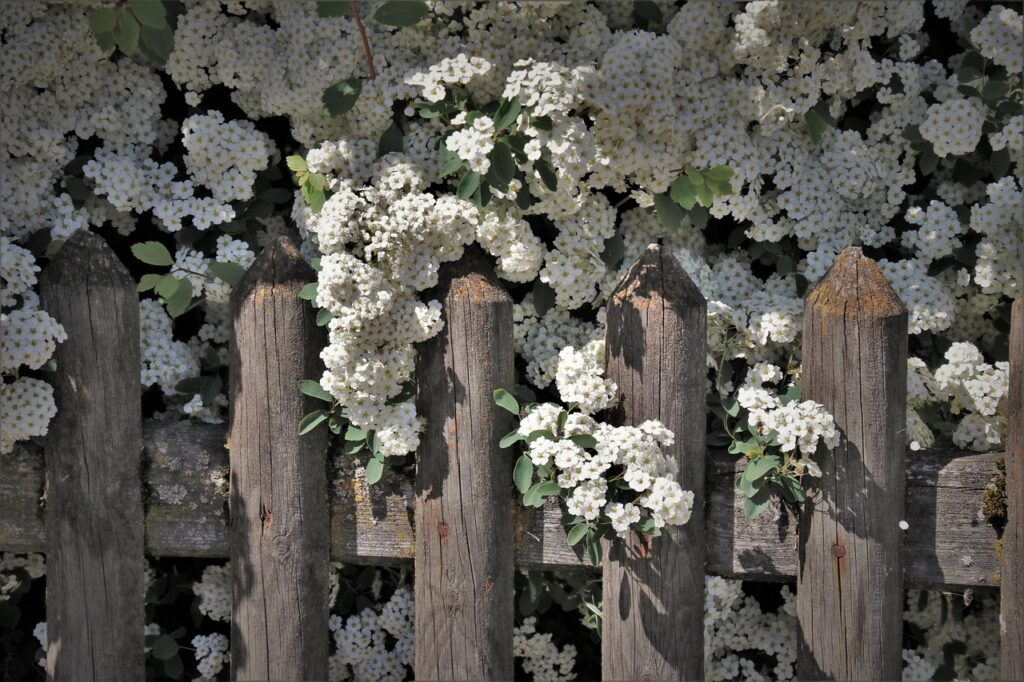
A wooden privacy fence shields your yard for 15 to 25 years before weather wins. A row of living shrubs, properly chosen and properly spaced, keeps growing for 50 to 100 years and gets denser every season. The best shrubs for privacy fence applications are evergreen, fast-growing but not invasive, and tolerant of the soil and climate where you live. Picking the wrong species creates either a maintenance nightmare or a 6-foot gap in your screening five years from now, so the matchup between site conditions and plant biology matters more than catalog photos suggest.
Part of our Decks & Outdoor guide — explore the full guide →
- What to Look for in a Privacy Shrub
- Best Overall: Green Giant Arborvitae
- Best for Tight Spaces: Sky Pencil Holly
- Best for the South: Wax Myrtle
- Best for Formal Lines: American Holly
- Best Fast Grower: Leyland Cypress
- Best for Cold Climates: Eastern Red Cedar
- Best Native Mix: Inkberry Holly and Bayberry
- Spacing, Planting, and First Year Care
What to Look for in a Privacy Shrub
A useful privacy shrub combines four traits. It needs to be evergreen or semi-evergreen, so it holds leaves in winter when you actually want to see less of your neighbors. It needs to grow tall enough to screen at the height you care about, usually 6 to 12 feet for most residential applications. It needs a growth rate fast enough to give results within 3 to 5 years but not so fast it overwhelms the space. And it should be hardy in your USDA zone with minimal special care.
Mature width matters as much as height. A shrub with 6-foot mature spread cannot live closer than 3 feet on center to its neighbor without permanently crowding. Read tags carefully.
Best Overall: Green Giant Arborvitae
Thuja standishii x plicata Green Giant is the most planted privacy shrub in the eastern and central US for good reason. It grows 3 to 5 feet per year once established, reaches 30 to 50 feet tall and 12 to 20 feet wide, holds dense foliage from the ground up, and tolerates USDA zones 5 to 8. Deer browse it less than other arborvitae varieties.
Plant in full sun for densest growth. Space 5 to 8 feet on center for a continuous wall, or 10 to 12 feet for a more individual look. A 4 to 5 foot tall starter from Lowe’s or Home Depot runs $30 to $80. Bare root liners from mail-order suppliers like Bower and Branch or Nature Hills run $15 to $25 each for smaller specimens that establish quickly.
Best for Tight Spaces: Sky Pencil Holly
Ilex crenata Sky Pencil grows to 10 feet tall but stays under 2 feet wide, making it ideal for narrow side yards or property lines where you cannot dedicate 6 to 8 feet of horizontal space. The dark green foliage is evergreen, the form is naturally columnar, and the plant rarely needs pruning to maintain shape.
Growth rate is moderate at 6 to 12 inches per year. Hardy in zones 6 to 8. Space 2 to 3 feet on center for solid screening. Sky Pencil tolerates partial shade better than most evergreens. Available widely at $40 to $90 for 3 to 4 foot specimens.
Best for the South: Wax Myrtle
Myrica cerifera is the southern privacy hedge default. It thrives from zones 7 to 11, tolerates wet feet, salt spray, and sandy soils, and grows 1 to 2 feet per year to a mature size of 15 to 20 feet. The aromatic gray-green foliage stays year-round in most of its range, and the small berries feed birds.
Wax myrtle is native to the southeastern US, which makes it environmentally appropriate for that region and resistant to local pests. Space 4 to 6 feet on center. Specimens run $25 to $60 at southern nurseries.
Best for Formal Lines: American Holly
Ilex opaca, the native American holly, creates a classic, dignified privacy screen with deep green foliage and red winter berries. Slow but steady at 1 foot per year, it reaches 15 to 30 feet at maturity. Hardy in zones 5 to 9. The thorny leaves discourage deer browsing and small animal incursion.
Plant in full sun for berry production. You need at least one male plant for every 4 to 6 female plants to ensure pollination and fruit set. The Stewart’s Silver and Jersey Princess cultivars are widely available. Specimens run $50 to $150 for 4 to 6 foot starters.
Best Fast Grower: Leyland Cypress
Cupressocyparis leylandii grows up to 4 feet per year in good conditions and reaches 60 to 70 feet at maturity, with a 15 to 20 foot mature spread. It is the workhorse of large-acreage screening from Virginia through northern Florida.
The catch is that Leyland cypress is susceptible to Seiridium canker and bagworm, both of which can kill rows of plants in a single season once established. Modern recommendations favor Green Giant arborvitae or Eastern red cedar for new plantings, with Leylands used where the buyer accepts the disease risk. Specimens are inexpensive at $20 to $50 for 4 foot starters, and they fill in fast.
Best for Cold Climates: Eastern Red Cedar
Juniperus virginiana handles USDA zones 2 to 9, the widest range of any privacy evergreen on this list. Mature plants reach 30 to 40 feet tall with 8 to 20 foot spread. Growth rate is moderate at 1 to 2 feet per year. The dense, dark green foliage and tolerance of drought, poor soil, and cold make this the right choice for the northern Plains and Mountain West.
Avoid planting near apple or hawthorn trees since Eastern red cedar hosts cedar-apple rust. Otherwise, this plant has few weaknesses. Native and inexpensive. Specimens run $20 to $60.
Best Native Mix: Inkberry Holly and Bayberry
For homeowners prioritizing native ecology, Ilex glabra (inkberry holly) and Morella pensylvanica (northern bayberry) make excellent mid-height screens at 6 to 10 feet tall. Both support local pollinators and birds. Hardy from zones 4 to 9 depending on cultivar.
Inkberry stays evergreen in zones 6 and warmer, semi-evergreen in colder zones. Bayberry is deciduous to semi-evergreen depending on climate. Mix them for visual variety and ecological diversity. Combined plantings give roughly the same screening as a monoculture row while supporting more bird species.
Spacing, Planting, and First Year Care
Plant in early spring or early fall for best establishment. Dig holes 2 to 3 times wider than the root ball but only as deep as the root ball is tall. Backfill with native soil mixed with 25 percent compost. Water deeply once a week for the first year, providing 1 to 2 inches of water per session depending on rainfall.
Mulch with 2 to 3 inches of shredded hardwood or pine bark, keeping mulch 2 inches off the trunks. Avoid the volcano mulch error that rots trunks. A drip irrigation line on a timer runs $150 to $400 for a 100-foot hedge run and reduces water bills while ensuring consistent establishment. Expect to wait 3 to 7 years for a full privacy screen depending on starting size and species choice. The investment in young plants now pays dividends decades into the future without the cycle of replacement that wooden fences eventually demand.