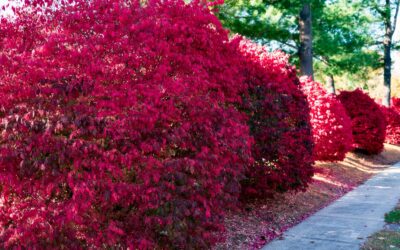
Most homeowners plant a privacy hedge, watch it grow for one summer, and then wake up in February to find the bottom four feet stripped bare. The right fast growing deer resistant shrubs solve both problems at once: they fill a gap quickly, and they taste bad enough, or feel prickly enough, that deer usually move on to something else. The word “usually” matters, though. No plant is deer proof, and a hungry herd in a hard winter will sample almost anything.
The best screening choices combine three traits: steady vertical growth of 1 to 3 feet per year, dense evergreen foliage that blocks views in every season, and aromatic, waxy, needled or spiny leaves that deer tend to avoid. Picking from that overlap, then spacing and protecting the plants correctly for the first two or three years, gives you a screen that actually survives long enough to do its job.
- Choosing Fast Growing Deer Resistant Shrubs That Actually Hold Up
- Top Picks Ranked by Growth Rate
- Why Arborvitae Gets Browsed
- Spacing, Mature Size and Layout
- Planting Steps for a Strong Start
- Protecting Young Plantings
- Troubleshooting Common Problems
- Cost Ranges
- When to Call a Pro
- Frequently Asked Questions
Our ranking focuses on plants that grow fast, stay dense, and show up repeatedly on “rarely damaged” or “seldom severely damaged” lists from university extension services. Treat every rating as a probability, not a promise, and plan for some protection while the plants are young.
Choosing Fast Growing Deer Resistant Shrubs That Actually Hold Up
Deer resistance is relative. Browsing pressure depends on local herd size, snow cover, what else is available nearby, and even the individual animals. A shrub that goes untouched in a suburb with plenty of lawns and gardens might get chewed hard on a rural lot bordering woods. Extension services rank plants on a scale from rarely damaged to frequently damaged, and it pays to read those lists with your own conditions in mind.
Look for these characteristics when narrowing the field:
- Strong scent or resin: junipers, cypress relatives, and many herbs and aromatic shrubs are less appealing to deer.
- Tough or spiny leaves: hollies with spined margins and needled conifers are harder to eat.
- Evergreen density: a screen only works year round if the foliage stays on, so deciduous shrubs work best as a mixed layer, not the whole hedge.
- Growth rate matched to your patience: 2 to 3 feet per year fills a gap in about three to five seasons, while 1 foot per year can take a decade.
- Mature size that fits: a plant that reaches 30 feet wide will eventually swallow a narrow side yard.
Top Picks Ranked by Growth Rate
Growth figures are typical for healthy plants in decent soil with regular water during establishment. Expect slower growth in poor soil, heavy shade, or drought.
| Plant | Typical Growth Per Year | Mature Width | Deer Resistance |
|---|---|---|---|
| Leyland cypress | 2 to 3 ft | 15 to 25 ft | Moderate to good |
| Wax myrtle (southern bayberry) | 2 to 4 ft in warm climates | 10 to 20 ft | Good |
| Norway spruce | 2 to 3 ft once established | 20 to 30 ft | Good |
| Eastern red cedar | 1 to 2 ft | 8 to 20 ft | Good |
| Upright juniper forms | 1 to 2 ft | 3 to 8 ft | Good |
| Inkberry holly | About 1 ft | 5 to 8 ft | Good |
| Common lilac and forsythia (deciduous) | 1 to 2 ft | 6 to 12 ft | Moderate to good |
Leyland Cypress
Few evergreens grow faster. Leyland cypress forms a soft, feathery wall and is often listed as only occasionally browsed. It prefers moderate climates and well drained soil, and it struggles with long droughts and some fungal diseases in hot, humid regions. Plant it where it has room, because a mature specimen gets far wider than most people expect.
Wax Myrtle
In the warm, humid South and along the coast, wax myrtle is a workhorse. The aromatic leaves deter most browsing, it tolerates wet or sandy soil, and it can put on several feet per year. It gets leggy without occasional pruning and can suffer in hard freezes, so it is a poor fit for cold northern areas.
Norway Spruce
For colder climates, Norway spruce is one of the fastest conifers available. The stiff, sharp needles discourage deer, and the dense branching makes a strong windbreak as well as a visual screen. It needs space: plan on a mature spread of 20 feet or more.
Eastern Red Cedar and Upright Junipers
These tough, resinous plants handle heat, cold, wind and poor soil across much of the country. Narrow upright juniper forms suit tight spaces near driveways and property lines. Growth is moderate rather than explosive, but browsing damage is uncommon.
Inkberry Holly
Inkberry is a shrub-sized evergreen holly that stays in the 5 to 8 foot range, making it a good lower layer in front of taller conifers. It handles damp soil and partial shade better than many screening plants.
Why Arborvitae Gets Browsed
Arborvitae is the most common privacy hedge in many neighborhoods, which is exactly why so many people are disappointed. Deer love the soft, flat sprays of foliage, especially in late winter when other food is scarce. A row of arborvitae near a wooded edge often ends up with a bare “browse line” about 4 to 6 feet off the ground, where deer can reach while standing.
Some faster arborvitae selections are browsed less heavily than the common eastern type, but they are still frequently damaged where pressure is high. If you love the look, plan on netting, fencing or repellent every winter, or mix it with less palatable plants so the screen does not depend on one species.
Spacing, Mature Size and Layout
Crowding a hedge to get instant privacy usually backfires. Tightly packed plants compete for water and light, the inner branches die back, and disease spreads faster. Use the mature width to set spacing:
- Single row, formal hedge: space plants about half their mature width apart. A shrub that reaches 10 feet wide goes in roughly 5 feet on center.
- Staggered double row: offset two rows in a zigzag, which fills in faster and looks more natural.
- Mixed screen: combine a tall conifer in back, a mid-height evergreen shrub in front, and a few deciduous flowering shrubs for seasonal color. Mixing species also protects you from losing the whole screen to a single pest or disease.
Keep large conifers at least half their mature width from fences, sidewalks, and the house, and well away from overhead power lines. Check property lines and any homeowners association rules before you plant along a boundary.
Planting Steps for a Strong Start
Gather a shovel, a garden hose, mulch, stakes and twine for marking, and protection materials such as deer netting or stakes and wire mesh.
- Call 811 before digging. The free service marks buried utility lines, and a privacy row along a property line often crosses gas, electric or cable routes.
- Mark the row. Run a string line and flag each planting spot using your chosen spacing.
- Dig wide, not deep. Make each hole two to three times as wide as the root ball and no deeper, so the top of the root flare sits at or slightly above grade.
- Loosen circling roots. Tease apart roots on container plants so they grow outward.
- Backfill with native soil. Heavy amendment in the hole can keep roots from spreading into the surrounding ground.
- Water deeply and mulch. Apply 2 to 3 inches of mulch in a wide ring, kept a few inches away from the trunk.
- Protect immediately. Young, freshly fertilized plants are the most tempting to deer, so install protection the same day.
Protecting Young Plantings
Even good choices get sampled in their first few years, when the growth is tender and the plants are short enough to reach easily. A few layered tactics help:
- Deer netting: lightweight polypropylene netting draped over shrubs or stretched on stakes is cheap, nearly invisible from a distance, and easy to remove in spring.
- Individual cages: wire mesh cylinders around each plant stop browsing and protect trunks from bucks rubbing antlers in fall.
- Repellents: scent and taste repellents work best when rotated and reapplied after heavy rain and new growth. Follow the label for application rates.
- Perimeter fencing: where pressure is severe, a fence around 8 feet tall is the only reliable long-term barrier.
Troubleshooting Common Problems
Bottom branches bare: that is a browse line. Add netting or cages each winter, and plant a lower layer of less palatable shrubs in front.
Browning inside the hedge: often normal seasonal needle drop, but widespread browning can point to drought stress, poor drainage or crowding. Check soil moisture a few inches down before adding water.
Slow growth: compacted soil, too much shade, and lawn competition all slow establishment. Keep a mulched strip free of grass along the row.
Torn bark in autumn: antler rubbing. Wrap or cage trunks of young conifers before the fall rut.
Cost Ranges
Prices vary by region and plant size. As a general guide, small 1 to 3 gallon shrubs often run about $15 to $50 each, while larger 5 to 7 foot balled conifers can run $75 to $250 or more. Professional installation of a privacy row commonly adds a significant amount per plant, depending on access, soil and size. Netting for a typical residential row is inexpensive, while a tall perimeter deer fence is a much larger investment. Buying smaller plants and protecting them well is often the most cost-effective path, since young shrubs establish faster than big transplants.
When to Call a Pro
Hire a landscape professional or certified arborist for long screens with large balled trees, slopes, wet sites with drainage problems, or plantings near utility lines. Tall perimeter deer fencing also often needs permits or homeowners association approval. A local extension office can tell you which fast growing deer resistant shrubs perform best in your soil and climate, which is worth a phone call before buying an entire hedge.
Frequently Asked Questions
Are any shrubs completely deer proof?
No. Deer resistance is relative, and hungry deer will eat almost any plant during a harsh winter or when herds are large. Choose plants rated as rarely damaged and plan on protection while they are young.
What is the fastest growing deer resistant privacy tree?
Leyland cypress and Norway spruce are among the fastest, often adding 2 to 3 feet per year once established. Wax myrtle can grow even faster in warm, humid regions.
Why do deer eat my arborvitae but leave other evergreens alone?
The soft, flat foliage of common arborvitae is highly palatable, especially in late winter. Prickly, resinous or aromatic plants such as spruce, juniper and holly are less appealing.
How far apart should I plant privacy shrubs?
A good rule is about half the mature width apart for a single row. Staggered double rows fill in faster and look more natural.
How long should I protect new plantings from deer?
Plan on two to three winters of netting, cages or repellents. Once plants grow taller than deer can comfortably reach and develop tougher growth, damage usually drops.