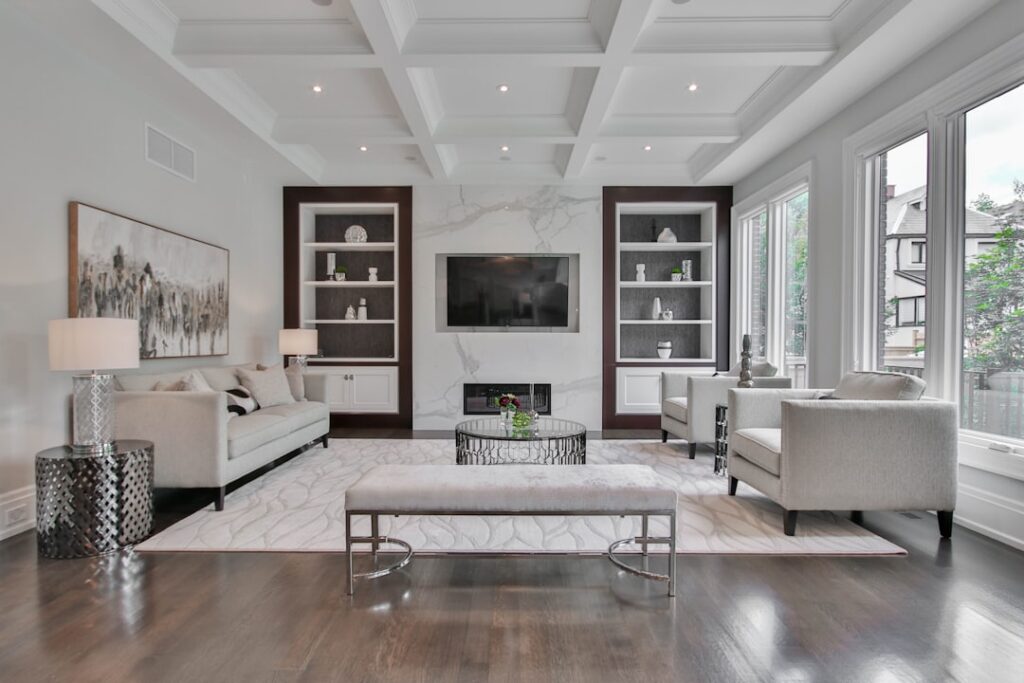
The mantel is the shelf everyone sees the moment they walk in, which is why great fireplace mantel decor ideas can lift an entire living room without a single power tool. The trick is not buying more stuff. The best fireplace mantel decor ideas come from a few reliable design principles, layering, balance, and scale, applied to pieces you likely already own, then refreshed with the seasons.
Below is how a stylist approaches a mantel, including the measurements that keep it from looking cluttered and the seasonal swaps that keep it feeling current.
Start With a Focal Anchor
Every well-styled mantel has one dominant piece that grounds the arrangement. This is usually a large mirror, a framed piece of art, or an oversized clock leaned or hung above center. Scale it generously: the anchor should span roughly two-thirds to three-quarters of the mantel width and sit tall enough to fill the vertical space between the shelf and the ceiling without crowding it.
A mirror is the most forgiving choice because it bounces light and visually enlarges the room. Lean it rather than hanging it for a relaxed, layered look, and let smaller objects overlap its bottom edge so nothing feels like it is floating in isolation. Once the anchor is set, everything else plays a supporting role.
Use the Rule of Thirds and Varied Heights
Divide the mantel into thirds in your mind and build small groupings within them rather than spreading objects evenly like soldiers. Odd numbers read as more natural, so group items in threes and fives. Within each cluster, vary the height: a tall candlestick or stem of greenery, a medium object like a small vase or stack of books, and a low element such as a bowl or a squat candle.
This staircase of heights creates a visual triangle that the eye travels comfortably. A common mistake is lining up three objects of identical height, which looks flat and static. Pull a couple of pieces slightly forward and push others back so the arrangement has depth as well as height.
Scale the objects to the mantel, not just to each other. A narrow, delicate mantel over a small firebox wants slimmer, lighter pieces, while a wide, chunky mantel on a floor-to-ceiling stone surround can carry big, bold objects that would overwhelm a smaller shelf. When in doubt, go with fewer, larger items rather than many small ones, because a handful of well-chosen pieces reads as confident and curated, while a crowd of tiny trinkets looks busy no matter how carefully you place them. Editing is as much a part of styling as arranging.
Layer for Depth
Depth is what separates a magazine mantel from a bare shelf. Layer front to back: lean the large art or mirror against the wall, set framed photos or a smaller print in front of it, then place shorter decorative objects at the very front of the shelf. Overlapping edges makes the whole display feel curated rather than lined up.
Texture adds another layer. Mix materials so nothing feels one-note: a smooth ceramic vase next to a woven basket, aged brass beside natural wood, glossy glass against matte stone. A trailing plant like pothos or a few stems of eucalyptus softens hard rectangular frames and brings life to the arrangement.
A stack of books is the workhorse of mantel styling, and most people underuse it. Lay two or three hardcovers flat to create a small pedestal that lifts a candle or a small sculpture to exactly the height you need, filling an awkward gap between a tall anchor and a low object. Turn a book spine-in for a quiet, monochrome look, or leave spines out for a pop of color. Books also add that horizontal, grounded weight that keeps a cluster from looking like a row of thin verticals.
Balance Symmetry and Asymmetry
You have two proven layouts to choose from. Symmetrical styling mirrors the same elements on each side of a central anchor, a matched pair of candlesticks or vases flanking a clock, which reads as formal, calm, and traditional. Asymmetrical styling clusters a taller group on one side and balances it with a lower, wider grouping on the other, which feels relaxed and modern.
Neither is wrong. Formal rooms and traditional architecture suit symmetry; casual and contemporary spaces come alive with asymmetry. The key with an asymmetrical mantel is visual weight: a tall thin object on the left can be balanced by a wider, heavier cluster on the right so the shelf does not feel like it is tipping.
Seasonal Swaps That Keep It Fresh
The smartest approach is a neutral base you refresh a few times a year rather than a full redecoration each season. Keep the anchor mirror, a pair of candle holders, and a stack of books in place, then swap in seasonal accents:
- Spring: Fresh tulips or branches, pastel ceramics, lighter linen textures.
- Summer: Coastal touches, clear glass, trailing greenery, driftwood or coral tones.
- Fall: Dried grasses, amber glass, small pumpkins or gourds, warm brass.
- Winter and holidays: Evergreen garland, brass or matte-black candlesticks, a simple garland draped and left to trail a foot or so past each end.
A draped garland is the classic holiday move. Secure it with removable adhesive hooks under the shelf lip, let it swag gently in the center, and add a few clustered candles or a pair of small trees at the ends. Stick to two or three colors so the display reads intentional rather than chaotic.
Candles deserve their own mention because they do so much work on a mantel. Vary the height with a cluster of pillar candles in graduated sizes, or line up matching taper candlesticks for a symmetrical, formal look. Group an odd number, three or five, at slightly different heights and pull them a little forward of the anchor so the flame line sits in front of the art. Over a working firebox, battery-operated LED candles give the same warm glow without the fire risk of real flames near decor, and they let you keep a fuller, more relaxed arrangement close to the mantel edge.
Color is the thread that ties the whole mantel together. Pull one or two accent colors from the room, a throw pillow, a rug, a piece of art on an adjacent wall, and repeat them in your mantel accessories so the fireplace feels connected to the space rather than decorated in isolation. Keeping the palette tight, a neutral base plus one or two accents, is what makes a mantel look styled by a designer instead of piled with favorite objects.
Get the Proportions Right
Proportion is where most home mantels go wrong. A few working numbers help:
- Anchor art or mirror: about 60 to 75 percent of mantel width.
- Tallest object cluster: roughly one-half to two-thirds the height of the anchor.
- Leave breathing room: keep the outer 4 to 6 inches of each end lighter so the arrangement does not run off the edges.
- Overlap objects by an inch or two so groupings connect visually.
If your mantel sits above a lit firebox, keep flammable items like dried stems and fresh garland well back from the opening and away from heat, and never drape anything that could sag toward the firebox. Battery-operated candles are a safer choice for a mantel over a working fireplace.
Common Mantel Mistakes to Avoid
A handful of missteps flatten an otherwise good mantel. Steer clear of these:
- Everything the same height: Creates a flat, lifeless line. Vary the vertical.
- Too many small objects: A crowd of tiny trinkets looks like clutter. Edit down to a few well-chosen pieces.
- Perfect spacing: Evenly spaced items feel like a retail shelf. Cluster instead.
- Ignoring the wall above: A bare wall over a low mantel looks unfinished. Fill it with a generous anchor.
- No negative space: Let some shelf show. Empty space is part of the composition.
Pulling It All Together
Style your mantel in a repeatable order: set the oversized anchor first, build two or three varied-height clusters using odd numbers, layer front to back for depth, and mix textures and a touch of greenery to keep it warm. Decide whether the room wants calm symmetry or relaxed asymmetry, respect the proportions, and leave a little breathing room. Then keep a neutral base and rotate small seasonal accents so the display feels current all year. With those fundamentals, a mantel becomes the polished centerpiece the room deserves, no renovation required.