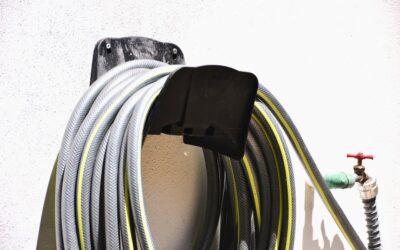
If you’ve ever wrestled a stiff, kinked OEM pressure washer hose across a driveway in 30-degree weather, the appeal of the Flexzilla pressure washer hose is obvious the first time you uncoil one. It stays limp and lays flat when the factory hose has gone board-stiff, and it springs back instead of taking a permanent kink. I’ve run these on both electric and gas machines for a few seasons. Here’s the real spec breakdown, the fitting gotchas, and where it beats — and doesn’t beat — a stock hose.
The Core Specs
Flexzilla builds these from a hybrid polymer instead of the usual PVC or rubber. The construction is what you’re paying for.
- Inner diameter: 1/4″ — the standard for residential and light-commercial washers up to roughly 3,600 PSI.
- Max working pressure: Listed around 3,100 PSI on the common models, with burst ratings well above that. Some heavier variants are rated to about 3,600 PSI.
- Lengths: 25 ft and 50 ft are the popular sizes. The 50-footer is the one most people actually want for reaching a full driveway or a two-story wall.
- Fittings: Brass ends, typically female M22 (14mm or 15mm) on one end and a fitting that mates to your gun and pump.
- Temperature: Rated for cold-weather use down to about 0°F without turning stiff — the headline feature.
Why the Hybrid Polymer Matters
Stiffness is the number one complaint with stock hoses, and it gets worse as they age and as temperatures drop. Flexzilla’s hybrid polymer jacket stays supple in the cold, so it doesn’t fight you or drag the machine over when you walk around a corner. It’s also kink-resistant — not kink-proof, but when it does bend hard, it recovers instead of holding a crimp that chokes flow. It won’t scuff your paint or leave the black rubber marks a cheap hose drags across concrete. For anyone washing in fall and winter, this is the whole selling point.
M22 vs. 3/8″ Fittings — Read This Before You Buy
The most common return I see is a fitment mismatch, so get this right. Most consumer gas and electric washers use M22 connections, but there are two M22 sizes and they are not interchangeable without care.
- M22-14mm: Common on many gas units (Simpson, some Ryobi/Generac). Smaller internal spud.
- M22-15mm: Common on electric machines and some others. Larger internal spud.
- 3/8″ quick-connect: Found on higher-end and commercial rigs. If your machine has these, you’ll want the QC version or M22-to-3/8″ adapters.
Check what threads your pump outlet and gun inlet actually use before ordering. If they don’t match the hose, brass M22-to-M22 and M22-to-3/8″ quick-connect adapters run $8–$15 and solve almost every mismatch. Confirm your machine’s PSI is within the hose’s rating too — don’t put a 3,100 PSI hose on a 4,000 PSI commercial unit.
How to Connect It
Swapping a hose takes about two minutes. Do it right and it won’t weep at the threads.
- Kill the machine and squeeze the trigger to bleed off any residual pressure in the old hose.
- Unthread the old hose from the pump outlet and from the gun/wand inlet.
- Check the small rubber O-rings inside each M22 fitting. A missing or nicked O-ring is the number one cause of leaks — replace it if it looks flat.
- Thread the Flexzilla’s female M22 onto the pump outlet by hand, then snug with a wrench a quarter turn past hand-tight. Don’t gorilla it; the O-ring does the sealing, not brute torque.
- Connect the other end to the gun. On quick-connect versions, pull the collar back, seat the plug, and release.
- Run the machine and check both ends for weeping before you start working.
Choosing the Right Length
Length is a real decision, not just a preference, because every foot of 1/4″ hose costs you a little pressure to friction. A 25-footer keeps you close to the machine and loses almost nothing; it’s ideal for washing a car or a small patio where you don’t mind moving the unit. The 50-foot version is what most homeowners actually reach for — it covers a two-car driveway and the side of a house without dragging the machine through your work area. Going beyond 50 feet, or daisy-chaining two hoses, adds noticeable pressure drop and drag, so if you routinely need more reach, step up the machine’s PSI to compensate rather than just adding hose.
One practical note: coil the 50-footer in wide loops, not tight ones, when you store it. Even a flexible hybrid hose takes a set if you cinch it into a tight bundle and hang it on a small hook all winter. A hose reel or a wide wall bracket keeps it laying flat for years.
Care That Keeps It Flexible
Hybrid polymer holds up well, but a few habits extend its life. Relieve pressure with the trigger before you disconnect, so you’re not fighting a pressurized fitting. Keep the brass ends off gritty concrete when you connect and disconnect — dirt in the threads chews the O-rings. After winter jobs, drain the hose and store it indoors if you can; leaving standing water in any hose invites a freeze crack at the fittings. And don’t drag the hose around sharp steel deck edges or over rebar stakes on a job site; the jacket is tough but not armored, and abrasion is the one thing that actually kills these hoses early.
Pros and Cons vs. the OEM Hose
No hose is perfect. Here’s the honest ledger after a couple seasons of use.
- Pros: Far more flexible, especially in cold; recovers from kinks; lighter to drag; brass fittings seal well; won’t mark surfaces; 25 ft and 50 ft options cover most jobs.
- Cons: The polymer jacket can scuff and abrade on rough concrete edges over time; it’s not armored like a wire-braid commercial hose; and at $35–$70 it costs more than a bargain replacement hose.
Troubleshooting Leaks and Low Pressure
If a new hose weeps at the connection, don’t reach for more torque — reach for the O-ring. The small rubber O-ring seated inside each M22 fitting does all the sealing, and if it’s missing, pinched, or flat, the joint drips no matter how hard you crank it. A $5 assortment of pressure-washer O-rings fixes almost every leak at the threads. If the hose itself weeps mid-length, that’s a pinhole from abrasion or a freeze crack, and the hose is done.
Sudden low pressure after swapping hoses usually isn’t the hose at all. Check for a kink you can’t see behind you, a clogged nozzle tip, or air still working its way out of the system on first start. Squeeze the trigger with the machine off to purge air, then start it. If pressure is still weak, pull and clean the nozzle with the wire tool before you blame the hose or pump.
Who Should Buy One
If you run a residential or light-commercial washer in the 1,800–3,300 PSI range and you’re tired of fighting a stiff hose — especially in cold weather — the Flexzilla pressure washer hose is an easy upgrade at $35–$70 for the 50-footer. Confirm your M22 size or grab a $10 adapter, check the O-rings, and you’ll wonder why you put up with the stock hose. If you’re a daily commercial operator dragging hose across gravel and steel edges all day, a wire-braid hose will outlast it — but for the rest of us, the flexibility wins.
Bottom line: buy the length that matches your reach, confirm your M22 or 3/8″ connection before you order, keep a $10 adapter and a $5 O-ring kit on the shelf, and store the hose in wide coils out of the sun. Do that and the Flexzilla will stay supple and leak-free far longer than the stiff hose it replaced.