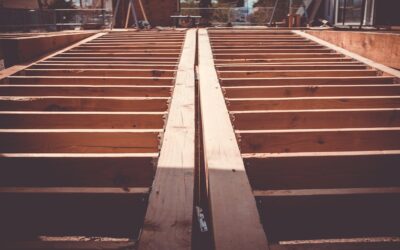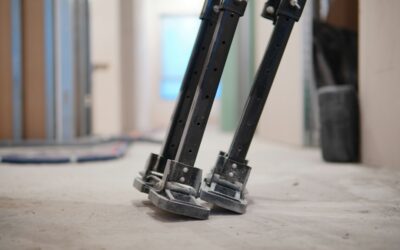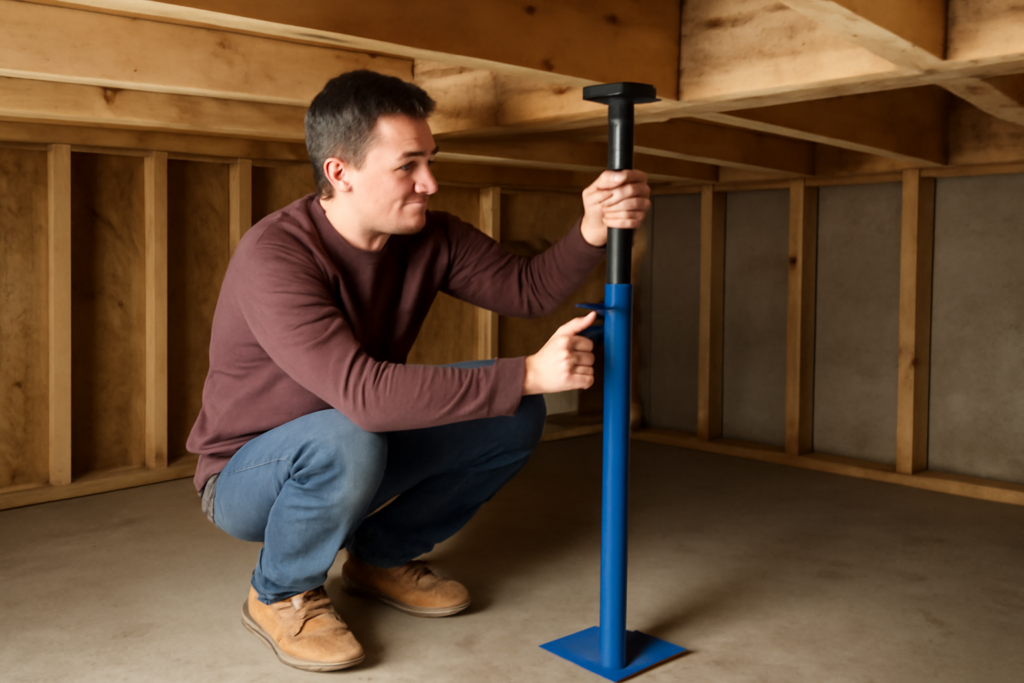
A floor joist jack is a structural support, typically an adjustable steel post or a heavy-duty hydraulic jack, used to lift and stabilize sagging floor joists or beams from below. When a floor feels bouncy, slopes noticeably, or has developed a visible dip, a jack is often part of the solution. This is serious structural work, though, and approaching it casually can crack your framing, drywall, and plumbing or cause injury.
This guide explains the types of jacks, how the process should be done slowly and safely, and why diagnosing the real cause and consulting a professional should come first.
Diagnose the Cause Before You Lift Anything
Lifting a sagging floor without understanding why it sags can make things worse. Floors droop for many reasons: undersized or damaged joists, rotted wood from moisture, failed support posts, a settling or cracked beam, foundation movement, or inadequate support from the start. Each cause calls for a different fix, and jacking alone may only mask a deeper problem.
Before any lifting, inspect the crawlspace or basement for water damage, rot, insect activity, and cracked or sinking support posts and footings. If moisture is the culprit, you must address the source first, because lifting rotted wood solves nothing. Because the stakes are high, having a structural engineer or experienced contractor evaluate the situation is strongly recommended; they can determine the cause and specify a safe repair plan.
Types of Floor Joist Jacks
- Adjustable steel support posts (jack posts): Threaded steel columns that screw up or down to provide permanent support. Common for shoring sagging beams and posts.
- Telescoping/temporary jack posts: Used to take the load temporarily during repairs, not as a permanent fixture in many jurisdictions.
- Hydraulic bottle or floor jacks: Provide the lifting force during the slow raising process, then the load is transferred to a permanent post.
- Permanent steel columns on proper footings: The long-term support that ultimately carries the corrected load.
A critical detail: any jack or post must bear on a solid, adequate footing. Setting a post on a thin slab or bare dirt can punch through or settle, undoing the repair and creating new hazards.
The Single Most Important Rule: Lift Slowly
This cannot be overstated. Jacking a sagging floor must happen slowly, in tiny increments over days or weeks, not all at once. A house has settled into its sagged position over years, and the framing, drywall, tile, and plumbing have conformed to it. Forcing it up quickly transfers enormous stress and can crack joists, split drywall, pop tile, shear plumbing connections, and crack the foundation.
A widely cited safe pace is raising only a small fraction of an inch at a time, often about an eighth of an inch, then waiting several days before the next adjustment so the structure can adjust gradually. Patience is the difference between a successful repair and expensive new damage.
The General Process
This overview is educational; the actual work should be planned with a professional who has verified the structure can be lifted at all.
- Diagnose and address the underlying cause, including any moisture or rot.
- Establish a solid footing, often a poured concrete pad sized to carry the load.
- Position the jack on the footing, using a beam or plate to spread the load across the joists rather than a single point.
- Raise a tiny increment, then stop and let the structure rest for days.
- Monitor for new cracks or stress at each stage and adjust the pace if anything appears.
- Once the floor reaches the target level over many cycles, transfer the load to a permanent, properly footed support post.
Warning Signs to Watch During the Lift
Stop and reassess if you notice fresh drywall cracks growing, doors or windows that suddenly bind, popping or cracking sounds, gaps opening at trim, or any movement in plumbing. These are signals that you are lifting too fast or that the structure cannot tolerate the planned correction. New damage means the pace is wrong or the diagnosis was incomplete.
When to Call a Professional
Honestly, most floor-leveling jobs warrant professional involvement. A structural engineer can confirm the cause, calculate loads, and specify footing sizes and post placement. An experienced contractor executes the lift safely. The risks of getting it wrong, structural failure, costly cosmetic damage, or personal injury, far outweigh the cost of expert guidance. If the sag is significant, if you find rot or foundation issues, or if you are at all unsure, do not improvise.
Permanent Support vs. Temporary Lifting
It helps to separate two related but distinct jobs. The lift is the slow, careful process of raising the sagged floor back toward level using a jack as the force. The support is the permanent structure, typically a steel post on a proper footing, or a sister joist or new beam, that holds the corrected position once the lift is done. A jack is generally not meant to be left as the permanent solution.
This matters because many jurisdictions and best practices require a permanent, code-compliant support to carry the load long term. Leaving a temporary jack in place indefinitely can be unsafe and may not meet code. Plan the permanent support as part of the project from the start, not as an afterthought.
What It Typically Costs
Costs vary enormously with the cause, access, and scope, so treat these as rough estimates only. A simple repair such as adding a properly footed support post to address a single sagging beam may run a few hundred to a couple thousand dollars when done by a contractor. More involved work, sistering multiple joists, pouring new footings, or addressing foundation issues, can climb well into the thousands.
A structural engineer’s evaluation is an added but worthwhile cost, often a few hundred dollars, that can save you from an expensive mistake. Given the risks of structural and cosmetic damage from doing it wrong, professional involvement frequently pays for itself.
Final Thoughts
A floor joist jack can correct a sagging, bouncy floor, but only when the underlying cause is diagnosed first, the jack bears on a proper footing, and the lift happens slowly over days or weeks. Rushing the process is the fastest way to crack framing, drywall, and plumbing or hurt yourself. Treat this as the structural work it is, lean on a structural engineer or seasoned contractor, and let patience guide every fraction of an inch.
Prefer to explore on your own?
See how new flooring looks in your actual room in seconds — free, no signup.
Try the free Floor Studio →