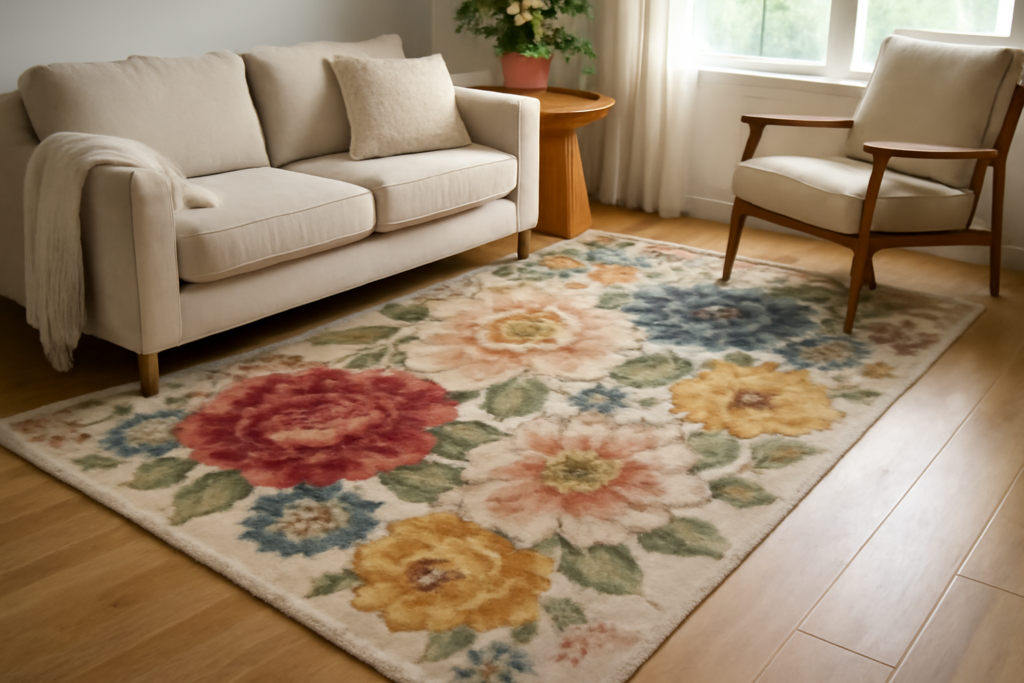
A floral rug is one of the most forgiving decor choices you can make, and that is exactly why designers reach for it so often. The botanical pattern hides crumbs, footprints, and minor stains far better than a solid color, brings instant warmth to a room, and ties together a palette of throw pillows and curtains. Floral does not mean fussy or old-fashioned anymore either, since today’s designs range from faded vintage Persians to oversized modern blooms in moody colors. The key is matching the style and scale of the pattern to your room.
Why Floral Rugs Are So Practical
Beyond looks, a floral rug earns its place through everyday usefulness. A busy multicolor pattern camouflages dirt and wear, making it a smart pick for high-traffic rooms, families, and pet owners. The mix of tones also gives you flexible color cues to pull from when choosing the rest of the room’s accents. Where a solid rug shows every spill, a floral one quietly shrugs them off until the next cleaning.
Floral Rug Styles
The category is broad, so identifying the style you want narrows the search fast.
- Traditional and Persian-style: intricate, symmetrical botanicals in rich reds, blues, and ivory
- Vintage and distressed: faded, low-contrast florals that feel collected and lived-in
- Modern and abstract: oversized or stylized blooms in bold or muted contemporary palettes
- Cottage and farmhouse: soft, hand-drawn flowers in gentle pastels and creams
- Tropical and botanical: large leaves and exotic blossoms, often for sunrooms and porches
Choosing Colors and Scale
Pattern scale changes the entire feel of a room. Large, sprawling florals make a statement and suit bigger spaces, while small, repeating patterns read as a soft texture from across the room and work in tighter areas. For color, decide whether you want the rug to be the star or a supporting player. A bold, saturated floral becomes the room’s anchor, so keep walls and furniture calmer. A muted, faded floral blends in and lets other pieces shine. Pull one or two colors from the rug into pillows or art to make the whole space feel intentional.
Materials and Durability
The fiber determines how the rug feels, wears, and cleans. Match it to the room’s traffic and your tolerance for upkeep.
- Wool: soft, resilient, naturally stain-resistant, and long-lasting, though pricier
- Polypropylene and polyester: affordable, fade-resistant, and easy to clean, great for busy rooms
- Cotton: casual and washable in smaller sizes, ideal for kitchens and bedrooms
- Indoor-outdoor synthetics: weatherproof florals for porches, sunrooms, and patios
Where Floral Rugs Work Best
A floral rug suits nearly every room, but a few placements really shine. In a living room, a large floral anchors the seating area and warms up neutral furniture. In a bedroom, a soft pastel floral adds a romantic, restful touch underfoot. Entryways and kitchens benefit from smaller, washable florals that hide dirt. Even a powder room or sunroom can carry a bold botanical as a cheerful accent. For seating areas, size the rug so at least the front legs of the furniture sit on it, which keeps the arrangement grounded.
Cleaning and Care
Maintenance depends on the fiber. Vacuum regularly to keep grit from grinding into the pile, and rotate the rug a couple of times a year so it wears and fades evenly. Blot spills immediately rather than rubbing, which spreads stains. Synthetic and cotton rugs often handle spot cleaning with mild soap and water, and many small cotton florals are machine washable. Wool should be cleaned gently and never over-wetted, and any rug labeled dry-clean only should be treated accordingly. The busy pattern works in your favor, since minor imperfections simply disappear into the design.
What a Floral Rug Costs
Prices vary with size, fiber, and construction. Small synthetic floral rugs often run about $30 to $80, mid-size area rugs in polypropylene or polyester land around $80 to $250, and large wool or hand-knotted floral rugs can exceed $500. Treat these as general ranges, since material, size, and brand drive the cost. For most living rooms, a quality synthetic or wool-blend floral in the $100 to $300 band offers durability and looks without designer pricing.
Sizing a Floral Rug Correctly
The right size makes a floral rug look custom rather than accidental. In a living room, aim for a rug large enough that at least the front legs of the sofa and chairs rest on it, which visually ties the seating together; a rug that floats too small in the center makes the room feel disjointed. Under a dining table, the rug should extend far enough that chairs stay on it even when pulled out, usually a couple of feet beyond the table edge. In a bedroom, a rug that reaches out on both sides of the bed gives a soft landing for your feet. When in doubt, size up, since an undersized rug is the most common decorating misstep.
Mixing Floral With Other Patterns
A floral rug can absolutely share a room with stripes, plaids, and geometrics if you balance the scale and color. The trick is varying the size of the patterns so they do not compete: pair a large-scale floral rug with smaller-scale pillow patterns, or vice versa. Keep a common color thread running through the mix so everything feels intentional. Solid-colored furniture gives the eye a place to rest between busy patterns. When done well, this layered approach feels collected and designer, which is exactly why floral rugs anchor so many professionally styled rooms.
The Bottom Line
A floral rug delivers warmth, color, and remarkable practicality, hiding everyday mess while tying a room together. Match the pattern scale and palette to your space, choose a fiber suited to the traffic, and let the rug guide your accent colors. With simple regular care, a floral rug stays a beautiful, hardworking foundation for any room for years. Size it generously, layer it for depth if you like, and lean on its forgiving pattern to keep your floors looking fresh between cleanings.