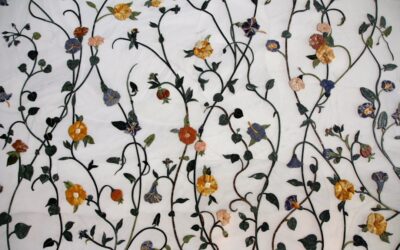
Few design elements bring as much personality to a space as flower mosaic tile, where small pieces of stone, glass, or ceramic combine into blooming floral patterns. From delicate single-flower accents to sprawling garden motifs, this decorative tile turns floors, backsplashes, and feature walls into works of art. It’s a way to add color, craftsmanship, and a touch of whimsy that flat, solid tile simply can’t deliver.
Part of our Tile & Grout guide — explore the full guide →
Whether you want a subtle nod to nature or a bold statement, understanding the materials and layouts helps you use floral mosaics to their full effect.
What Makes a Floral Mosaic
Mosaic tile is built from small individual pieces, called tesserae, arranged into a pattern. In a flower mosaic, those pieces form petals, leaves, stems, and blooms. The designs range widely in complexity.
- Geometric florals: Stylized flowers built from regular shapes like hexagons and triangles, modern and graphic.
- Realistic blooms: Detailed, artistic renderings of roses, lotus, or wildflowers, often hand-cut.
- Repeating patterns: All-over floral motifs that tile seamlessly across a surface.
- Medallion centerpieces: A single large flower or bouquet designed as a focal point, common on floors and shower floors.
Most mosaics come pre-arranged on mesh-backed sheets, which makes installation far more manageable than setting each tiny piece by hand.
Material Options and Their Strengths
The material shapes both the look and the best use for a floral mosaic.
- Glass: Luminous and richly colored, with depth that catches light beautifully. Ideal for backsplashes and accent walls. Nonporous and easy to wipe clean.
- Ceramic and porcelain: Durable and affordable, with a huge range of colors and finishes. Porcelain works well on floors.
- Natural stone: Marble, travertine, and other stones give an organic, earthy floral with subtle color variation. Requires sealing.
- Mixed media: Combinations of glass, stone, and metal that add texture and contrast within a single design.
- Pebble and penny round: Rounded pieces that create soft, naturalistic flower shapes.
Where Flower Mosaics Shine
Because they’re so decorative, floral mosaics work best as accents rather than covering every surface, where they could overwhelm a room. Strategic placement gives them the most impact.
- Kitchen backsplash: A floral band or full backsplash behind the range as a focal point.
- Bathroom walls and niches: A blooming accent strip or a tiled niche that draws the eye.
- Shower floors: Small mosaics offer grip underfoot, and a floral medallion adds charm.
- Entryway or floor medallions: A central bloom that welcomes guests.
- Fireplace surrounds and accent walls: A garden of color as a room’s centerpiece.
Balancing Pattern in a Room
A busy floral mosaic is a strong visual element, so the surrounding finishes should give it room to breathe. Pair an elaborate flower mosaic with simpler solid tiles, calm wall colors, and restrained cabinetry so the mosaic stays the star. If you want florals across a larger area, choose a more subtle, tonal pattern rather than a high-contrast one to avoid visual overload.
Consider color flow too. Pull one or two hues from the mosaic into your paint, textiles, or accessories so the floral feature feels integrated rather than tacked on.
Installation Considerations
Mesh-backed mosaic sheets make floral patterns achievable for a careful DIYer, though the small pieces and pattern alignment demand patience.
- Plan the layout dry first, especially for patterns that must align across sheets, so flowers connect seamlessly.
- Use a white or light-colored thin-set for glass and translucent tiles, since dark adhesive can show through.
- Apply thin-set with the correct trowel size, set sheets gently, and check that the pattern lines up between sheets.
- Use a flat board or grout float to press the sheet evenly so all pieces sit at the same depth.
- Let the adhesive cure fully before grouting.
Cutting around the small pieces in a floral design can be intricate, so for complex medallions or large installations, an experienced tile setter often delivers cleaner results.
Grout: A Design Decision
Grout color dramatically affects how a flower mosaic reads. A grout that contrasts with the tile outlines each petal and emphasizes the pattern, giving a graphic, defined look. A grout that blends with the dominant tile color lets the colors flow together for a softer, more painterly effect. Because mosaics have so many grout lines, choose a stain- and mildew-resistant grout, and consider epoxy in wet areas for durability and easy cleaning.
Cost and Budgeting
Flower mosaic tile spans a wide price range depending on material and craftsmanship, so set expectations before you fall for a particular design. Machine-made ceramic and porcelain floral mosaics are the most affordable, while glass mosaics cost more for their luminous quality. Hand-cut natural stone florals and custom artistic medallions sit at the premium end, since real labor goes into shaping each piece.
Because most homeowners use floral mosaics as accents rather than covering whole rooms, the total material cost often stays reasonable even with a higher per-square-foot price. A backsplash strip or a single niche uses only a few square feet. Factor in that intricate mosaics take longer to install than plain field tile, so labor is a larger share of the budget. Buy a little extra to account for the small pieces lost during cutting and for future repairs, since matching a discontinued mosaic later is difficult.
Care and Maintenance
Maintenance depends on the material. Glass and glazed ceramic mosaics wipe clean easily with a soft cloth and mild cleaner, resisting stains well. Natural stone mosaics need sealing and gentle, pH-neutral cleaning to avoid etching. In all cases, the many grout lines benefit from regular cleaning to prevent buildup; a soft brush and mild cleaner keep the joints looking fresh. Reseal stone and cement grout on schedule, and avoid abrasive scrubbers that can scratch glass and dull finishes.
Bringing a Garden Indoors
Flower mosaic tile is one of the most expressive ways to personalize a home, turning ordinary surfaces into colorful, handcrafted features. Used as a thoughtful accent, paired with simpler finishes, and installed and grouted with care, a floral mosaic brings lasting charm and artistry to a kitchen, bath, or entryway. Choose a material suited to the location, plan the pattern carefully, and you’ll have a blooming focal point that draws compliments for years.
Prefer to explore on your own?
See how new flooring looks in your actual room in seconds — free, no signup.
Try the free Floor Studio →