Foam flooring provides cushioning, safety, and comfort in spaces where traditional hard flooring falls short. From children’s playrooms and home gyms to trade show booths and workshop areas, foam tiles and mats create a forgiving surface that protects people and floors alike. This guide covers every type of foam flooring, where to use it, and how to choose the right product for your specific needs.
What Is Foam Flooring?
Foam flooring encompasses any floor covering made primarily from closed-cell foam materials. The most common type is EVA foam (ethylene-vinyl acetate) — the same material used in shoe soles and yoga mats. Foam flooring comes in interlocking tiles, puzzle mats, roll-out sheets, and standalone mats in various thicknesses, densities, and surface textures.
Unlike permanent flooring like hardwood flooring or tile flooring, foam flooring is typically a portable, removable layer placed on top of an existing floor. It can be installed and removed in minutes without tools, adhesive, or damage to the surface beneath.
Types of Foam Flooring
EVA Foam Interlocking Tiles
Interlocking EVA tiles are the most popular foam flooring format. Each tile has puzzle-piece edges that snap together to create a seamless surface. Standard sizes are 24 x 24 inches and come in thicknesses from 3/8 inch to 3/4 inch. They are lightweight, easy to cut with a utility knife, and available in dozens of colors and patterns including faux wood grain.
High-Density Foam Tiles
High-density foam tiles use denser EVA or rubber-topped foam for applications that need more cushioning and durability than standard EVA. They are popular for home gyms, martial arts studios, and commercial fitness centers. Thicknesses range from 3/4 inch to 1-1/2 inches.
Foam Roll Mats
Roll-out foam mats provide large coverage areas without the seams of interlocking tiles. They are common in gymnastics, cheerleading, and martial arts training. Rolls are typically 4 to 6 feet wide and can be cut to any length.
Anti-Fatigue Foam Mats
Anti-fatigue mats are dense foam pads designed for standing workstations — kitchen prep areas, workshop benches, standing desks, and commercial environments like retail checkout counters. They feature beveled edges to prevent tripping and a textured surface for grip.
Foam Carpet Tiles
These combine a soft foam base with a carpet or fabric top surface. They provide the cushioning of foam with the finished appearance of carpet. Popular for bedrooms, playrooms, and trade show booths.
Rubber-Top Foam Tiles
A thin rubber surface bonded to a foam core provides the durability of rubber flooring with the cushioning of foam. These are the go-to option for home gyms where heavy weights may be dropped.
Where to Use Foam Flooring
Children’s Playrooms
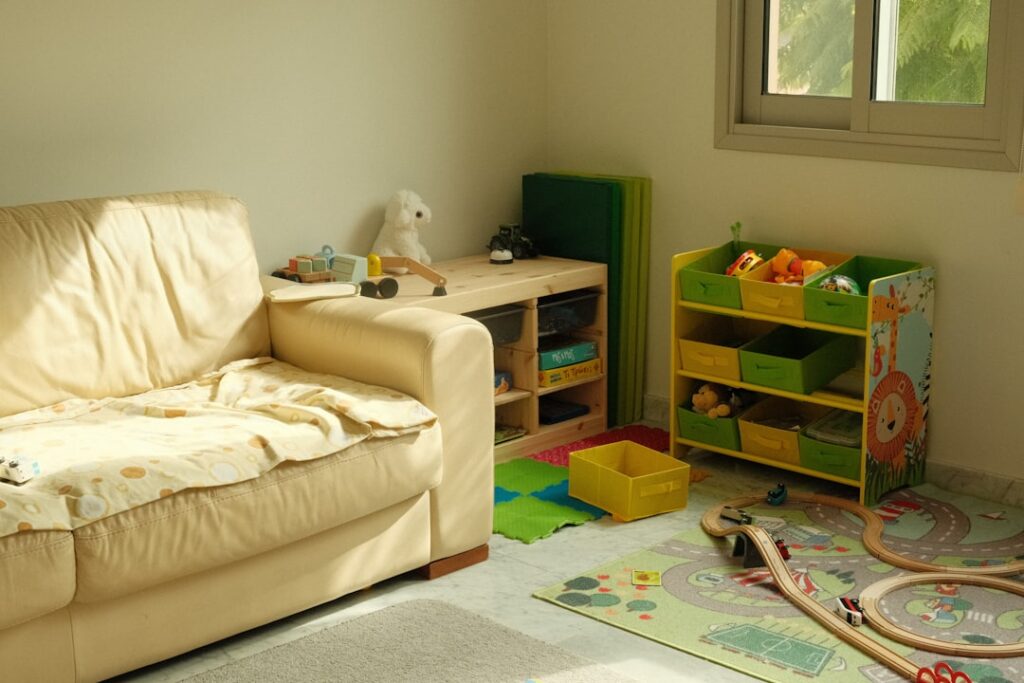
Foam flooring is the top choice for playrooms. It cushions falls, reduces injury risk, provides thermal insulation (kids play on the floor constantly), and is easy to clean. Colorful interlocking tiles also serve as a play surface for building, puzzles, and imaginative play.
Home Gyms
High-density foam tiles protect your subfloor from dropped weights, reduce noise, and provide cushioning for floor exercises like yoga, pilates, and stretching. For heavy weightlifting, choose rubber-top foam tiles that resist punctures from equipment.
Garage Workshops
Standing on a concrete garage floor for hours causes fatigue and joint pain. Foam tiles or anti-fatigue mats placed at workbenches and tool stations make a dramatic difference in comfort during long projects.
Basements
Foam flooring over concrete flooring in basements adds warmth, cushioning, and a finished appearance without the cost and permanence of traditional flooring installation.
Trade Shows and Events
Foam carpet tiles and padded exhibition flooring create comfortable, attractive booth flooring that is easy to transport, install, and remove. Staff standing all day at trade shows benefit enormously from cushioned flooring.
Martial Arts and Gymnastics
Thick foam tiles and roll-out mats provide the fall protection required for combat sports, tumbling, and gymnastics training. Martial arts foam tiles are typically 1 inch to 1-1/2 inches thick with a textured non-slip surface.
Daycare Centers
Commercial-grade foam flooring in daycare facilities protects children during active play. Look for products that meet ASTM F1292 fall attenuation standards for playground surfaces.
Benefits of Foam Flooring
Safety and Fall Protection
Foam flooring’s primary benefit is cushioning. It reduces the impact of falls, making it safer for children, athletes, and elderly individuals. Thicker foam provides more fall protection — 3/4-inch foam is adequate for standing comfort, while 1-inch or thicker is recommended where falls from standing height may occur.
Comfort
The closed-cell foam structure absorbs impact and provides a springy, comfortable surface that reduces fatigue during prolonged standing or physical activity.
Noise Reduction
Foam absorbs impact noise from footsteps, dropped objects, and exercise equipment. This is valuable in home gyms above living spaces, apartment playrooms, and any environment where noise transmission is a concern.
Thermal Insulation
Foam creates a thermal barrier between the occupant and a cold concrete or tile floor. In basements and garages, this makes the space significantly more comfortable without any modifications to the building’s HVAC system.
Easy Installation
No tools, adhesive, or professional installation required. Interlocking tiles snap together by hand and can be cut with a utility knife for custom fitting. Most foam flooring projects take under an hour.
Portability
Foam flooring can be installed, removed, and relocated as needed. This makes it ideal for rental properties, temporary spaces, and areas with changing uses.
Protects Underlying Floors
Foam tiles protect hardwood, tile, and other permanent flooring from scratches, dents, and stains caused by exercise equipment, workshop activities, and heavy use.
Drawbacks of Foam Flooring
Not a Permanent Solution
Foam flooring is a surface covering, not a replacement for proper flooring. It does not add property value and is not appropriate as the sole floor surface in finished living spaces.
Can Off-Gas
New EVA foam tiles have a distinctive chemical smell that can last days to weeks. While EVA is generally considered safe, the odor can be unpleasant. Ventilate the area well after installation and choose products that are formaldamide-free and certified for low emissions.
Compression Over Time
Foam compresses under sustained heavy loads. Furniture legs, heavy equipment, and high-traffic paths will compress the foam over time, creating permanent flat spots. Use furniture cups or plywood under heavy items to distribute the weight.
Moisture Trapping
Foam tiles laid directly on concrete can trap moisture beneath them, potentially leading to mold growth. In damp basements, use a moisture barrier beneath the foam or choose foam tiles with built-in airflow channels.
Limited Aesthetic Appeal
Even the best wood-grain or stone-pattern foam tiles do not fool anyone — they look like what they are. For spaces where appearance matters, traditional flooring options like LVP flooring or laminate flooring provide a more polished look.
How to Choose the Right Foam Flooring
Thickness
- 3/8 inch: Basic comfort for standing areas and light play
- 1/2 inch: Good general-purpose thickness for playrooms and light exercise
- 3/4 inch: Standard for home gyms and active play areas
- 1 inch or more: Required for martial arts, gymnastics, and serious fall protection
Density
Higher-density foam is firmer, more durable, and better at supporting heavy loads without compressing permanently. Low-density foam is softer and more cushioned but wears out faster. For gyms, choose high-density. For playrooms, medium density provides a good balance of softness and durability.
Surface Texture
Smooth surfaces are easiest to clean. Textured surfaces provide better traction. Tatami-textured tiles are standard for martial arts. Diamond-plate patterns are popular for workshops and garages.
Color and Pattern
Solid colors are available in every shade. Faux wood grain offers a more finished appearance. Multi-color puzzle packs create playful, stimulating environments for children.
Foam Flooring Costs
- Basic EVA interlocking tiles (1/2 inch): $1 to $2 per square foot
- Standard EVA tiles (3/4 inch): $1.50 to $3 per square foot
- High-density foam tiles: $2 to $5 per square foot
- Rubber-top foam tiles: $3 to $7 per square foot
- Anti-fatigue mats: $2 to $6 per square foot
- Foam carpet tiles: $3 to $8 per square foot
- Martial arts mats (1 inch+): $3 to $8 per square foot
Maintenance Tips
Foam flooring is low maintenance, but a few simple practices extend its life.
- Sweep or vacuum regularly to remove dirt and grit that can wear the surface
- Damp mop with mild soap and water for deeper cleaning
- Avoid harsh chemicals that can break down the foam material
- Disassemble and clean beneath the tiles periodically to prevent moisture and mold
- Replace individual damaged tiles rather than the entire floor — interlocking tiles make this easy
- Keep out of prolonged direct sunlight, which can cause fading and material degradation
Final Thoughts
Foam flooring fills a specific niche — portable, cushioned, safe, and affordable floor covering for spaces where comfort and protection matter more than permanence and aesthetics. It excels in playrooms, home gyms, workshops, and temporary installations. Choose the right thickness and density for your application, prioritize low-emission products, and enjoy the comfort and safety that foam flooring provides. For permanent flooring solutions, explore our guides on vinyl flooring, laminate flooring, and rubber flooring.
Prefer to explore on your own?
See how new flooring looks in your actual room in seconds — free, no signup.
Try the free Floor Studio →