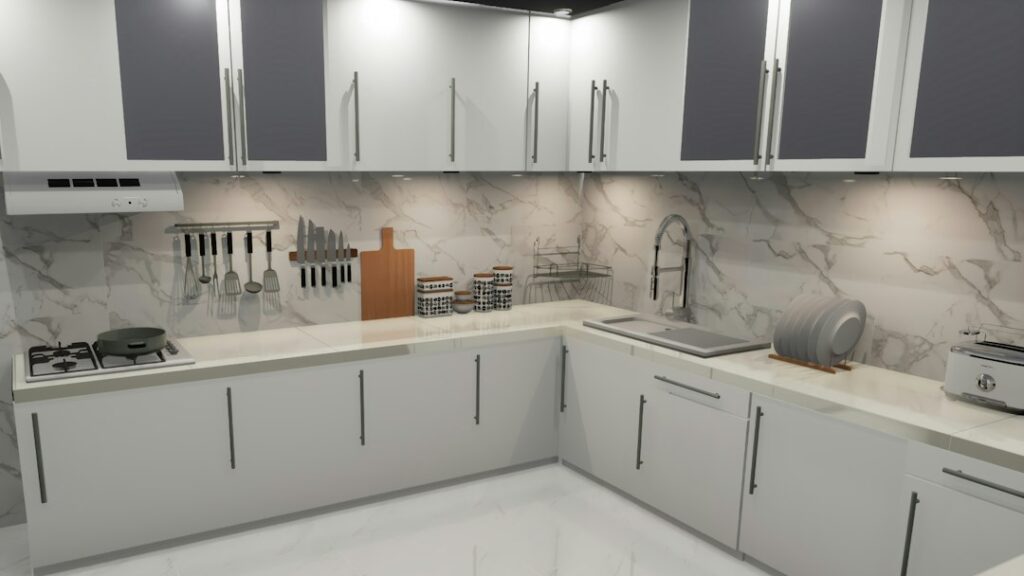
Swapping hardware is the cheapest way to make tired cabinets look new, and the cost adds up fast when a kitchen needs 30 or 40 pulls. Franklin Brass cabinet pulls are aimed squarely at that problem: simple bar and handle designs sold in multipacks of 5, 10 or 25, in the finishes most kitchens are using right now. They are not designer showpieces, but for a rental refresh, a laundry room or a full kitchen on a budget, they cover the common sizes at a low per-pull cost.
Part of our Kitchen Remodeling guide — explore the full guide →
Franklin Brass is a hardware brand distributed by Liberty Hardware, which is part of Masco. That relationship explains why the two brands share similar sizes and finishes. This explainer walks through the styles, finishes and center-to-center sizes you will find, how the multipacks compare with Liberty and Amerock, and how to measure and install pulls so every one lines up.
Franklin Brass Cabinet Pulls at a Glance
The table summarizes the spec ranges that show up across current Franklin Brass product listings. The lineup changes, and not every size comes in every finish, so check the specific product’s spec sheet before ordering a full kitchen’s worth.
| Spec | Value | What it means |
|---|---|---|
| Common styles | Round bar, square bar, cylindrical bar, arch/handle pulls, adjustable pulls | Mostly clean, modern shapes |
| Finishes | Matte black, champagne bronze, satin nickel, stainless steel look, satin gold or brushed brass | Covers today’s most requested tones |
| Small sizes | 3 inch and 3-3/4 inch (96 mm) center to center | Doors, vanities and small drawers |
| Mid sizes | 4 inch, 5 inch and 5-1/16 inch (128 mm) | Standard kitchen drawers |
| Long sizes | 7-1/2 inch (190 mm) and up to 12 inch (305 mm) bars | Wide drawers, pantry doors, appliance-style looks |
| Adjustable pulls | Fit spacing ranges such as 1-3/8 to 4 inches or 1-3/8 to 6-5/16 inches | Cover old holes that do not match a standard size |
| Pack sizes | Single, 5-pack, 10-pack, 25-pack | Bulk packs lower the cost per pull |
Center-to-center (often written “CC”) is the distance between the two screw holes, not the overall length of the pull. A 3-3/4 inch pull may be close to 5 inches long overall, so check both numbers when you plan a layout.
Styles and Finishes
Bar Pulls
Bar pulls are the core of the Franklin Brass range: a round or square rod on two posts. They suit Shaker, slab and flat-panel doors and look right in modern, transitional and farmhouse kitchens. Longer bars, from 7-1/2 inches up to 12 inches, give a bold, appliance-style look on wide drawers and tall pantry doors.
Handle and Arch Pulls
Arched and cup-style handles soften a kitchen’s lines and work well with traditional doors. They tend to come in the smaller 3 and 3-3/4 inch spacings for doors and standard drawers.
Adjustable Pulls
The adjustable design is the clever part of the lineup. Each pull has slotted mounting points that slide to fit a range of hole spacings, so you can replace old hardware without filling and redrilling holes. That alone can save hours on a kitchen with a mix of odd sizes from a previous owner.
Finishes
Matte black and champagne bronze are the trend finishes; satin nickel and stainless-look finishes are the safe neutrals; satin gold and brushed brass add warmth against white, green or navy cabinets. Match finishes to your faucet and lighting, or deliberately mix one warm and one cool metal for contrast.
Multipack Value vs Liberty and Amerock
All three brands target the same homeowner, but they sit at slightly different points. Franklin Brass leans hardest into bulk value: big multipacks of simple shapes so a full kitchen costs less. Liberty, its sister brand under the same parent company, offers a wider spread of styles and finishes, including more decorative and traditional collections, usually at a modestly higher per-pull price. Amerock is a separate long-running hardware maker with a broad catalog that reaches further into designer-style collections and specialty finishes.
- Choose Franklin Brass when you need many matching pulls in a mainstream style and finish and price per piece matters most.
- Choose a broader catalog when you want a specific decorative profile, a matching knob and appliance-pull family, or a less common finish.
- Feel matters. Budget pulls are usually zinc alloy or steel with a plated or powder-coated finish. Solid-feeling pulls cost more. If possible, hold one before ordering 40.
Whatever the brand, buy every pull for a project at once from the same finish batch. Finishes can shift slightly between production runs, and a slightly different black or bronze is easy to spot side by side.
Placement Rules That Look Professional
Good hardware placement matters as much as the pull itself. On upper cabinet doors, mount vertical pulls on the stile opposite the hinges, with the bottom of the pull roughly 2 to 3 inches above the bottom edge of the door. On base cabinet doors, flip that rule: place the pull near the top corner so it falls naturally under your hand. Drawers usually get a horizontal pull centered side to side, either centered top to bottom on slab fronts or centered on the top rail of a five-piece drawer front.
Keep one consistent size for every door, then scale drawer pulls by width. A common pattern is 3 or 3-3/4 inch pulls on doors and small drawers, 5-1/16 inch pulls on 18 to 24 inch drawers, and 7-1/2 inch or longer bars on 30 to 36 inch drawers and pantry doors. Some homeowners put two smaller pulls on very wide drawers instead of one long bar; either approach works as long as it repeats across the room.
Think about the finish in context, too. Matte black hides fingerprints well but shows water spots near a sink. Satin nickel and stainless looks forgive both. Gold and bronze tones look warmer next to wood floors and butcher block counters, and they pair well with navy, green and white cabinets.
How to Measure and Plan a Layout
- Measure existing holes center to center on several doors and drawers. Use a ruler, not a guess; 3 inch and 3-3/4 inch spacings look similar.
- Decide on sizes. A common rule is to size drawer pulls at roughly one third of the drawer width, while keeping door pulls consistent.
- Count every piece by size, then add one or two spares for future repairs or a pull that arrives damaged.
- Check screw length. Standard screws fit common 3/4 inch doors; thicker drawer fronts or false fronts need longer screws.
- Match pack sizes to your count so you are not buying a 25-pack for 6 pulls.
Installation Steps
Tools and Materials
- Cabinet hardware jig or a homemade template from scrap plywood
- Drill with a sharp 3/16 inch bit (or the size the pull’s instructions specify)
- Painter’s tape, pencil, tape measure and combination square
- Screwdriver, plus wood filler and touch-up paint if relocating holes
- Safety glasses
- Set the jig to your center-to-center size and position, such as centered on a drawer or 2 to 3 inches from the corner of a door.
- Tape the drill spot on painted or veneered faces to reduce chip-out.
- Drill straight through from the front, with a scrap block clamped behind to prevent blowout.
- Fasten the pull from inside with the supplied screws. Snug them firmly but do not overtighten, which can strip threads in zinc pulls.
- Check alignment across a run of drawers before drilling the rest. Adjust the jig if anything drifts.
Troubleshooting and Care
- Pull wobbles: screws too short or holes oversized. Use longer screws or add a finish washer inside.
- Screws too long: they bottom out before the pull tightens. Use breakaway screws or cut to length.
- Old holes do not match: use adjustable pulls, a backplate, or fill and redrill.
- Finish wearing: clean with a damp cloth and mild soap only. Skip abrasive pads and harsh cleaners that remove plating and coatings.
General Costs and When to Call a Pro
Budget multipacks bring the per-pull cost down to a few dollars in many sizes and finishes, while longer bars and single premium pulls cost more. A full kitchen with franklin brass cabinet pulls often lands in the low hundreds of dollars for hardware. A handyman typically charges by the hour or by the piece for drilling new hardware, which adds up on a large kitchen but is worth it if you are nervous about drilling into expensive doors. Call a cabinet pro if doors are sagging or out of alignment, since new pulls will only highlight crooked doors.
Frequently Asked Questions
Who makes Franklin Brass cabinet pulls?
Franklin Brass is distributed by Liberty Hardware, which is part of Masco. The brand focuses on value-priced bath and cabinet hardware.
What size cabinet pull is most common?
3 inch and 3-3/4 inch (96 mm) center to center are the most common for doors and standard drawers, with 5-1/16 inch (128 mm) popular for wider drawers.
Can I replace old pulls without drilling new holes?
Yes, if you match the existing center-to-center spacing exactly or use an adjustable pull that fits your old hole spacing.
Are budget cabinet pulls durable?
For normal household use, most hold up fine. Clean them gently and avoid overtightening screws, which is the most common cause of failure.
How many pulls come in a Franklin Brass multipack?
Common packs hold 5, 10 or 25 pulls, and some sizes are also sold singly. Check the label for the exact count.