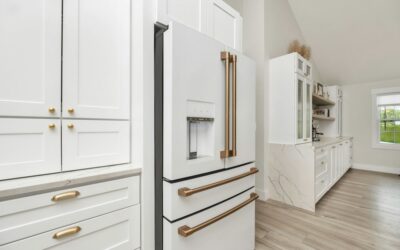
Liberty cabinet hardware is a popular pick for a clean, updated kitchen without spending boutique money on knobs and pulls. A Masco brand stocked at home centers and online, Liberty cabinet hardware hits a sweet spot on price, finish selection, and everyday durability that few budget lines match. Here is what to know before you fill your cart.
Part of our Kitchen Remodeling guide — explore the full guide →
These pieces show up in kitchens, baths, and laundry rooms everywhere. They are not heirloom-grade solid brass, but for the money they hold up well, the finishes stay consistent lot to lot, and the multipacks keep a whole-kitchen job affordable.
- Product Lines and Styles
- Finishes That Actually Match
- Understanding Pull Sizes and Center-to-Center
- Pricing and Where the Value Sits
- Quality: What to Expect
- How to Measure and Install
- Mixing Knobs and Pulls the Right Way
- Care, Cleaning, and When to Replace
- Shopping Liberty Cabinet Handles, Pulls and Knobs by Finish and Size
Product Lines and Styles
Liberty’s catalog is broad, which is part of the appeal. You can outfit an entire house from one brand and keep the finish matched throughout. The main styles:
- Bar pulls: clean, modern, and by far the most popular. Available in straight and slightly flared profiles.
- Cup and bin pulls: for farmhouse and traditional kitchens.
- Round and square knobs: the workhorse for upper doors.
- Cabinet pulls with backplates: good for covering old drilling or worn spots on cabinet faces.
- Specialty and decorative collections for period looks; check the maker’s current catalog for collection names.
Because the range is so deep, buy a single sample of two or three candidates first, hold them on your actual cabinets, and live with them for a day before committing to a 25-pack. Kitchen lighting changes a finish dramatically between the store aisle and your home, and a knob that looked warm under fluorescents can read cold and gray under your undercabinet LEDs. A single inexpensive sample can save you from ordering forty pieces of the wrong finish.
Finishes That Actually Match
Finish consistency is Liberty’s quiet strength. The most popular finishes:
- Matte black: the runaway favorite for the last several years. It hides fingerprints and pairs with almost any cabinet color.
- Satin nickel: the safe, warm-neutral choice that never dates badly.
- Bronze and oil-rubbed bronze: for traditional, Craftsman, and Tuscan kitchens.
- Polished chrome and stainless: bright and clean for contemporary spaces.
- Champagne bronze and brass tones: the warmer metals that have surged in popularity.
One tip: if you are mixing knobs and pulls from different Liberty collections, confirm they share the exact finish name. “Satin nickel” and “stainless steel” read differently side by side under kitchen lighting.
Understanding Pull Sizes and Center-to-Center
The single most confused number in hardware shopping is center-to-center, which is the distance between the two screw holes on a pull, not the overall length. Get this wrong and your holes will not line up. Common Liberty center-to-center sizes:
- 3 inch: standard for smaller drawers and traditional cup pulls.
- 3.75 inch (96mm): the most common all-purpose size.
- 5 inch (128mm): good for medium drawers.
- 6.25 inch and larger: for wide, deep drawers and appliance panels.
A common rule of thumb: the pull should run roughly one-third the width of the drawer. On a 30-inch drawer, that means a 10- to 12-inch pull. Knobs, by contrast, have a single screw and no center-to-center measurement to worry about.
Pricing and Where the Value Sits
Liberty’s price is the reason it dominates the aisle. Individual pieces generally run $2 to $8, with knobs at the low end and larger decorative pulls at the top. The real savings come from multipacks: 10-packs and 25-packs frequently drop the per-piece cost to $1.50 to $4.
For a typical kitchen with 30 to 40 openings, budgeting $80 to $250 for all the hardware is realistic with Liberty. Compare that to $400 to $900 for a mid-tier boutique brand, and you see why builders and flippers lean on it. Spend the savings on a few statement pieces elsewhere if you want.
Quality: What to Expect
The trade-offs are worth knowing. Liberty hardware is mostly zinc alloy and steel with plated or coated finishes, not solid forged brass. In daily use that distinction rarely matters; the pieces feel solid in the hand and the screws are standard 8-32 thread. On matte black especially, the coating holds up well to cleaning.
Wear tends to show first on high-touch pulls near a stove, where oils and abrasive cleaners can dull a finish. If a drawer gets brutal daily use, step up to a heavier decorative line rather than the thinnest budget pull. For 95 percent of a kitchen, though, the standard lines are more than adequate.
How to Measure and Install
Installing hardware yourself is one of the highest-payoff DIY jobs in a kitchen, and it takes an afternoon. The process:
- Measure your existing holes first. If you are replacing pulls, match the center-to-center exactly and you can skip drilling entirely.
- Make a template. Cut a scrap of cardboard or buy an inexpensive hardware jig to mark consistent hole locations on every door and drawer.
- Drill with a backer. Clamp a scrap block behind the cabinet face and drill from the front with a 3/16-inch bit to prevent blowout.
- Check screw length. Liberty includes standard screws, but thick shaker drawer fronts sometimes need the longer screws sold separately.
- Snug, do not crank. Overtightening strips the soft zinc threads. Hand-snug plus a quarter turn is plenty.
Position knobs on upper doors 2.5 to 3 inches from the bottom corner, and on lower doors 2.5 to 3 inches from the top corner. Center pulls horizontally on drawers and set them one-third down from the top on tall doors. Consistency across the room matters more than any single rule, so pick your dimensions and stick to them on every opening. A written cheat sheet taped to the cabinet during the job (top-corner offset, bottom-corner offset, and drawer-center height) keeps the twentieth door lined up exactly like the first, even after a long afternoon.
Done carefully, a set of Liberty knobs and pulls modernizes a tired kitchen for a couple hundred dollars, one of the best cost-to-impact ratios in any cabinet refresh.
Mixing Knobs and Pulls the Right Way
A common question is whether to use knobs, pulls, or both. A reliable formula: knobs on the upper doors, pulls on all the drawers, and pulls on the lower doors if the doors are large. This reads as intentional and is easy to operate: you can hook a finger under a drawer pull with wet hands far more easily than pinching a knob. Liberty makes coordinating knob-and-pull sets in the same collection and finish, which takes the guesswork out of matching.
If you want a single statement, use appliance pulls on the refrigerator and dishwasher panels sized to the door, often 12 to 18 inches overall. Scale matters more than people expect: a dainty 3-inch pull on a tall pantry door looks lost, while an oversized bar pull on a small drawer looks clumsy. Buy one of each candidate size and hold them up before you order in bulk.
Care, Cleaning, and When to Replace
Maintaining these finishes is straightforward, and doing it right extends their life considerably. Wipe hardware with a damp microfiber cloth and mild dish soap, never a scouring pad, abrasive cleanser, or ammonia-heavy glass cleaner, all of which can dull or etch a coated finish over time. Matte black in particular shows water spots if you let drips dry, so a quick buff keeps it looking new.
Check the screws once a year. The soft 8-32 screws can work loose with daily use, and a loose knob is the fastest way to strip a hole or crack a drawer front. If a finish finally wears through near the range after a decade of hard use, the beauty of a mass-market brand like this is that the same line is usually still stocked, so you can swap a few pieces without re-drilling or re-outfitting the entire kitchen. That long-term availability, more than any single feature, is why Liberty stays a strong pick for budget-conscious kitchens.
Shopping Liberty Cabinet Handles, Pulls and Knobs by Finish and Size
The fastest way to shop Liberty cabinet handles is to fix two things first: the finish and the center-to-center spacing. Liberty sells the same finish across many collections, so once those two are set, Liberty cabinet pulls, Liberty drawer pulls and Liberty cabinet knobs can be mixed from different styles and still match. Champagne bronze is a good example, since Liberty lists it on solid bars, slim bars, rounded pulls, an adjustable pull and long pulls for wide drawers.
Liberty Hardware Champagne Bronze
Liberty hardware in champagne bronze is a soft, slightly pink gold that sits between brushed brass and satin nickel. On Liberty’s own product listings it appears on pulls with 3 inch and 3-3/4 inch (96 mm) spacing, on 12 inch bar pulls for wide drawers, and in 10-packs and 25-packs. Coverage changes as styles are added and dropped, so check the maker’s current listing for the exact size before planning a whole kitchen around one style.
| Opening | Typical Liberty hardware choice | Spacing to look for |
|---|---|---|
| Upper doors | Knobs or short bar pulls | Single hole, or 3 inch |
| Standard drawers | Bar or cup pulls | 3 inch or 3-3/4 inch (96 mm) |
| Medium drawers | Bar pulls | 5 inch (128 mm) |
| Wide drawers and pot drawers | Long bar pulls | 6-1/4 inch and up, to about 12 inch |
| Pantry and appliance panels | Appliance pulls | 12 to 18 inch overall |
Matching Existing Holes
Liberty kitchen hardware is often bought to replace builder pulls, so measure an existing pull before shopping. If the spacing is an odd size, Liberty also lists adjustable pulls whose mounting posts slide to fit a range of hole spacings, which avoids filling and redrilling. Knobs need only one hole, so they swap in on any door.
Simple vs Decorative Pulls
Many shoppers looking for Liberty cabinet pulls want simple, clean bars rather than ornate shapes. Plain bar pulls in a single finish suit shaker and slab doors, are easy to keep clean and stay in production longer than decorative designs. Decorative cabinet pulls with scrollwork, backplates or detailed ends suit traditional and period kitchens but are more likely to be discontinued, so buy spares.
- Choose the finish first and keep it the same across every opening.
- Buy multipacks for the most common size and single pieces for odd drawers.
- Confirm screw length for thick drawer fronts before installing.