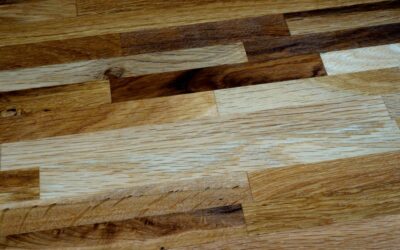
“Liberty Flooring” returns several different brands, dealers, and product lines when you search it — there is Liberty Home Products LVP, Liberty Oak engineered hardwood from various mills, and a string of regional dealers operating under the Liberty name. That fragmentation has made it hard for homeowners to tell whether the product they are buying is a national-brand line or a private-label import. Liberty flooring as a category covers everything from $2 per sq ft entry-level LVP up to $7 per sq ft engineered oak. Here is how to identify what you are actually getting and decide if it fits your project.
Sorting Out the Liberty Brands
Three Liberty-branded categories show up regularly in US dealer showrooms:
- Liberty Home Products — primarily LVP and SPC plank, distributed through regional flooring chains
- Liberty Oak engineered hardwood — private-label oak veneer over HDF or plywood cores, milled by various overseas manufacturers
- Liberty Floors — a UK-based parent brand also exported to North America through specialty channels
None of the Liberty brands carry the marketing budget or warranty depth of Mohawk, Shaw, or Mannington. They compete on price by offering a comparable spec at a lower retail. The pros and cons follow from that positioning.
The LVP Line
Liberty Home Products LVP typically runs $2 to $4 per sq ft at regional showrooms. The spec sheet looks competitive — 5mm rigid SPC core, 12 to 22 mil wear layer depending on tier, attached IXPE foam underlayment, and a click-lock system that installs like every other floating LVP.
The catch is the warranty fine print. Liberty’s residential warranty is usually 25 to lifetime, but it requires registered installation by a licensed contractor and proof of correct underlayment and acclimation. Mohawk and Shaw structure their warranties similarly, but their dealer networks help with claims; Liberty often leaves the homeowner to chase the manufacturer directly.
The Engineered Hardwood Lines
Liberty Oak engineered hardwood is more variable than the LVP. Some Liberty Oak SKUs are repackaged Hallmark or Mannington overruns, sold at a 25 percent discount. Others are direct-import Chinese or Vietnamese product with thin 1-millimeter wear layers and HDF cores that swell with moisture.
Ask the dealer for the mill spec sheet before purchasing. A genuine 3-millimeter or thicker top layer of sliced white oak veneer over a baltic birch core is a quality product at $5 to $7 per sq ft. A 0.6 to 1-millimeter veneer over MDF or HDF is a cosmetic floor that will not refinish and may delaminate under a steam mop. The price tag alone does not tell you which version you have.
Where Liberty Flooring Makes Sense
Liberty flooring earns its place in three scenarios:
- Rental properties where the cost-per-year matters more than long-term warranty value
- Secondary or vacation homes that see light traffic
- Flips and renovations where you need a visually appealing floor at a budget price point
For these uses, $2.50 to $3.50 per sq ft installed for a Liberty LVP is a defensible spend. The product looks like a $5 floor for the first three to five years, which is often all a rental needs between turns.
Where It Does Not Make Sense
Primary residences with kids, pets, and a 10-plus-year ownership horizon are better served by Mohawk RevWood Plus, Shaw Floorte Pro, COREtec Plus HD, or Mannington Adura Max at $4 to $6 per sq ft. The marginal $1 to $2 per sq ft buys you a real warranty network, third-party certifications (FloorScore for VOCs, NWFA for hardwood standards), and dealers with skin in the game on warranty claims.
If you spend 25 percent less and the floor fails in year four, you net out worse than you would have with a premium brand at year ten. Liberty’s value proposition is best at the short end of the time horizon, not the long.
Buying Checklist for Liberty Products
Whichever Liberty line you are considering, run through this checklist before signing:
- Confirm the actual manufacturer and country of origin on the product spec sheet, not the box
- Check the wear layer in mils for LVP (15 mil minimum residential, 20 mil for pets and kids) or veneer thickness in millimeters for hardwood (2 mm minimum for residential refinish potential)
- Verify the warranty registration process and whether the dealer or the manufacturer handles claims
- Ask whether the floor carries FloorScore Gold certification for indoor air quality — a real quality marker
- Get at least two install quotes — install labor should be $1.50 to $3 per sq ft for floating LVP
Any answer that the salesperson cannot give you in writing is a red flag.
Brand Comparison at the Same Price Point
For $3.50 per sq ft material, Liberty’s mid-tier LVP competes with:
- LifeProof rigid core from Home Depot — 22 mil wear layer, lifetime residential, $3.49 per sq ft
- NuCore from Floor and Decor — 20 mil wear layer, lifetime residential, $3.69 per sq ft
- Mohawk RevWood Plus laminate — water-resistant laminate with attached pad, $3.79 per sq ft
- Shaw Floorte Classic — 12 mil wear layer, 25-year residential, $3.39 per sq ft
The big national brands tend to win on warranty backing and dealer network. Liberty wins when a regional showroom heavily discounts to clear inventory — those one-off deals at $2.50 per sq ft can be genuine bargains if the spec is solid.
Final Take
Liberty flooring is not a single product but a label that covers a spectrum of imported and rebadged flooring. The LVP line is solid for rental and secondary uses. The hardwood line varies in quality and demands close spec-sheet inspection before purchase. Compare any Liberty product against equivalent Mohawk, Shaw, COREtec, and LifeProof options at the same price point — if Liberty is meaningfully cheaper with the same spec on paper, the warranty network is what you are giving up. That trade-off is defensible for budget projects and risky for forever homes.
Prefer to explore on your own?
See how new flooring looks in your actual room in seconds — free, no signup.
Try the free Floor Studio →