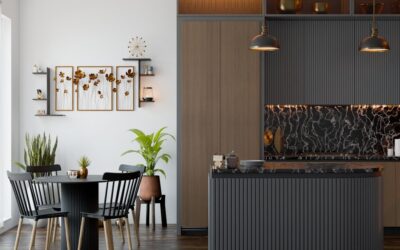
After swapping out knobs and pulls on a few hundred kitchens, I can tell you that champagne gold cabinet hardware is one of the smartest finish upgrades a homeowner can make. It reads as warm and expensive without the loud, cast-brass yellow that dated so many kitchens in the 1990s. Champagne gold sits in a soft middle ground: a muted, slightly rosy gold with a satin sheen that catches light gently instead of throwing it back at you.
Part of our Kitchen Remodeling guide — explore the full guide →
The finish flatters almost everything I install it against, but it isn’t foolproof. Get the undertone wrong, or pair it with the wrong faucet, and the whole kitchen looks mismatched. Below is what I tell clients before we order a single pull.
What Champagne Gold Actually Looks Like
Manufacturers use the term loosely, so the color varies from brand to brand. In general, champagne gold is lighter and cooler than antique brass, warmer than nickel, and far more subdued than polished brass. Think of the color of a glass of dry champagne: pale gold with a whisper of pink or beige. Most versions carry a brushed or satin texture rather than a mirror polish, which hides fingerprints and small scratches beautifully.
Compare the three finishes people most often confuse:
- Champagne gold: soft, muted, warm-neutral with a satin finish. The most forgiving of the golds.
- Brushed brass: a touch more yellow and saturated, closer to raw brass, still matte.
- Polished/aged brass: higher shine and stronger yellow or amber tone, more traditional and bolder.
If a client wants glamour but worries about a fixture looking “too gold,” champagne is the answer nearly every time.
Pairing It With Cabinet Colors
The beauty of champagne gold is its range. It works across a wider palette than either chrome or oil-rubbed bronze. Here is how it lands against the cabinet colors I install most:
- Crisp white and off-white: classic and clean. The gold warms up a cool white so the kitchen doesn’t feel clinical.
- Deep navy and forest green: my favorite pairing. The contrast is rich and modern, and the gold pops without shouting.
- Warm greige and taupe: a soft, quiet, high-end look. Great for transitional kitchens.
- Charcoal and matte black: dramatic and current. Champagne reads softer here than a bright brass would.
- Natural wood and light oak: the gold echoes the wood’s warmth for a Scandinavian feel.
The one combination I steer people away from is champagne gold against a very cool, blue-based gray. The undertones fight, and the gold can look slightly green in certain lighting.
Choosing the Right Pull Sizes
Hardware sizing is measured center-to-center, meaning the distance between the two screw holes, not the overall length. Getting this proportional to the door or drawer matters more than the finish. A stubby pull on a 30-inch drawer looks like an afterthought.
My standard sizing rules:
- 3-inch center-to-center: good for small drawers and doors up to about 15 inches wide.
- 5-inch center-to-center: the workhorse size for standard base cabinet doors and mid-size drawers.
- 6.25-inch center-to-center: for wider drawers, 24 to 30 inches, and larger doors.
- 8 to 12 inch (appliance pulls): for panel-ready refrigerators, dishwashers, and oversized pantry doors.
A common designer trick is to run one continuous pull length across cabinet doors while scaling pulls up on the big drawers below. On large drawers 30 inches and wider, I often mount two pulls side by side or use a single long appliance-style pull for balance.
What It Costs
Hardware pricing spans a huge range, and it directly reflects the base metal and plating quality. Cheap zinc alloy with a thin coating will rub through in a couple of years; solid brass with a durable finish will outlast the cabinets.
- Budget (zinc alloy, coated): $2 to $4 per pull, $1.50 to $3 per knob.
- Mid-range (solid brass or steel, quality plating): $6 to $14 per pull.
- Premium (solid brass, living or PVD finish): $18 to $40+ per pull.
For a typical 30-cabinet kitchen you might need roughly 40 to 50 pieces of hardware. At the mid-range level, budget $350 to $650 for the whole kitchen. I always order two to three spares; discontinued lines are a headache when you crack a pull during install.
Brands Worth Knowing
Not all “champagne” is created equal, so order a single sample before committing. Names I trust and specify regularly:
- Emtek: solid, consistent satin brass and champagne tones, excellent quality.
- Amerock and Hickory Hardware: broad big-box availability, good value, reliable “Golden Champagne” style finishes.
- Top Knobs and Berenson: designer lines with heftier feel and refined finishes.
- Schaub, Atlas Homewares: higher-end options with distinctive profiles.
You’ll find champagne gold at Home Depot, Lowe’s, Wayfair, Build.com, and Amazon, plus specialty dealers. Big-box stock is fine for most kitchens; just verify the finish name across your whole order since even one brand may list “champagne bronze,” “golden champagne,” and “satin brass” as separate colors.
Knobs, Pulls, or a Mix
The layout question comes up on every job. Traditionally, knobs go on doors and pulls go on drawers, and that split still looks correct and balanced in most kitchens. It’s also the budget-friendly route, since knobs run cheaper than pulls and you only drill one hole per door.
That said, the current trend leans toward pulls everywhere, including on doors, for a more streamlined, contemporary feel. If you go all-pulls, keep the door pulls vertical and the drawer pulls horizontal, and align them consistently, roughly 2.5 to 3 inches down from the top corner on upper doors and up from the bottom corner on lowers. For a 30-cabinet kitchen mixing knobs and pulls, plan on about 18 to 24 knobs and 18 to 26 pulls. Whatever ratio you land on, buy everything in one order and one finish batch so the champagne tone is consistent across every piece.
Common Mistakes to Avoid
A few errors I see repeatedly. First, ordering online without a physical sample; screen colors lie, and a “champagne” that photographs warm can arrive noticeably pink or green. Second, mixing coating types, like pairing a lacquered pull with an unsealed living-finish knob, so the two age at different rates and drift apart in color. Third, skimping on the base metal, which leaves you with rubbed-through spots at the highest-touch handles within a year or two.
Spend a few dollars ordering one knob and one pull, tape them to your cabinet in daytime and evening light, and live with them for a couple of days before you commit the whole kitchen. That small step has saved more of my clients from expensive regret than any other piece of advice I give.
Matching Faucets and Fixtures
One question I get constantly: will my hardware match my faucet? It doesn’t need to be identical, but it should be in the same family. Delta’s Champagne Bronze, for example, is a well-known plumbing finish that pairs cleanly with champagne gold hardware. If your faucet is a true polished brass, choose a slightly warmer gold pull to bridge the gap, or lean into intentional mixing where metals differ but tones agree.
Designers today mix metals on purpose, so a matte black faucet with champagne gold pulls looks deliberate, not accidental. The rule I follow is to keep one metal dominant and use the second as an accent.
Keeping the Finish Looking New
Champagne gold is low-maintenance, but coating quality determines longevity. PVD (physical vapor deposition) finishes are the most durable and resist tarnish for years. Lacquered finishes are next best. Unsealed “living finishes” will patina over time, which some people love and others don’t expect.
To protect any champagne gold hardware:
- Wipe with a soft, damp microfiber cloth and mild dish soap; dry immediately.
- Avoid abrasive pads, vinegar, bleach, and ammonia-based cleaners, which strip plating.
- Keep glass cleaner and harsh degreasers off the metal.
- Buff occasionally with a dry cloth to restore the satin sheen.
Handled this way, quality champagne gold cabinet hardware will look as warm and refined a decade from now as the day you screwed it on. It’s a small line item that punches far above its cost, which is exactly why it stays on my recommendation list.