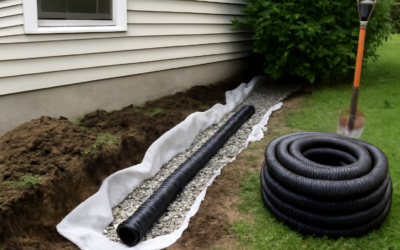
Water is the number-one enemy of any foundation, and a well-built french drain around house perimeters is one of the most effective defenses against a wet basement, cracked foundation walls, and a soggy yard. This gravel-filled trench with a perforated pipe intercepts groundwater and surface runoff, then carries it safely away from your home before it can pool against the foundation and seep inside. Whether you are fighting an existing water problem or protecting a new build, understanding where to place the drain, how it is installed, and what it costs will help you get lasting results.
How a French Drain Protects Your Home
A French drain works on the simple principle that water follows the path of least resistance. By digging a sloped trench, filling it with gravel, and burying a perforated pipe, you create an easy channel for water to enter and flow away. Around a house, the drain collects water in the soil before it builds up hydrostatic pressure against the foundation walls. That pressure is what forces water through cracks and porous concrete into a basement or crawl space. Relieve the pressure with a properly placed drain, and you cut off the water at its source.
Exterior vs. Interior French Drains
There are two main ways to install a French drain to protect a house, and they solve the problem from different sides:
- Exterior (footing) drain: Installed outside the home along the foundation footing, ideally during construction or by excavating down to the footing. It stops water before it ever reaches the wall and is the gold standard, but retrofitting one means digging deep around the house, which is labor-intensive and costly.
- Interior perimeter drain: Installed inside the basement along the interior footing, beneath the floor slab, feeding a sump pump. It manages water that has already reached the foundation and is often the more practical retrofit for an existing home with a finished exterior.
- Surface French drain: A shallower yard drain that intercepts surface runoff and redirects it away from the house, good for wet yards and directing downspout water.
Where to Place the Drain
Placement determines everything. For foundation protection, the drain should run along the perimeter where water collects, sloped continuously downhill toward an outlet. The trench must maintain at least a 1 percent grade, meaning it drops about 1 inch every 8 feet, so water always flows away rather than sitting. The discharge point should be well away from the house, at a lower elevation, emptying to daylight on a slope, into a dry well, or to a storm drain where permitted. Never route the outlet somewhere it will simply flow back toward the foundation.
Step-by-Step Installation
A yard or surface French drain around the house is achievable for a determined DIYer with the right tools; a deep footing drain usually calls for an excavator and a pro. Here is the general process:
- Call 811 to mark utilities. Never dig around a house without locating buried lines first. This is free and required.
- Plan the route and slope. Map the trench from the wet area to a suitable outlet, confirming a continuous downhill grade with a line level.
- Dig the trench. Typically 18 to 24 inches deep and about 12 inches wide for a yard drain, deeper for foundation work. Keep the bottom sloped.
- Line with filter fabric. Lay landscape fabric in the trench, extending up the sides, to keep soil from clogging the gravel and pipe.
- Add gravel and pipe. Put a few inches of washed gravel at the bottom, lay perforated pipe (holes facing down is the common practice) on top, then cover with more gravel.
- Wrap and backfill. Fold the fabric over the gravel to seal it, then top with soil, sod, or decorative stone.
Use rigid perforated PVC rather than cheap corrugated pipe for a foundation drain; it resists crushing and roots and lasts far longer.
What It Costs
Cost depends heavily on depth, length, and whether it is interior, exterior, or surface:
- Surface/yard French drain: $10 to $40 per linear foot, often $1,000 to $4,000 for a partial perimeter.
- Interior basement perimeter drain: $50 to $100 per linear foot, commonly $5,000 to $13,000 including a sump pump.
- Exterior footing drain (retrofit): $80 to $200 per linear foot due to deep excavation, often $10,000 to $25,000 for a full perimeter.
- DIY yard drain materials: $5 to $15 per linear foot if you do the digging yourself.
Common Mistakes to Avoid
Several errors doom a French drain. The most common is insufficient slope; a flat trench lets water and sediment sit, clogging the system. Skipping the filter fabric is another; without it, soil migrates into the gravel and pipe and chokes the drain within a few years. Using flimsy corrugated pipe that later crushes or fills with roots leads to failure, so choose rigid pipe for permanent installations. Discharging too close to the house simply recycles the water back to the foundation. Finally, forgetting a cleanout access makes future maintenance far harder; add a riser at the inlet so you can flush the line annually.
Pairing With Other Drainage Fixes
A French drain works best as part of a complete water-management strategy. Extend your gutter downspouts at least several feet from the foundation, or tie them into their own solid drain line. Grade the soil around the house so it slopes away from the foundation, dropping about 6 inches over the first 10 feet. Seal any obvious foundation cracks. Together with the French drain, these measures keep water away from the house from every direction and give your foundation the best possible protection for the long term.
Maintaining Your French Drain
A French drain is not a install-and-forget system; a little annual maintenance keeps it working for decades. Install a cleanout riser with a removable cap at the inlet end so you can flush the pipe with a garden hose or a pressure jetter once a year, clearing any silt before it accumulates. Each spring and after major storms, check the outlet to confirm water is discharging freely and that no debris, mulch, or animal nest is blocking it. Keep the area over the trench clear of deep-rooted trees and shrubs, whose roots seek out the moisture and eventually invade the pipe. If you notice water pooling again or the outlet running dry after rain, act quickly; a small clog caught early is a simple flush, while a neglected one becomes a full excavation.
Landscaping Over the Drain
You do not have to live with an ugly gravel strip around your house. Once the drain is installed and the fabric folded over the gravel, you can finish the surface to blend with your yard. A shallow surface drain can be topped with soil and sod so grass grows right over it, or covered with decorative river rock for a clean, low-maintenance border that also signals where not to dig later. Some homeowners run the drain beneath a mulched planting bed, choosing shallow-rooted plants that will not invade the pipe. Whatever you choose, avoid placing heavy pavers, driveways, or structures directly over the drain unless it was engineered for that load, since concentrated weight can crush the pipe. Mark the drain’s route on a simple sketch so future landscaping or digging projects steer clear of it.
Frequently Asked Questions
How much does a french drain around a house cost?
A surface yard drain runs $10 to $40 per linear foot. An interior basement perimeter drain runs $50 to $100 per foot, often $5,000 to $13,000 with a sump pump. An exterior footing drain retrofit costs $80 to $200 per foot.
Should a french drain be inside or outside the house?
An exterior footing drain stops water before it reaches the wall and is the gold standard, but retrofitting is costly. An interior perimeter drain feeding a sump pump is often the more practical retrofit for an existing home with finished landscaping.
How deep should a french drain around a house be?
A yard drain is typically 18 to 24 inches deep, while a foundation footing drain goes down to the footing, which can be several feet. The trench must slope continuously, dropping at least 1 inch every 8 feet toward the outlet.
Can I install a french drain around my house myself?
A shallow yard or surface drain is doable for a determined DIYer with proper slope, filter fabric, and rigid pipe. A deep exterior footing drain usually requires an excavator and professional installation. Always call 811 before digging.
Where should a french drain discharge?
Discharge well away from the house at a lower elevation, emptying to daylight on a slope, into a dry well, or to a storm drain where permitted. Never route the outlet where water can flow back toward the foundation.