
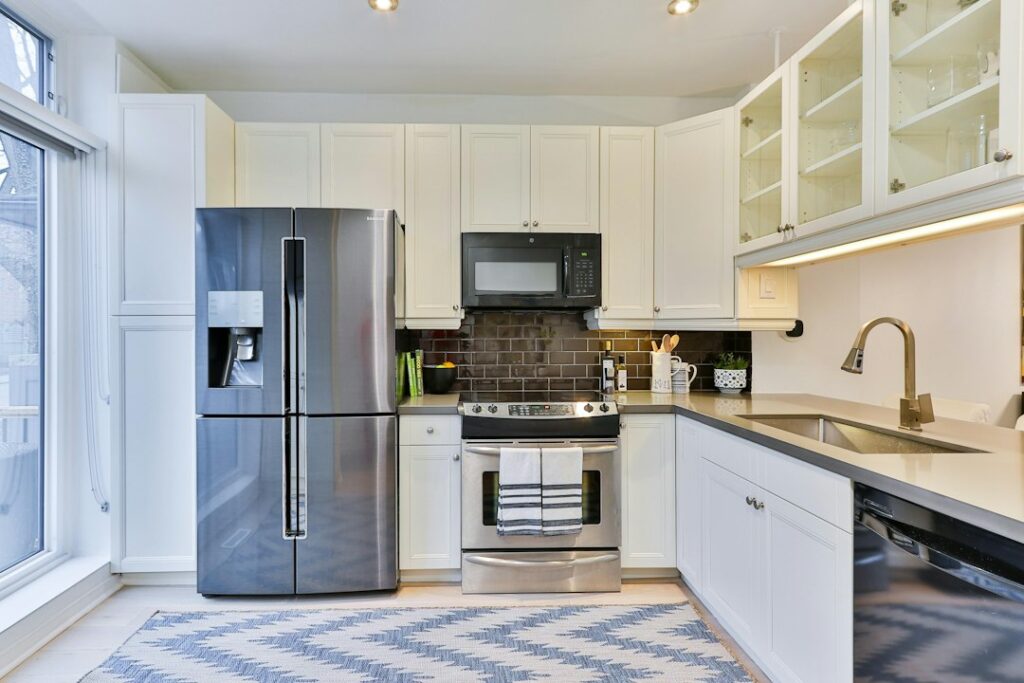
Here is the catch most shoppers miss: a full size retro refrigerator is often smaller inside than a standard modern fridge of the same height. The rounded doors, thick insulated walls and chrome-trimmed styling that make these fridges look like the 1950s eat into interior space. A typical 24 inch wide retro two-door model holds roughly 10 to 12.5 cubic feet, while a plain 30 to 36 inch wide modern fridge usually holds 18 to 28 cubic feet.
The short answer on sizes: most retro fridges sold as “full size” are about 24 inches wide, 64 to 78 inches tall and around 10 to 12.5 cubic feet. True family-size retro models do exist at 30 and 33 inches wide with roughly 19 to 21 cubic feet, but they are a premium, specialty category. Apartment retro units are narrower and shorter, and compact retro fridges are counter-height or under.
- Full Size Retro Refrigerator Dimensions by Class
- Why "Full Size" Means Different Things for Retro Fridges
- Measuring Your Kitchen for a Retro Fridge
- Styles, Colors and Finishes
- Fitting a Retro Fridge Into a Real Kitchen
- Troubleshooting After Delivery
- General Cost Ranges
- When to Call a Pro
- Frequently Asked Questions
Measure your opening, your doorways and your grocery habits before you fall for a color. The right size makes a retro kitchen work; the wrong one becomes a very stylish second fridge.
Full Size Retro Refrigerator Dimensions by Class
These ranges come from manufacturer and retailer spec sheets for current retro-styled models. Exact numbers vary by brand and even by finish within the same model, so always check the spec sheet for the exact model number before you buy.
| Class | Width | Height | Total capacity | Typical layout |
|---|---|---|---|---|
| Compact retro | About 18 to 22 inches | About 32 to 35 inches | About 3 to 4.5 cu ft | Single door or mini two-door |
| Apartment retro | About 21 to 22 inches | About 55 to 60 inches | About 7 to 10 cu ft | Top or bottom freezer |
| 24 inch “full size” retro | About 23.5 to 24 inches | About 64 to 78 inches | About 10 to 12.5 cu ft | Top or bottom freezer |
| 30 inch retro | About 30 inches | About 66 to 70 inches | About 18 to 19 cu ft | Bottom freezer or French door |
| 33 inch retro | About 33 inches | About 68 to 72 inches | About 20 to 21 cu ft | Bottom freezer |
| Standard modern (for comparison) | About 30 to 36 inches | About 66 to 70 inches | About 18 to 28 cu ft | Top, bottom, side-by-side, French door |
Depth is the number that surprises people. Many retro models run about 28 to 30 inches deep without the handle, and the chunky chrome handles add more. Rounded doors also swing wider than flat doors, so you need more clearance at the hinge side than a flat-front fridge of the same width.
Why “Full Size” Means Different Things for Retro Fridges
Appliance makers use “full size” loosely. For a mainstream fridge it usually means a 30 inch or wider unit with 18 cubic feet or more. In the retro world, “full size” often just means “standing height,” as opposed to a mini fridge. A retro fridge full size listing at 24 inches wide and 12 cubic feet will feel similar to an apartment fridge once you load it, even if it stands taller than you.
Interior capacity claims can also be generous. Total cubic feet includes door bins and space you cannot easily use. Independent reviews of some retro models have measured noticeably less usable space than the label suggests. If you cook for a family of four, plan on 18 cubic feet or more of fresh plus frozen storage, or plan on a second fridge or chest freezer in the garage or basement.
Quick capacity guide by household
- 1 to 2 people: a 24 inch retro at 10 to 12.5 cubic feet usually works.
- 3 to 4 people: look at 30 or 33 inch retro models in the 18 to 21 cubic foot range.
- 5 or more, or bulk shoppers: pair a retro fridge with a backup freezer.
Measuring Your Kitchen for a Retro Fridge
Get these numbers before you shop, and write them down so you can compare spec sheets quickly.
Tools you need
- Tape measure (25 foot is ideal)
- Level
- Pencil and notepad or phone notes
- Flashlight to check the outlet and water line location
Steps
- Measure the opening width at the top, middle and bottom. Use the smallest number.
- Measure the height from the floor to the underside of the cabinet above. Retro models with tall rounded tops need extra room.
- Measure the depth from the back wall to the front edge of the counter. Decide whether you are fine with the fridge sticking out past the counters; most retro units will.
- Add ventilation clearance. Leave about 1 inch at the top and back and a small gap at the sides, or follow the clearance on the spec sheet. Freestanding fridges run hotter and less efficiently when boxed in tightly.
- Check the door swing. Open doors need room to swing at least 90 degrees so drawers and bins come out. Check the hinge side against walls and islands.
- Measure the delivery path. Front door, hallways and tight turns. Some 33 inch retro models need a delivery opening wider than 34 inches.
- Confirm the outlet. Plug the fridge directly into a properly grounded wall outlet, never an extension cord or power strip.
Styles, Colors and Finishes
Retro fridges come in two broad looks. The 1950s style has rounded corners, big chrome or polished handles and bold pastel or saturated colors. The 1930s to 1940s “icebox” look is boxier, often with lever-style latches and a more industrial feel. Both are offered in top-freezer and bottom-freezer layouts.
- Pastels: mint, light blue, pink and cream suit vintage-inspired kitchens with checkerboard floors.
- Saturated colors: red, orange and yellow make the fridge a focal point. Use them sparingly elsewhere in the room.
- Neutrals: white, cream and black are easier to live with long term and easier to resell with the house.
- Metallics: stainless and chrome-trim versions blend retro shapes with modern appliances.
Handle and hinge direction matter too. Many retro models are left-hinged or right-hinged by color or model and cannot be easily reversed. Check whether the door can be switched before ordering if your layout needs a specific swing.
Fitting a Retro Fridge Into a Real Kitchen
A full size retro refrigerator works best when the rest of the kitchen supports it. Pick one or two other retro elements (a colored range, a vintage-style faucet, chrome bar stools or a black and white floor) and keep the rest simple. If every surface is retro, the room starts to look like a theme restaurant.
Flooring makes a big difference. A checkerboard vinyl tile or a classic black and white sheet vinyl suits pastel fridges. Warm wood or wood-look plank floors pair well with cream, red and mint. Check that the floor under the fridge is level; retro units with rounded doors show any lean very clearly, and a tilted fridge can keep the door from sealing.
Retro fridges are often freestanding, not counter-depth, so leave a filler panel or an end cabinet beside them so the side of the fridge looks intentional. If you have an ice maker water line, check whether the retro model even has an ice maker, since many do not.
Troubleshooting After Delivery
- Door will not seal: level the fridge with the front feet slightly higher than the back so the door swings closed on its own.
- Food freezing in the fresh section: the thermostat may be set too cold. Use a refrigerator thermometer and aim for 37 to 40°F in the fresh food section and 0°F in the freezer.
- Running constantly: check the clearance at the top and back, and clean the coils if they are exposed.
- Noise: a new fridge can hum or click for a few days. Persistent rattles usually mean a foot is not touching the floor.
- Paint chips: retro finishes show chips easily. Many makers sell touch-up paint by color code.
Most retro models use a simple dial thermostat rather than a digital display, which is why an inexpensive appliance thermometer is worth having. Leave it in the middle shelf for 24 hours before adjusting.
General Cost Ranges
Retro styling carries a premium. Compact retro fridges sit at the low end, often a few hundred dollars. Apartment and 24 inch retro models typically cost about the same as, or somewhat more than, a mainstream full-size fridge. The 30 and 33 inch premium retro lines can cost several thousand dollars, especially in custom colors. Delivery, haul-away and any door reversal can add to the total.
When to Call a Pro
Call a licensed electrician if your kitchen outlet is ungrounded, loose, or on a circuit that trips when the fridge starts. Many codes call for a dedicated circuit for a refrigerator. For a fridge with an ice maker or water dispenser, have a plumber install a proper shut-off valve if you do not already have one. Appliance techs handle sealed-system problems like refrigerant leaks; those are not DIY repairs.
Frequently Asked Questions
How wide is a full size retro refrigerator?
Most are about 24 inches wide. Larger premium retro models come in 30 and 33 inch widths.
How many cubic feet is a retro fridge?
A 24 inch retro two-door model usually holds about 10 to 12.5 cubic feet. 30 and 33 inch retro models reach about 18 to 21 cubic feet.
Is a retro fridge big enough for a family?
A 24 inch model is tight for a family of four. Look at 30 or 33 inch retro models or add a second freezer.
Do retro refrigerators fit in standard fridge openings?
Many 24 inch models fit easily with room to spare, but a standard 36 inch opening will leave a gap you may want to fill with a cabinet or panel. Check depth and door swing too.
Do retro fridges have ice makers?
Many do not. Check the spec sheet if an ice maker or water dispenser matters to you.
Are retro refrigerators energy efficient?
Many current models carry efficiency certifications. Compare the yearly energy estimate on the label, since thick styling does not automatically mean poor efficiency.


