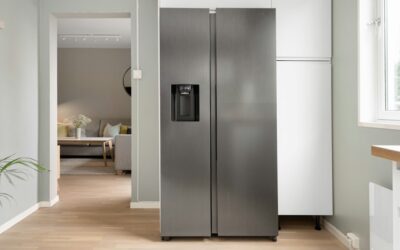
Here is the catch most shoppers discover too late: very few models are built at exactly 32 inches. If you need a 32 inch wide refrigerator, you are really shopping in the gap between the 30-inch class (about 29.5 to 30.75 inches wide) and the 33-inch class (about 32.5 to 33 inches wide). Which class fits depends on your true cabinet opening, not the number on the old fridge’s spec sheet.
For a 32-inch opening, a 30-inch class unit slides in with room to spare, and many 33-inch class units will not fit at all. If your opening measures 33 inches or a hair more, a 33-inch class fridge is usually the better buy because it adds 1 to 3 cubic feet of storage. Height and depth matter just as much: most units in this width run 66 to 70 inches tall and 28 to 34 inches deep with doors and handles.
- 32 Inch Wide Refrigerator Sizes by Style
- Clearances You Need Around the Fridge
- Tools and Materials for Measuring and Installing
- How to Measure for a 32 Inch Wide Refrigerator
- 30-Inch or 33-Inch Class: Choosing for a 32-Inch Space
- Installation Steps Once It Arrives
- Troubleshooting Fit and Performance Problems
- General Cost Ranges
- When to Call a Pro
- Frequently Asked Questions
The sections that follow cover typical sizes by style, the clearances that installers actually need, a measuring routine that avoids return trips, and fixes for the most common fit problems.
32 Inch Wide Refrigerator Sizes by Style
Every maker rounds differently, so treat these as typical ranges for the 30 to 33 inch width band rather than exact specs. Always confirm the installation dimensions on the specific model’s sheet before you buy.
| Style | Typical width | Typical height | Depth with doors | Typical capacity |
|---|---|---|---|---|
| Top-freezer (30-inch class) | 29.5 to 30.75 in | 65 to 67 in | 29 to 32 in | 18 to 21 cu ft |
| Top-freezer (33-inch class) | 32.5 to 33 in | 66 to 68 in | 30 to 33 in | 20 to 22 cu ft |
| Bottom-freezer (30-inch class) | 29.5 to 30.75 in | 67 to 70 in | 30 to 33 in | 18 to 20 cu ft |
| Bottom-freezer (33-inch class) | 32.5 to 33 in | 67 to 70 in | 31 to 34 in | 20 to 23 cu ft |
| French door (30-inch class) | 29.5 to 30 in | 67 to 70 in | 31 to 34 in | 19 to 22 cu ft |
| French door (33-inch class) | 32.5 to 33 in | 68 to 70 in | 32 to 35 in | 21 to 25 cu ft |
| Counter-depth (any style) | 29.5 to 33 in | 67 to 70 in | 27 to 30 in | 15 to 20 cu ft |
| Side-by-side | Rare under 33 in | 67 to 70 in | 31 to 34 in | Varies widely |
Two patterns stand out. First, a French door unit in this width gives you the most fresh-food shelf width but tends to be the tallest and deepest. Second, counter-depth models trade 3 to 5 cubic feet of capacity for a cabinet-flush look. If you search for a fridge 32 inches wide and see “33 inch” in the listing, read the actual case width before ruling it in or out.
Clearances You Need Around the Fridge
A refrigerator needs breathing room to shed heat from the condenser. Without it, the compressor runs longer, the unit gets louder, and energy use creeps up. Model sheets list exact numbers, but typical requirements look like this:
- Top: about 1 inch between the cabinet top and the cabinet or soffit above.
- Sides: 1/8 inch to 1 inch per side, depending on whether the door hinges need extra swing room.
- Back: 1 to 2 inches for the water line, power cord and air flow.
- Door swing: on a hinge side next to a wall, plan 2 to 4 inches so the door opens past 90 degrees and the crisper drawers can slide out.
Add those numbers to the fridge case size and you get your minimum cutout. A 32.75-inch wide unit that needs 1/4 inch per side calls for a 33.25-inch opening, which a “32-inch” space cannot provide. That simple math is the reason so many deliveries end with a fridge sitting in the dining room.
Tools and Materials for Measuring and Installing
- 25-foot tape measure and a pencil
- 4-foot level (or a 2-foot level and a straight board)
- Flashlight for checking the back wall and outlet position
- Adjustable wrench or the leveling tool included with the fridge
- Appliance dolly with straps for moving the unit
- Braided stainless water supply line if the fridge has an ice maker
- Painter’s tape to mark the opening on the floor
Adjustable refrigerator leveling legs are worth checking on any unit you consider. Front legs that thread up and down let you tip the cabinet back slightly so the doors close on their own, and they also let you fine-tune the height under an upper cabinet by a quarter inch or so.
How to Measure for a 32 Inch Wide Refrigerator
- Measure the width in three places. Check at the floor, at counter height and near the top of the opening. Cabinets and walls are rarely perfectly plumb. Use the smallest of the three numbers.
- Measure height at both sides. Floors slope, especially in older kitchens. Take the shorter height and subtract the 1-inch top clearance.
- Measure depth from the back wall. Run the tape to the front edge of the countertop, not the cabinet doors. Note anything sticking out of the wall, such as the outlet box or water valve, because it steals depth.
- Check the floor. Lay a level across the opening front to back and side to side. Leveling legs can usually take up about 1/2 inch of slope.
- Measure the delivery path. Doorways, hallways and turns need to clear the depth of the fridge without doors, plus a couple of inches for the dolly. Many units have removable doors and handles for tight entries.
- Write down the door swing. If one side of the opening sits against a wall or a tall pantry, check the model’s door clearance dimension at 90 degrees.
- Compare to the installation sheet. Use the published case width, height to the top of the hinge cap and depth without handles, then add clearances. If the total is larger than your smallest measurement, move on to a different model.
30-Inch or 33-Inch Class: Choosing for a 32-Inch Space
The decision usually comes down to your smallest width reading. Use this quick guide:
- Opening under 32 inches: stick with the 30-inch class. Look for a unit around 29.5 to 30 inches wide so side clearances are easy.
- Opening of 32 to 33 inches: a 30-inch class unit fits comfortably. A 33-inch class unit only works if its case is 32.5 inches or narrower and the maker allows near-zero side clearance. Filler strips can hide the leftover gap on a 30-inch unit.
- Opening of 33 to 33.5 inches: this is the sweet spot for a 33-inch class fridge. You gain shelf width for platters and pizza boxes without a full remodel.
- Opening over 34 inches: consider whether a 36-inch unit could fit after trimming a filler or moving a panel.
Capacity matters too. A rough rule is 4 to 6 cubic feet of fresh and frozen space per adult in the home. A family of four that shops weekly may feel cramped in an 18 cubic foot top-freezer and much happier with a 22 cubic foot bottom-freezer in the 33-inch class.
Installation Steps Once It Arrives
- Unplug and remove the old unit, then shut off the water valve and disconnect the supply line if there is one.
- Clean the floor and wall area. Check the outlet for a dedicated circuit and plug the new fridge directly into the wall, never into an extension cord or power strip.
- Connect a new water supply line, turn the valve on slowly and look for drips at both ends.
- Roll the fridge into the opening, guiding the line so it does not kink behind the cabinet.
- Adjust the front leveling legs until the fridge is level side to side and tilted slightly back, so the doors swing shut gently from halfway open.
- Line up the doors. Most units have an adjustment on the bottom hinge to raise or lower one door to match the other.
- Let the fridge cool for several hours before loading food, and discard the first few batches of ice.
Troubleshooting Fit and Performance Problems
The fridge sticks out past the counters
A standard-depth unit typically projects 4 to 8 inches beyond a 24 to 25 inch counter. If that bothers you, a counter-depth model or recessing the water valve and outlet into the wall can gain an inch or two.
The doors hit the wall or cabinet
Swap the door hinges to the other side if the model allows reversal, or pull the fridge forward slightly. French door units are friendlier in tight spots because each door is roughly half the width.
The fridge runs constantly or feels warm on the sides
Side walls on many modern units hold condenser tubing and get warm by design. Constant running usually means the unit is boxed in too tightly or the coils are dusty. Check top and back clearance and vacuum the coils.
The doors will not close on their own
Raise the front legs a little more so the cabinet leans back. A full door bin on a slightly forward-tilted fridge is the usual cause.
General Cost Ranges
Prices swing with features and finish, but broad ranges help with budgeting. Basic top-freezer units in this width are usually the cheapest option. Bottom-freezer models typically cost more, and French door units in the 30 to 33 inch range cost more again, especially counter-depth versions. Delivery, haul-away of the old unit and a new water line add a modest amount on top. Expect cabinet modifications, such as trimming a filler or rebuilding an upper cabinet, to cost more than any of those add-ons if a carpenter is involved.
When to Call a Pro
Call a carpenter or cabinet installer when the fix involves cutting cabinets, removing a soffit or rebuilding a pantry wall. If the outlet behind the fridge is missing, damaged, or shared with several other kitchen appliances, a licensed electrician should handle it, including any new circuit. A plumber is the right call if there is no shutoff valve or the existing valve leaks when turned. Delivery crews can also remove doors and handles to get a 32 inch wide refrigerator through narrow entries, so ask about that service when you order.
Frequently Asked Questions
Do they make a refrigerator that is exactly 32 inches wide?
A few models land close to 32 inches, but most are either in the 30-inch class (about 29.5 to 30.75 inches) or the 33-inch class (about 32.5 to 33 inches). Shop by your measured opening and the published case width instead of the size label.
Will a 33 inch refrigerator fit in a 32 inch space?
Usually not. Even the narrowest 33-inch class units are about 32.5 inches wide before side clearance. A 30-inch class model is the safer choice for a true 32-inch opening.
How much space should be above a refrigerator?
Most makers call for about 1 inch above the cabinet. Check the hinge cap height, because some models list the cabinet height and the hinge height separately.
What capacity can I expect from a fridge this width?
Typical capacities run from about 18 cubic feet for a 30-inch top-freezer to around 25 cubic feet for a 33-inch French door. Counter-depth versions usually hold 15 to 20 cubic feet.
Is a counter-depth fridge worth it in a 32 inch opening?
It is worth it if a flush look and walkway space matter more than capacity. You give up several cubic feet of storage and usually pay more for the slimmer cabinet.