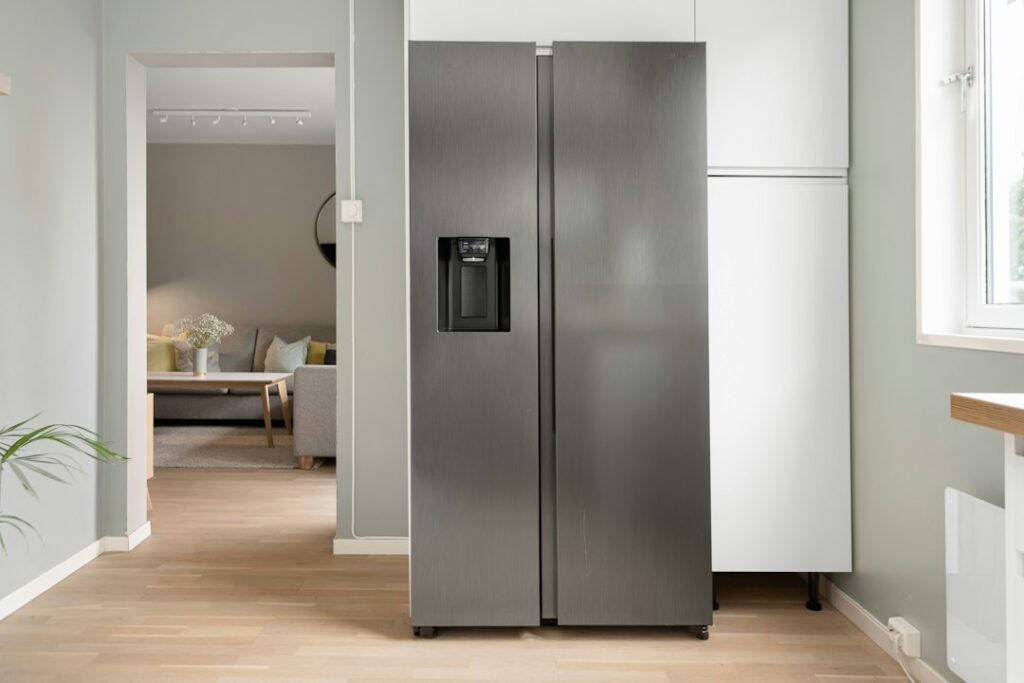
The most common refrigerator mistake is measuring the width and nothing else. A 30 inch wide refrigerator is the standard size for many apartments, condos, older kitchens and galley layouts, and most models actually measure about 29.5 to 30 inches across the cabinet. Height typically falls between about 66 and 70 inches, depth runs from roughly 28 inches for shallow models to about 35 inches with handles for standard-depth units, and capacity usually lands between about 18 and 22 cubic feet.
Those ranges matter because the opening in your cabinets is fixed. A fridge that fits the width can still hit an upper cabinet, stick out past the counter, or block a door from opening fully. Before you shop, measure the width, height and depth of the opening, plus the path into the kitchen.
- 30 Inch Wide Refrigerator Dimensions by Style
- Cabinet Opening and Clearance Requirements
- How to Measure for a 30 Inch Fridge
- Choosing a Style for Your Kitchen
- Apartment and Small Kitchen Notes
- Moving and Installing Without Damaging Floors
- Troubleshooting Fit Problems
- Cost Ranges and When to Call a Pro
- Frequently Asked Questions
The sections that follow give typical dimensions by style, the cabinet opening each one needs, clearance rules, a measuring checklist and tips for getting a new unit in place without damaging floors.
30 Inch Wide Refrigerator Dimensions by Style
Exact sizes vary by model, so treat these as typical ranges drawn from manufacturer spec sheets for current 30-inch units. Always confirm the exact model’s spec sheet before you buy.
| Style | Typical width | Typical height | Typical depth (with doors/handles) | Typical capacity |
|---|---|---|---|---|
| Top freezer | 29.5 to 30 in | 66 to 67 in | 30 to 34.5 in | 18 to 20 cu ft |
| Bottom freezer | 29.5 to 30 in | 67 to 70 in | 31 to 34 in | 18 to 20 cu ft |
| French door (standard depth) | 29.5 to 30 in | 68 to 70 in | 33 to 35 in | 19 to 22 cu ft |
| Counter depth | 29.5 to 30 in | 68 to 70 in | Roughly 6 to 8 in shallower than standard | About 15 to 22 cu ft |
| Built-in column or panel-ready | About 30 in | About 84 in | About 24 to 25 in (flush with cabinets) | Varies by configuration |
Two lessons stand out. First, height is the most common surprise: a French door model near 70 inches tall will not fit under a cabinet set at 67 inches. Second, depth varies more than width. A standard-depth French door unit can project several inches past a 25-inch countertop, while a counter-depth unit sits nearly flush.
Cabinet Opening and Clearance Requirements
Manufacturers publish a “cutout” or installation opening size that is a little larger than the cabinet itself. This gap lets air move and gives room to slide the unit in and out.
| Clearance | Typical requirement | Why it matters |
|---|---|---|
| Opening width | 30 in for most 29.5 in models | Leaves about 1/4 in each side for installation |
| Top | About 1/2 to 1 in above the hinge | Airflow and room to tilt the unit into place |
| Back | About 1 in from the wall | Room for the water line, cord and ventilation |
| Door swing beside a wall | Several inches on the hinge side | Lets doors open past 90 degrees so drawers can slide out |
| Depth with door open | Often around 50 in or more for French doors | Make sure an island or opposite counter does not block the door |
Read the installation guide for your exact model, because some units need more room at the top or back, and some list zero side clearance while others do not. If a fridge sits tight against a side wall, check the door swing carefully: some doors need extra room on the hinge side before crisper drawers can open.
How to Measure for a 30 Inch Fridge
- Measure the opening width at the top, middle and bottom. Use the smallest number.
- Measure the height from the floor to the underside of the upper cabinet or soffit, at both the front and the back. Floors are not always level.
- Measure the depth from the back wall to the front edge of the counter, not counting the countertop overhang. Subtract any space taken by a water valve or outlet box that protrudes from the wall.
- Check door swing. Note walls, islands or other appliances on either side and in front of the opening.
- Measure the delivery path. Check front door, hallway and interior doorway widths, plus tight turns and stairs. Removing doors or handles can buy an inch or two.
- Compare against the spec sheet using the cutout dimensions and the height to the top of the hinge.
Write all of these numbers down and bring them shopping. Cutout depth is often 1 to 1.5 inches more than the cabinet depth, and those details are easy to forget in a showroom.
Choosing a Style for Your Kitchen
Top freezer
The simplest and usually least expensive option. Top freezer models tend to be the shortest of the 30-inch styles, which helps in older kitchens with low cabinets above the fridge. They often offer good capacity for the price and fewer parts to fail.
Bottom freezer
Fresh food sits at eye level and the freezer is a pull-out drawer. A good choice for people who use the fridge section far more than the freezer.
French door
Two narrow doors on top need less swing room than one wide door, which is useful in galley kitchens. In a 30-inch width they are typically the tallest and deepest option, so measure height and depth carefully.
Counter depth
Sits nearly flush with cabinets for a built-in look and frees up floor space in narrow kitchens. You trade some capacity for that slimmer profile.
Built-in or panel-ready
True built-ins are installed flush and can take cabinet panels, but they need a specific opening and professional installation. They are usually the costliest choice.
Apartment and Small Kitchen Notes
Many apartments and older kitchens were designed around a 30-inch opening. If you rent, check with your landlord or building manager before replacing an appliance, and confirm whether the building has rules about delivery times, elevator padding or old-appliance removal.
In very tight spaces, a 30-inch unit may still be too large. Compact 24-inch models exist for those openings, and 28-inch models fit some older cabinets. Going wider requires cabinet changes, so if your opening is exactly 30 inches, stick with a 30-inch unit unless you are remodeling.
Moving and Installing Without Damaging Floors
Refrigerators are heavy, and dragging one across vinyl, laminate or hardwood can scratch or gouge the surface. A set of appliance rollers or a sheet of hardboard laid over the floor protects it while you slide the unit in. Use a proper appliance dolly with straps on stairs, and always move with a helper.
Unplug the fridge before moving it, and keep it upright when possible. If it must lie down during transport, follow the manufacturer’s guidance on how long to let it stand upright before plugging it in. Level the unit using the front feet or rollers so doors close by themselves.
For an ice maker or water dispenser, shut off the water supply at the valve before connecting or disconnecting the line, and check for leaks after turning it back on. Plug the refrigerator directly into a properly grounded wall outlet rather than using an extension cord or power strip. If there is no suitable outlet or water supply behind the fridge, hire a licensed electrician or plumber to add one.
Troubleshooting Fit Problems
Too tall for the opening: check whether the listed height includes the hinge cap. Some upper cabinets can be raised or the cabinet above removed, but that is a carpentry job.
Sticks out past the counters: standard-depth units commonly project several inches. A counter-depth model or moving the outlet or water valve into a recessed box can help.
Doors hit the wall or island: pick a model with reversible doors, a French door design, or one that lists zero-clearance hinges.
Runs warm or noisy after install: it may be pushed too tight against the back wall, blocking airflow. Pull it out to the recommended clearance and level it.
Cost Ranges and When to Call a Pro
Basic top freezer models in this width usually sit at the low end of the refrigerator price range, bottom freezer and French door models in the middle, and counter-depth and built-in models at the high end. Delivery, haul-away and water line hookup may cost extra.
Call a pro for built-in installations, cabinet modifications to fit a taller or deeper unit, new electrical outlets (a licensed electrician) and new water lines (a licensed plumber). Most freestanding models are straightforward to install yourself if the outlet and water valve are already in place.
Frequently Asked Questions
How wide is a 30 inch refrigerator really?
Most measure about 29.5 to 30 inches wide at the cabinet. They are designed to fit a 30-inch opening with a small gap on each side for installation.
How tall is a 30 inch wide refrigerator?
Typical heights range from about 66 inches for top freezer models to about 70 inches for French door models. Built-in column units are taller, around 84 inches.
How many cubic feet is a 30 inch refrigerator?
Most standard-depth models hold about 18 to 22 cubic feet. Counter-depth versions usually hold less because they are shallower.
Will a 30 inch refrigerator fit in a 30 inch opening?
Usually yes, because most units are about 29.5 inches wide. Check the model’s cutout dimensions for height and depth as well, and allow for door swing.
How much clearance does a refrigerator need?
Many models call for about 1/2 to 1 inch at the top and about 1 inch at the back, but requirements vary. Follow the installation guide for your exact model.
Is a counter depth 30 inch fridge worth it?
It is worth it if floor space is tight or you want a flush look. You give up some capacity, so compare cubic feet against how much food you store.