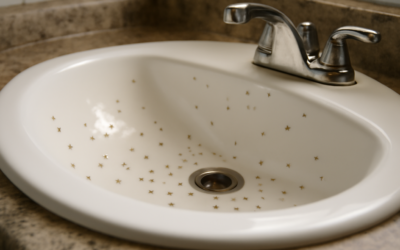
If tiny dark flies keep appearing around your bathroom sink or shower drain, you’re probably not dealing with fruit flies or drain flies — you’re looking at fungus gnats. Finding fungus gnats in bathroom spaces is more common than people realize because bathrooms combine the three conditions these insects need: persistent moisture, organic debris, and dim corners. Killing the adults is easy. Stopping the breeding cycle takes a few more steps, but the entire problem can be solved in 2-3 weeks without an exterminator if you know where to look.
Part of our Bathroom Remodeling & Flooring guide — explore the full guide →
How to Tell If They’re Actually Fungus Gnats
Three small flying insects look similar at a glance. Identification matters because the treatment is different for each:
- Fungus gnats — about 1/8 inch long, dark gray or black, long thin legs, weak fliers that hover near surfaces. Love damp soil and drain biofilm
- Drain flies — fuzzy, moth-like wings, slightly larger. Almost always tied to a single drain
- Fruit flies — tan or red-eyed, fly more confidently in open air, prefer fruit and fermentation
If the insects are hovering around plant pots, near the toilet base, or right at the sink overflow drain — and they look more like miniature mosquitoes than moths — they’re fungus gnats.
Where They’re Actually Breeding
Adult fungus gnats live only 7-10 days. The real problem is the larvae, which feed on fungus, decaying organic matter, and root tissue for 2 weeks before maturing. In a bathroom, larvae typically breed in one of four places:
- Houseplant soil — the top 1-2 inches of any potted plant in the bathroom is the most common breeding site
- Drain biofilm — the slimy gunk inside sink, shower, and tub drains
- Under wet bath mats — especially mats that don’t dry fully between uses
- Around the toilet wax seal — if there’s a slow leak, the subfloor stays damp and breeds gnats
Until you find and treat the breeding site, killing adults is a never-ending loop.
Killing Adult Gnats Quickly
Yellow sticky traps cut the adult population fast. Place one near each plant and one on the bathroom counter. They cost $8-$12 for a 20-pack on Amazon (Trappify or Gideal brands are reliable). Expect to see 20-50 gnats per trap in the first 3-4 days if you have an active infestation.
For faster knockdown of flying adults, a small dish of apple cider vinegar with a drop of dish soap left on the counter overnight catches dozens. The soap breaks surface tension so gnats sink instead of escaping.
Treating Plant Soil
If you have plants in the bathroom, treat the soil even if you can’t see larvae — they’re nearly invisible to the naked eye until they’re mature. The most reliable home treatments:
- Bottom-watering only for the next 3 weeks — let the top 2 inches of soil dry completely between waterings. Larvae die without surface moisture
- Mosquito Bits (Bti) — sprinkle 1 tablespoon on top of soil, water through it. The bacteria kills larvae within 48 hours and is harmless to pets and people. About $12 for a 30 oz bag
- Hydrogen peroxide drench — mix 1 part 3% hydrogen peroxide with 4 parts water, drench the soil. Kills larvae on contact
If a plant is heavily infested and you don’t love the plant enough to spend a month rehabilitating it, throwing it out (in a sealed bag) is the fastest fix.
Cleaning Drains and Plumbing Sources
Drain biofilm is the second most common breeding spot. Pour a kettle of boiling water down each bathroom drain — sink, shower, tub. Wait 30 minutes, then pour 1 cup of baking soda followed by 1 cup of white vinegar. Let it foam for 15 minutes, then flush with hot water again. Do this for 3 nights in a row to break the larval cycle.
For tough biofilm, an enzyme-based drain cleaner (Bio-Clean or Green Gobbler) works without damaging pipes. Avoid bleach as the primary drain treatment — it doesn’t penetrate biofilm effectively and damages chrome and PVC over time.
Find the Moisture Source
If gnats persist after treating plants and drains, there’s a moisture problem somewhere in the bathroom you haven’t found yet. Check:
- Around the base of the toilet — wobble it gently; any movement suggests a failing wax seal and slow leak
- Under the sink — feel inside the cabinet for soft wood or musty smell
- Behind the toilet tank where the supply line connects
- Caulk lines around the tub and shower — cracked caulk lets water seep into the subfloor
- The bathroom fan housing — condensation can drip and pool above the ceiling
Persistent gnats almost always mean persistent moisture. Fix the leak and the infestation ends within 2 weeks naturally.
Long-Term Prevention
Once the current infestation is gone, three habits stop them from coming back. Keep the bathroom exhaust fan running for at least 20 minutes after every shower to bring humidity below 55%. Switch any houseplants in damp rooms to terracotta pots (porous, dries faster than plastic). And add a thin layer of horticultural sand or aquarium gravel — about 1/2 inch — on top of plant soil; gnats can’t lay eggs through it.
A small dehumidifier (Pro Breeze Mini, $50) in the bathroom corner solves chronic humidity problems and pays for itself in maintenance savings within a year.
When to Call a Pro
Most fungus gnat problems resolve with DIY treatment in 2-3 weeks. Call an exterminator or plumber if gnats persist after a full month of treatment, you smell musty air with no visible water source, or gnats spread to other rooms. A persistent infestation across multiple rooms is almost always a hidden plumbing leak or subfloor moisture issue — both are problems that get more expensive the longer they’re left alone.