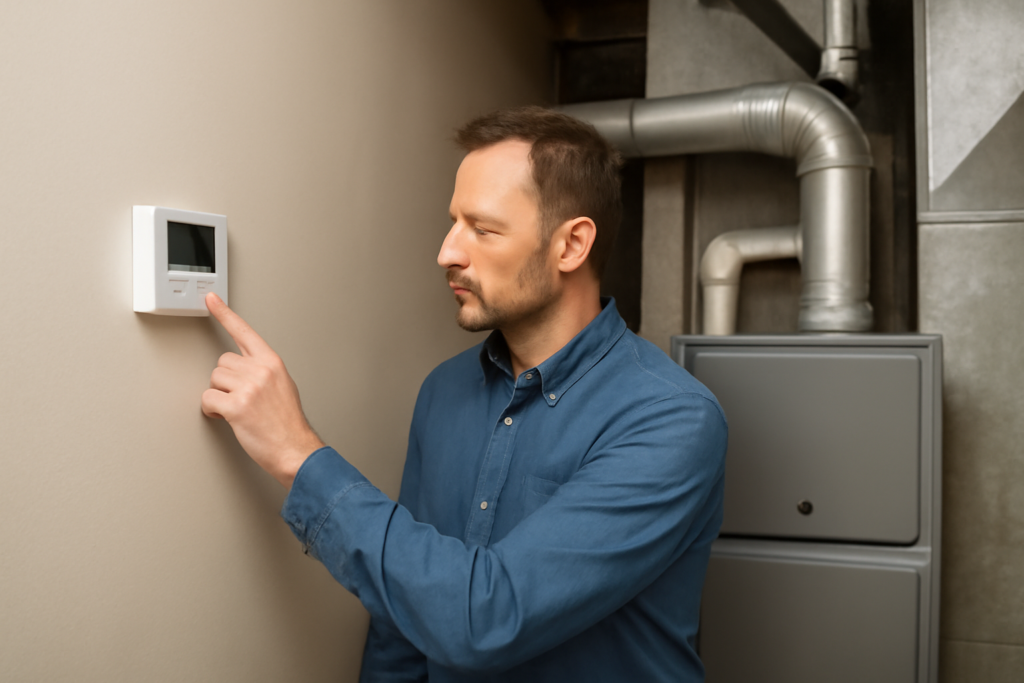
When your house feels too cold, too hot, or wildly uneven from room to room, the culprit usually traces back to how your furnace senses and regulates heat. Understanding furnace temperature control helps you set your system correctly, troubleshoot minor issues, and know when a problem is beyond DIY. Several components work together to keep your home comfortable and, just as importantly, safe. This guide explains how they function and what you can adjust yourself, while making clear which jobs belong to a licensed HVAC professional.
- The Thermostat: Your Main Control
- The Limit Switch: A Safety Device
- How a Heating Cycle Works
- Common Temperature Control Problems
- What You Can Safely Do Yourself
- Setting the Thermostat for Efficiency
- When to Call an HVAC Professional
- Thermostat Types and Placement
- Zoning for Even Comfort
- Seasonal Maintenance Checklist
The Thermostat: Your Main Control
The thermostat is the brain of the system. It reads the indoor air temperature, compares it to your set point, and signals the furnace to fire up or shut down. When the room drops below your target, it closes a circuit that tells the furnace to start; once the set temperature is reached, it opens the circuit and the furnace turns off. Everything you do to control comfort starts here.
Modern programmable and smart thermostats let you schedule different temperatures throughout the day, which is the single most effective way to cut heating costs. Lowering the setting by 7 to 10 degrees while you sleep or are away can meaningfully reduce energy use over a season.
The Limit Switch: A Safety Device
Inside the furnace, the high-limit switch monitors the temperature of the air in the heat exchanger area. Its job is safety: if the furnace gets too hot, often because of restricted airflow, the limit switch shuts off the burners to prevent overheating, cracking, or fire. It also controls the blower, turning it on once the heat exchanger warms up and off after it cools. A furnace that short-cycles or blows cold air may have a limit switch tripping, which is a sign to investigate airflow.
How a Heating Cycle Works
Walking through a normal cycle shows how the parts coordinate:
- The thermostat senses the room is below the set point and calls for heat.
- The furnace ignites the burners and the heat exchanger warms up.
- The limit switch confirms safe temperature and signals the blower to run.
- Warm air circulates through the ducts to your rooms.
- When the thermostat reaches the set point, it ends the call and the burners shut off.
- The blower continues briefly to use up residual heat, then stops.
Common Temperature Control Problems
- Short cycling: The furnace turns on and off rapidly, often from a dirty filter, overheating, or a thermostat placed near a heat source.
- Uneven heating: Some rooms stay cold, usually a ductwork, register, or balancing issue.
- Furnace runs constantly: Can indicate an undersized system, leaky ducts, or a faulty thermostat.
- Blower runs but no heat: May point to ignition or limit switch trouble.
What You Can Safely Do Yourself
Several fixes are well within homeowner reach. Replace the air filter every one to three months, since a clogged filter restricts airflow and trips the limit switch. Confirm the thermostat is set to heat and the batteries are fresh. Make sure supply and return registers are open and unobstructed by furniture or rugs. Check that the thermostat is not mounted in direct sunlight or near a vent, which throws off its readings.
Setting the Thermostat for Efficiency
For comfort and savings, many households set around 68 degrees Fahrenheit while awake and lower it overnight or when away. Use the scheduling features on a programmable thermostat rather than dramatic manual swings. Avoid cranking the dial far above your target to heat faster; the furnace heats at the same rate regardless, and the high setting just wastes energy if you forget to turn it down.
When to Call an HVAC Professional
Anything involving the burners, gas, ignition components, the heat exchanger, electrical wiring, or a malfunctioning limit switch should be handled by a licensed HVAC technician. A cracked heat exchanger, in particular, can leak carbon monoxide and is a serious safety hazard. Schedule an annual professional tune-up, typically $80 to $200, to clean and inspect the system, test safety controls, and catch problems early. If you smell gas, leave the home and call your utility immediately.
Thermostat Types and Placement
Where and what kind of thermostat you use has a big effect on comfort. A basic manual thermostat holds one temperature until you change it, a programmable model follows a daily schedule, and a smart thermostat learns your habits and can be controlled from your phone. Placement matters just as much as the device: mount it on an interior wall, away from direct sunlight, supply vents, lamps, and exterior doors. A thermostat in a poor location reads the wrong temperature and makes the furnace cycle incorrectly, causing the very comfort problems you are trying to solve.
Zoning for Even Comfort
If some rooms are always too hot or cold, a single thermostat may not be enough. Zoning systems use multiple thermostats and motorized dampers in the ductwork to control temperature room by room or floor by floor. This is especially helpful in multi-story homes where heat rises and the upstairs runs warm while the basement stays cool. A zoning system requires professional design and installation, but it can dramatically improve comfort and reduce energy waste by heating only the spaces you are using.
Seasonal Maintenance Checklist
- Replace or wash the air filter every one to three months
- Test the thermostat and replace batteries at the start of heating season
- Keep all supply and return registers open and unblocked
- Vacuum dust from accessible registers and the blower compartment when off
- Schedule an annual professional tune-up before winter
- Install or test carbon monoxide detectors near sleeping areas
Staying on top of this short list prevents most temperature control problems and keeps the system running efficiently and safely.
Effective furnace temperature control comes down to a smart thermostat setting, clean airflow, and properly functioning safety switches working together. Handle the simple maintenance yourself, set the thermostat wisely, and leave burner, gas, and electrical repairs to a qualified HVAC professional. That combination keeps your home comfortable, efficient, and safe all winter.