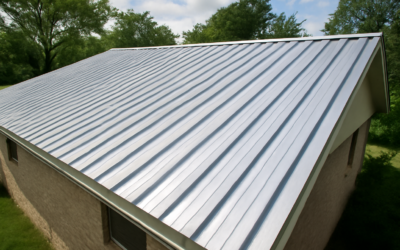
Metal roofing quietly abandoned plain galvanized steel decades ago, and the material it switched to is now working its way into the gutter market. Galvalume gutters are steel coated with a 55 percent aluminum, 43 percent zinc alloy — a combination that outlasts traditional galvanizing by two to four times in industry corrosion testing while keeping steel’s dent-proof strength. If you want gutters stronger than aluminum without copper’s price tag, Galvalume is the modern answer. Here is how it stacks up against every other gutter metal, what it costs, and the two situations where you should not use it.
Part of our Roofing guide — explore the full guide →
What Galvalume Actually Is
Galvalume is a trademarked coating, not a metal — carbon steel sheet hot-dipped in an alloy of roughly 55 percent aluminum, 43.4 percent zinc, and 1.6 percent silicon. The genius is in how the two elements divide the work. Aluminum forms a tough, stable oxide barrier that erodes far more slowly than zinc, giving the coating its long life. Zinc provides sacrificial protection at scratches and cut edges, corroding preferentially so exposed steel stays sound. Plain galvanizing offers only the sacrificial half; bare aluminum offers only the barrier half. Galvalume does both.
The standard coating weight for gutters and roofing is AZ50 to AZ55 on 24- or 26-gauge steel, usually finished with a baked-on PVDF (Kynar 500) or SMP paint system in the same color range as metal roofing. Bare, unpainted Galvalume has a distinctive spangled silver-gray look that some modern and agricultural designs use deliberately.
Galvalume vs Galvanized Steel
This is the comparison that matters most, because the two products occupy the same niche — strong steel gutters at mid-market prices. In atmospheric exposure testing going back to the 1960s, Galvalume coatings have consistently shown two to four times the service life of G90 galvanizing in the same environment. Where a galvanized gutter delivers 20 to 25 years in a humid climate, an equivalent Galvalume gutter is realistically a 40-to-60-year product, and manufacturers back painted Galvalume roofing with 25-year-plus finish warranties they never offered on galvanized.
The one place galvanized retains an edge is at cut edges and scratches: pure zinc is more aggressively sacrificial, so galvanized heals raw edges slightly better. In practice, factory-painted Galvalume with field-cut ends sealed at installation makes this a non-issue on gutters. Pricing runs close — Galvalume typically costs 5 to 15 percent more than galvanized for equivalent gauge, which the lifespan difference repays several times over. Full rust-management details for the older material are in our galvanized gutters guide.
Galvalume vs Aluminum
Aluminum owns the gutter market for good reasons — it cannot rust, it is cheap, and every seamless crew in the country carries it. Galvalume challenges it on strength. Steel’s tensile strength means Galvalume troughs resist ladder dents, hail bruises, and snow-slide damage that crease 0.027-inch aluminum, and long runs stay straighter with less oil-canning between hangers.
- Strength: Galvalume, decisively — roughly three times the dent resistance of standard aluminum coil
- Corrosion: aluminum by a nose; it has no steel core to protect, though painted Galvalume gets close in practice
- Price: aluminum, at $6 to $14 per foot installed versus $12 to $22 for Galvalume
- Availability: aluminum overwhelmingly; Galvalume gutters usually come from metal-roofing contractors, not standard gutter crews
- Thermal movement: Galvalume — steel expands about half as much as aluminum, easing sealant stress at long-run joints
The practical verdict: on a standard shingled house in a mild climate, aluminum remains the value pick. Under a metal roof, in hail or heavy-snow country, or anywhere gutters take physical abuse, Galvalume earns its premium.
Galvalume vs Copper and Zinc
Copper and zinc are the lifetime-luxury tier — 60 to 100 years for copper at $25 to $45 per foot, around 80 years for zinc at $20 to $35. Painted Galvalume plausibly delivers half to two-thirds of that service life at roughly half the cost, without the patina aesthetic that draws people to copper gutters in the first place. If the look you want is living metal that ages visibly, Galvalume is the wrong product; its job is to look exactly the same in year 30 as year one. One hard rule: never let copper runoff drain onto Galvalume (or galvanized) surfaces — the dissolved copper ions plate onto the coating and trigger rapid galvanic corrosion.
The Two Places Galvalume Fails
Galvalume has two well-documented weaknesses. First, marine salt spray: within about 1,500 feet of breaking surf, manufacturers void their warranties, because chlorides attack the coating aggressively. Aluminum or copper is the correct coastal choice. Second, contact with concrete, mortar, and treated lumber: fresh alkaline masonry and the copper compounds in modern pressure-treated wood both corrode the coating on contact. Keep Galvalume gutters and downspouts isolated from masonry walls with butyl tape or standoffs, and never strap a downspout directly to treated lumber.
Animal confinement buildings are a third, niche exclusion — ammonia atmospheres in barns eat the coating — which is why agricultural suppliers still sell galvanized for hog and poultry structures.
Cost and Sourcing
Expect $12 to $22 per linear foot installed for painted Galvalume gutters, with bare-finish material toward the low end. A 180-foot system with downspouts typically prices between $2,200 and $4,000. The sourcing reality: most seamless gutter trucks carry aluminum coil only, so Galvalume usually means a metal-roofing contractor who roll-forms steel, a sectional order from a metal supplier, or a specialty seamless outfit. Matching profiles are widely available — K-style, half-round, and the box profiles common under standing-seam metal roofs — along with color-matched steel downspouts, which you should insist on to keep all metals compatible. Broader material pricing context lives in our gutter cost guide.
Bare vs Painted Galvalume
Galvalume gutters come two ways, and the choice changes both look and lifespan. Bare (mill-finish) Galvalume shows the alloy’s signature small spangle in bright silver-gray, weathering slowly to a soft matte gray over a decade. It is the cheapest option, popular on barndominiums, agricultural buildings, and industrial-modern designs, and the coating alone still delivers decades of service. Painted Galvalume adds a factory-baked finish — SMP paint systems in the value tier, PVDF (Kynar 500) in the premium tier — which both extends coating life meaningfully and opens the full metal-roofing color deck, including the matte blacks and dark bronzes driving current exterior trends.
Spend up for PVDF if the gutters face south or west or the color is dark; PVDF holds color and gloss dramatically better over 20-plus years, which is why it backs the longest fade warranties in the roofing industry. One handling note either way: Galvalume scratches show brighter than scratches on aluminum because the steel core reflects differently, so insist the crew uses touch-up paint sparingly and correctly — heavy touch-up brushing ages worse than the scratch it hides.
Maintenance Expectations
Maintenance is minimal and mostly generic: clean twice a year, flush downspouts, keep debris from holding moisture against the coating. Two Galvalume-specific habits pay off. Rinse cut ends and drilled fastener points annually for the first couple of years while the zinc phase passivates the exposed edges, and check that no one has leaned treated-lumber scraps, fertilizer bags, or masonry against downspouts — chemical contact, not weather, causes most premature Galvalume failures.
Who Should Choose Galvalume
Galvalume gutters make the most sense in four situations: under a Galvalume or painted-steel roof, where matching metal and matching thermal behavior keep the whole edge detail clean; in hail-prone states like Texas, Oklahoma, and Colorado, where aluminum gutters are routinely totaled; in snow country, where roof-edge slides destroy lighter troughs; and for anyone who wants a genuine 40-year-plus system without paying copper prices. Skip it on the coast, keep it clear of concrete and treated wood, seal your cut edges, and it is arguably the best strength-per-dollar metal hanging on any house today. For the full landscape of profiles, sizing, and materials before you commit, start with our house gutters overview.