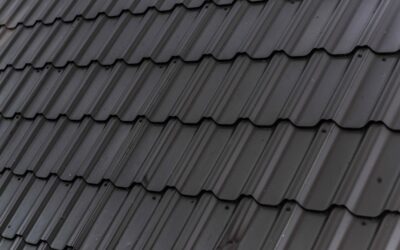
Most residential metal roofs sold in America — whatever color they’re painted — are steel wearing the same protective jacket: Galvalume. A galvalume metal roof uses steel coated with an alloy of 55 percent aluminum, 43.4 percent zinc, and 1.6 percent silicon, a chemistry that outlasts traditional galvanized coating by two to four times in standard atmospheric testing. Understanding what the coating is — and its two genuine weaknesses, cut edges and certain environments — tells you more about how long your roof will last than any brochure. This guide covers the chemistry, the grades, the warranty fine print, and where Galvalume should and shouldn’t go.
Part of our Roofing guide — explore the full guide →
Galvalume vs. Galvanized: The Chemistry That Matters
Bare steel rusts. Both coatings solve that problem with sacrificial metallurgy, but differently:
- Galvanized (G60/G90): pure zinc. Zinc protects two ways — as a physical barrier, and galvanically: when a scratch exposes steel, the surrounding zinc corrodes instead of the steel, sacrificing itself. The cost: zinc erodes steadily everywhere, all the time. A G90 coating (0.9 oz/sq ft) in a normal environment gives roughly 20–30 years before red rust.
- Galvalume (AZ50/AZ55): the aluminum-zinc alloy forms a microstructure of aluminum-rich and zinc-rich zones. Aluminum contributes a hard, inert oxide barrier that barely erodes; the zinc-rich zones still provide sacrificial protection at scratches and edges. Barrier durability plus galvanic healing.
Long-running industry exposure studies put Galvalume’s corrosion life at 2–4x equivalent-thickness galvanized in marine, industrial, and rural test sites. The practical translation: unpainted Galvalume roofing is routinely projected at 40–60+ years to first significant corrosion in ordinary environments, and the coating is why paint-grade steel roofing can carry 40-year warranties at all.
Grades: AZ50 vs. AZ55, and Gauge
| Spec | Coating weight | Typical use |
|---|---|---|
| AZ50 | 0.50 oz/sq ft (both sides total) | Painted panels — paint shares the protection load |
| AZ55 | 0.55 oz/sq ft | Bare/acrylic-coated Galvalume; spec for unpainted warranties |
- Buying bare Galvalume (the raw silvery look, usually with a clear acrylic mill finish — “Acrylume”-type): insist on AZ55; the 25-year-plus bare-metal warranties key to it.
- Buying painted panels: AZ50 under a good paint system is the industry standard and entirely adequate.
- Gauge: 24 ga is the standing-seam residential standard; 26 ga is fine for many exposed-fastener applications; 29 ga is agricultural economy. Thicker steel doesn’t change coating chemistry but resists dents, oil-canning, and foot traffic.
Paint matters as much as substrate on colored roofs: PVDF (Kynar 500-class) resins hold color and chalk ratings dramatically better than budget SMP polyester — a distinction covered further in the metal roofing guide. Dark colors especially punish cheap paint; if you’re eyeing deep charcoal or bronze tones like those in the burnished slate metal roof palette, PVDF is the difference between a 40-year color and a 15-year fade.
Weakness #1: Cut Edges and Details
Every panel ends in a sheared edge of exposed steel. Galvalume’s zinc phase does throw galvanic protection across small cut edges, but less vigorously than pure zinc does — aluminum’s share of the alloy doesn’t sacrifice. Consequences and cures:
- Edge creep: on thin gauges the cut edge self-protects well; on thicker material or aggressive environments, a thin rust line at drip edges can appear over decades. Hemmed edges (metal folded back on itself) at eaves hide and protect the cut — a detail worth requesting on standing seam.
- Field cutting: never cut panels with an abrasive blade or grinder — hot steel swarf embeds in the coating and blooms into rust freckles within months. Shears, nibblers, or snips only. This single job-site rule prevents the most common “defective panel” complaint, which isn’t a defect at all.
- Scratches: minor scratches self-heal galvanically; deep gouges to steel get touch-up paint made for Galvalume, sparingly.
Weakness #2: Environments Galvalume Hates
- Contact with concrete, mortar, and treated lumber. Alkaline runoff and direct contact with wet concrete/mortar attack the aluminum in the coating. Isolate panels from masonry with underlayment or spacers, and never let panels sit on ACQ-treated lumber without a barrier.
- Animal-confinement buildings. Ammonia atmospheres in poultry and hog barns eat Galvalume; galvanized G90 actually outperforms it there. Purely a farm concern, but it explains conflicting internet anecdotes.
- Copper and lead runoff. Water dripping from copper pipes, flashing, or AC condensate lines onto Galvalume deposits copper ions that pit the coating. Route condensate away; don’t mix copper flashing with Galvalume panels.
- Severe salt spray — the coastal caveat. Within roughly 1,500 feet of breaking surf, standard Galvalume warranties are void or restricted. The coating performs better than galvanized near the coast, but for true oceanfront the right answer is aluminum panels or specialty marine systems. A quarter mile inland with normal exposure, Galvalume with PVDF paint is generally warrantable — read the specific mill warranty’s distance table, not the dealer’s reassurance.
Warranties Decoded
A “40-year warranty” quote bundles three separate promises:
- Substrate/perforation warranty (the Galvalume itself): typically 25 years+ against rust-through from the mill. This is the one the AZ coating earns.
- Paint film integrity: 30–40 years against peeling/cracking on PVDF systems.
- Chalk and fade limits: numeric limits (e.g., fade ≤5 ΔE units in 30 years) — the fine print that separates PVDF from SMP.
All three carry exclusions for coastal distance, improper storage (wet-stacked panel bundles stain permanently — “storage stain”), field-cut abuse, and contact corrosion. Installer workmanship is a fourth, separate warranty; the mill covers none of it.
Cost and the Bare-Galvalume Look
- Exposed-fastener Galvalume panels: $4.50–$8 per sq ft installed.
- Standing seam (24 ga, PVDF): $9–$16 per sq ft installed.
- Bare Galvalume premium: none — it’s often slightly cheaper than painted, which makes the raw-silver modern-farmhouse look one of roofing’s best value plays. It reflects heat well (solar reflectance ~0.65 new) and weathers to a soft matte gray rather than rusting.
Against alternatives: architectural asphalt runs $4.50–$7 installed but lasts half as long; the whole comparison lives in the roof styles guide.
Living With Bare Galvalume: What Owners Report
The unpainted look has grown from agricultural default to deliberate design choice, and a few realities come with it. New panels arrive bright and slightly mirror-like — noticeably reflective for the first one to three years, which occasionally matters for neighbors facing your south slope. The shine mellows steadily as the acrylic mill coating weathers and the alloy develops its matte gray patina; by year five the roof reads as soft pewter and stops changing in any way you’d notice. Fingerprints, footprints, and handling marks visible at installation weather out within the first year. Expect some panel-to-panel tone variation in raking light — mill runs differ slightly, and installers who pull panels from mixed bundles create a subtle checkerboard; ask the crew to install in bundle order. Storage stain is the one permanent cosmetic risk: bundles rained on before installation develop white-to-dark staining between panels that never fully weathers away, so insist panels stay tarped, sloped, and off the ground on site. On maintenance, bare Galvalume asks almost nothing — rinse bird droppings and leaf tannin stains annually if you care, keep valleys clear, and touch up deep scratches. Owners in dry and mixed climates report decades-old bare roofs that look intentionally, evenly gray — which is exactly the modern-farmhouse target, achieved by doing nothing at all.
FAQ
Is Galvalume the same as aluminum roofing?
No — Galvalume is steel with an aluminum-zinc coating. Full aluminum panels contain no steel, can’t rust at all, and are the oceanfront choice at a 20–40 percent price premium and softer dent resistance.
Will a galvalume metal roof rust?
Eventually everything steel can, but the AZ coating defers it for decades — 40–60+ years in normal environments, with cut edges and detail work usually showing age first. Keep copper runoff, mortar, and grinder sparks away and the coating does its job.
Can I install solar panels on it?
Yes — standing-seam Galvalume is the best solar roof there is: clamps grip the seams with zero penetrations. Use isolation pads with aluminum racking to avoid dissimilar-metal contact.
Galvanized or Galvalume for my house?
Galvalume, in essentially every residential case. Galvanized survives only in niches (animal confinement, some heritage looks) — the 2–4x corrosion life is the whole argument.
The coating is the roof. Specify AZ55 for bare looks or AZ50 under PVDF paint, hem the eave edges, cut with shears, keep it clear of concrete and copper — and a galvalume metal roof becomes the last one the house needs this side of 2070.