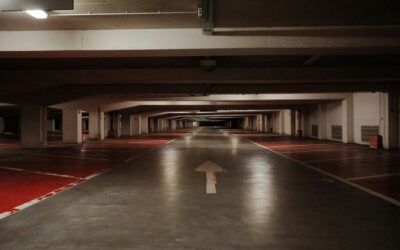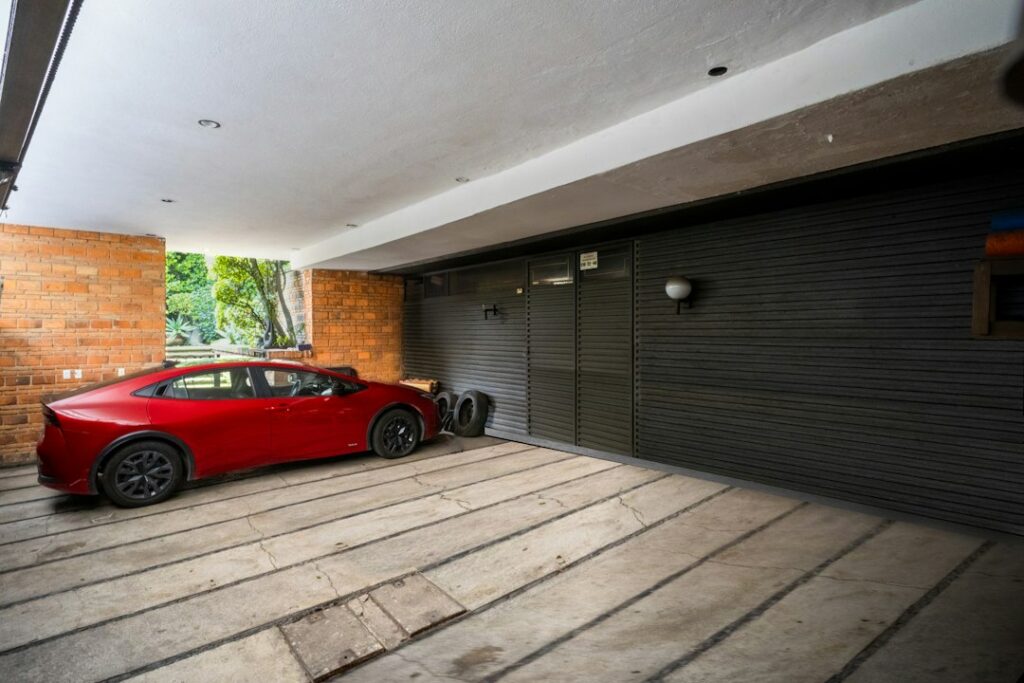
Your garage floor takes more punishment than any other surface in your home. It endures vehicle traffic, oil drips, chemical spills, heavy tool drops, temperature swings, and road salt tracked in on tires. The bare concrete that comes standard in most garages stains, cracks, and dusts over time, which is why millions of homeowners upgrade to a more durable and attractive garage floor finish.
Part of our Epoxy, Concrete & Garage Floors guide — explore the full guide →
This guide compares every major garage floor option: epoxy coatings, polyaspartic coatings, interlocking tiles, rubber mats, sealed and stained concrete, and garage floor paint. We break down durability, cost, installation difficulty, and appearance so you can pick the best option for your garage.
Epoxy Garage Floor Coating
Epoxy is a two-part coating (resin and hardener) that chemically bonds to concrete, creating a thick, high-gloss surface that resists stains, chemicals, abrasion, and moisture. It is the most popular garage floor upgrade and the one most often recommended by professionals.
Pros
- Extremely durable — professional-grade epoxy lasts 10 to 20 years
- Chemical resistant (oil, gasoline, brake fluid, salt)
- Available in dozens of colors plus decorative flake and metallic finishes
- Seamless, easy-to-clean surface
- Hides minor concrete imperfections and cracks
Cons
- Extensive surface preparation required (grinding or acid etching)
- Long cure time (2 to 7 days before vehicle traffic, depending on product)
- Slippery when wet unless anti-slip additive or flake is applied
- DIY kits from hardware stores are much thinner and less durable than professional applications
- Cannot be applied in cold temperatures (most products require 50°F minimum)
Cost
- DIY kit (1-car garage, ~250 sq ft): $100 – $300
- Professional application: $3 – $7 per square foot ($750 – $1,750 for a 1-car garage; $1,500 – $3,500 for a 2-car garage)
Best For
Homeowners who want a showroom-quality floor and are willing to invest in proper preparation. Professional epoxy flooring is the best overall value for long-term garage floor protection.

If you’re running out of room even with a clean garage floor, a backyard shed takes the overflow — seasonal gear, tools, lawn equipment. And if you’re parking outside while the garage doubles as a workshop, a carport keeps your car covered without needing a second garage.
We may earn a commission when you purchase through our links.
Polyaspartic Garage Floor Coating
Polyaspartic coatings are the next evolution of epoxy technology. They share epoxy’s chemical and abrasion resistance but cure dramatically faster — often within a single day. Most professional garage floor installers now offer polyaspartic as their premium option.
Pros
- Same day cure — drive on it within 24 hours
- UV stable (will not yellow or fade in sunlit garages)
- More flexible than epoxy, so it handles temperature expansion better
- Can be applied in a wider temperature range (as low as 30°F)
- Higher abrasion resistance than standard epoxy
Cons
- More expensive than epoxy
- Extremely fast cure time makes DIY application very difficult (limited working time)
- Still requires thorough concrete grinding for proper adhesion
Cost
- Professional application: $5 – $10 per square foot ($1,250 – $2,500 for a 1-car garage; $2,500 – $5,000 for a 2-car garage)
- DIY polyaspartic kits exist but are not recommended due to the short pot life
Best For
Homeowners who want the best available coating and need fast turnaround. Ideal if you cannot have your garage out of service for multiple days.
Interlocking Garage Floor Tiles
Interlocking tiles are rigid modular squares (typically 12 x 12 inches or 18 x 18 inches) made from PVC or polypropylene that snap together over the existing concrete. No adhesive, no coating, no prep beyond sweeping the floor.
PVC Tiles
Solid PVC tiles are smooth-surfaced, chemical resistant, and comfortable underfoot. They are available in a wide range of colors and can create custom patterns (checkerboard, racing stripes, borders). PVC tiles are softer than polypropylene, which makes them quieter and more comfortable but slightly less resistant to heavy point loads.
Polypropylene Tiles
Polypropylene tiles have a raised, perforated design that allows water, dirt, and debris to fall through to the concrete below. They are harder and more rigid than PVC, making them better suited for heavy vehicles and jack stands. The perforated design means spills and snowmelt drain through rather than pooling on the surface.
Pros
- Fastest installation of any garage floor option — a 2-car garage takes 2 to 4 hours
- No concrete prep required (just sweep)
- Removable and reusable if you move
- Individual damaged tiles are replaceable
- No cure time — drive on immediately
Cons
- Higher cost per square foot than coatings
- Edges and corners can lift under aggressive tire turning
- Dirt and moisture can accumulate under tiles (clean periodically)
- Seams are visible, unlike the seamless look of epoxy
Cost
- PVC tiles: $3 – $6 per square foot
- Polypropylene tiles: $2 – $5 per square foot
- 2-car garage (400–500 sq ft): $1,000 – $3,000
Best For
Renters, DIYers who want instant results, and anyone who prefers a reversible flooring solution.
Rubber Garage Floor Mats and Rolls
Rubber flooring for garages comes as interlocking tiles, large rolled sheets, or individual mats placed in work zones. It provides excellent impact protection, noise dampening, and anti-fatigue comfort.
Pros
- Absorbs impact from dropped tools and equipment
- Anti-fatigue comfort for standing workbenches
- Slip resistant even when wet
- Easy installation (roll out or interlock)
- Durable under foot traffic and light vehicle traffic
Cons
- Strong rubber odor initially (off-gasses for 1 to 4 weeks)
- Can stain from hot tire pickup (hot tires can bond to rubber surfaces)
- Heavy — rolled rubber for a 2-car garage weighs several hundred pounds
- Less chemical resistant than epoxy or PVC tiles
Cost
- Interlocking rubber tiles: $2 – $5 per square foot
- Rolled rubber (3/8 to 1/2 inch): $2 – $4 per square foot
- Individual mats (workbench area): $30 – $100 each
Best For
Workshop areas, tool benches, and garages that double as workout spaces. Not ideal as full-coverage flooring under parked vehicles due to hot tire pickup.
Sealed and Stained Concrete
If you prefer the look of concrete but want protection, sealing or staining enhances the natural floor without covering it completely.
Concrete Sealer
A clear penetrating or topical sealer protects concrete from moisture, stains, and dusting without changing its appearance significantly. Penetrating sealers soak into the concrete and provide invisible protection. Topical sealers add a slight sheen.
Concrete Stain
Acid stains and water-based stains add color to concrete, creating a marbled or variegated look. Stained concrete is then sealed to lock in the color and protect the surface.
Pros
- Lowest cost option for upgrading bare concrete
- Maintains the industrial concrete aesthetic
- Quick application (1 day plus cure time)
- Penetrating sealers do not peel or flake
Cons
- Less durable than epoxy or polyaspartic coatings
- Stains need reapplication every 2 to 4 years
- Topical sealers can wear in tire tracks
- Does not hide cracks or imperfections
Cost
- DIY sealer: $0.15 – $0.50 per square foot
- Professional stain and seal: $2 – $4 per square foot
Best For
Homeowners on a tight budget who want basic protection, or those who prefer the natural concrete look.
Garage Floor Paint
Garage floor paint is a single-component latex or acrylic coating that rolls on like wall paint. It is the cheapest garage floor option but also the least durable.
Pros
- Cheapest option available
- Easy DIY application with a roller
- Available in many colors
Cons
- Peels and chips within 1 to 3 years, especially under vehicle tires
- Does not bond chemically to concrete the way epoxy does
- Low chemical and abrasion resistance
- Requires frequent touch-ups and recoating
Cost
- DIY (1-car garage): $50 – $100
- DIY (2-car garage): $100 – $200
Best For
Temporary cosmetic improvement when selling a home or for garages used only for storage (no vehicle traffic).
Comparison Table
| Option | Durability | Cost (per sq ft) | DIY Friendly | Cure/Install Time |
|---|---|---|---|---|
| Epoxy Coating | High | $3 – $7 (pro) | Moderate | 2 – 7 days |
| Polyaspartic | Very High | $5 – $10 (pro) | Low | 1 day |
| Interlocking Tiles | High | $2 – $6 | High | Immediate |
| Rubber Mats/Rolls | Moderate-High | $2 – $5 | High | Immediate |
| Sealed Concrete | Moderate | $0.15 – $4 | High | 1 – 2 days |
| Floor Paint | Low | $0.20 – $0.40 | High | 1 – 2 days |
How to Choose the Right Garage Floor
Your decision comes down to four factors:
- Budget. Floor paint and concrete sealer are the cheapest. Polyaspartic coatings are the most expensive. Epoxy and interlocking tiles sit in the middle.
- Usage. Heavy vehicle traffic demands epoxy, polyaspartic, or polypropylene tiles. Workshop areas benefit from rubber or anti-fatigue matting. Storage-only garages can get by with paint or sealer.
- Installation preference. If you want a weekend DIY project with no special skills, interlocking tiles or rubber mats are the easiest. If you want a professional showroom finish, hire a pro for epoxy or polyaspartic.
- Appearance. Epoxy and polyaspartic offer the widest range of decorative options (metallic, flake, solid colors). Interlocking tiles offer pattern customization. Stained concrete offers a unique, natural look.
Final Thoughts
There is no single best garage floor option — only the best option for your budget, usage, and aesthetic preferences. For most homeowners who use their garage daily and want long-term protection, professional epoxy or polyaspartic coatings deliver the best combination of durability, appearance, and value. For those who want instant results and portability, interlocking tiles are hard to beat. And if you are working with a tight budget, a quality concrete sealer provides meaningful protection for pennies per square foot.