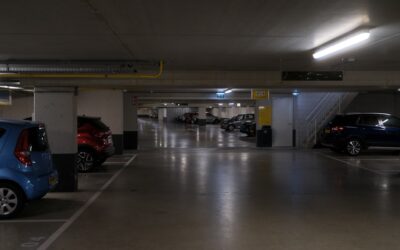
Ask any installer what the most requested garage color is and the answer is almost always grey. There’s a reason grey garage flooring has become the default choice for homeowners upgrading from bare concrete: it hides dirt, tire marks, and the occasional oil drip far better than lighter shades, it pairs with any vehicle or cabinet color, and it reads as clean and modern without the glare of white or the heaviness of black. Over the years I’ve installed just about every grey garage system on the market, and the shade you pick is only half the decision. The other half is the material underneath that color, because that’s what determines how long the floor lasts and how it holds up to hot tires, dropped tools, and road salt.
Part of our Epoxy, Concrete & Garage Floors guide — explore the full guide →
This guide breaks down the real grey garage flooring options, from epoxy coatings to interlocking tiles to roll-out mats, with honest pros, cons, and pricing. I’ll also cover design choices like flake blends and gloss levels so you can land on a floor that looks as good in year five as it does on install day.
Why Grey Is the Smart Garage Color
Color choice in a garage isn’t just aesthetic; it’s practical. A medium to slate grey sits in the sweet spot for hiding the grime a working garage collects. Lighter greys brighten the space and make it feel bigger and cleaner, which matters if your garage doubles as a gym or workshop, while darker charcoal greys deliver a dramatic, showroom look but show dust and lint more readily. Most homeowners land on a mid-tone grey precisely because it splits the difference.
Grey also plays well with the decorative flake systems that dominate garage finishes. A grey base coat with a blend of black, white, and light grey flakes produces a granite-like speckle that camouflages minor imperfections and stains almost completely. That’s why builders and flooring pros steer so many clients toward grey blends; it’s the most forgiving palette for a hard-working floor and the easiest to keep looking sharp with minimal effort.
If you’re running out of room even with a clean garage floor, a backyard shed takes the overflow — seasonal gear, tools, lawn equipment. And if you’re parking outside while the garage doubles as a workshop, a carport keeps your car covered without needing a second garage.
We may earn a commission when you purchase through our links.
Grey Epoxy Coatings
Epoxy is the classic grey garage floor, and for good reason. A professionally installed epoxy system bonds a pigmented resin directly to the prepared concrete, creating a seamless, glossy, chemical-resistant surface that resists oil, gas, brake fluid, and hot-tire pickup. Grey is the most popular epoxy base color because it provides a neutral canvas for decorative flakes and shows off the depth of a high-gloss clear topcoat.
A solid grey epoxy floor typically runs $3 to $7 per square foot for a professional install, or roughly $1,500 to $3,500 for a standard two-car garage. DIY kits cost less, around $0.75 to $2 per square foot, but the durability gap is real: the pro systems use higher-solids epoxy and, critically, proper concrete grinding rather than acid etching. Expect a professionally installed grey epoxy floor to last 10 to 20 years. The main catch is downtime, since epoxy needs a clean, dry, ground slab and several days to cure before you can park on it.
For maximum toughness, many installers now top grey epoxy with a polyaspartic or polyurethane clear coat. This adds UV stability so the grey won’t yellow, boosts abrasion and chemical resistance, and can shorten the return-to-service window considerably. If your budget allows, that topcoat is the single best upgrade for a coated grey floor.
Interlocking Grey Garage Tiles
If you want grey garage flooring without the prep, cure time, or commitment of a coating, interlocking tiles are the answer. These rigid PVC or flexible polypropylene squares snap together over your existing concrete with no adhesive, no grinding, and no drying time. You can floor a two-car garage in an afternoon and drive on it immediately, which is a huge advantage for anyone who can’t take their garage out of service for a week.
Grey tiles come in coin, diamond-plate, and smooth textures, and they mix beautifully with a second color (usually black or dark charcoal) to create checkerboard patterns, borders, and parking-pad outlines. That design flexibility is part of their appeal. Tiles run $2 to $5 per square foot, so a two-car garage lands around $1,500 to $3,000. They tolerate slab imperfections and cracks well because they float on top, and any damaged tile pops out and replaces individually.
The trade-offs: the seams between tiles can let water and small debris migrate underneath, so they’re not fully sealed like a coating, and cheaper flexible tiles can shift under aggressive turning loads. For most home garages, though, a quality grey rigid-tile floor is a durable, low-hassle, renter-friendly option that looks far better than bare concrete.
Roll-Out Grey Garage Mats
The fastest and most forgiving grey option is a roll-out garage mat, a heavy PVC sheet you simply unroll across the floor. These are ideal for a single parking bay, a workshop zone, or a rented garage where a permanent finish isn’t practical. Grey mats hide dirt well and provide instant containment for snowmelt, mud, and drips, protecting the concrete underneath.
Roll-out mats run $1.50 to $3.50 per square foot depending on thickness, with the heavier 85- to 100-mil mats being far more durable and lay-flat than thin economy rolls. They install in minutes, need no prep beyond a swept floor, and roll back up when you move. The downsides are that they can trap moisture against the slab if left wet for long periods, and the seams between rolls aren’t sealed. Still, for pure convenience and reversibility, a grey mat is hard to beat.
Grey Concrete Stains and Polished Concrete
For a subtler, more architectural grey, consider staining or polishing the concrete itself. A grey acid or water-based stain penetrates the slab to create a mottled, variegated grey that looks natural and won’t peel because it’s absorbed into the concrete rather than sitting on top. Polished concrete takes this further, grinding the slab to a smooth sheen that showcases the natural grey of the cement and aggregate.
Stained concrete runs roughly $2 to $5 per square foot and polished concrete $3 to $8, both requiring a good sealer to resist oil and moisture. These options give you an understated, high-end grey that’s extremely durable and easy to clean, though they offer less chemical resistance than epoxy and won’t hide cracks the way a flake coating does. They shine in garages that double as living or display spaces where the raw concrete aesthetic is the goal.
Design Choices: Flakes, Gloss, and Patterns
Once you’ve chosen a grey system, the design details make it yours. Decorative flake blends are the biggest lever: a “domino” blend of black, white, and grey flakes over a grey base is the most popular garage look because it’s forgiving and reads as premium. Flake broadcast density matters too; a full broadcast (flakes covering the entire floor) hides imperfections best, while a light broadcast lets more of the grey base color show through.
Gloss level changes the whole feel of the room. A high-gloss grey floor looks like a dealership showroom and bounces light around, but it shows dust and can be slick when wet. A satin or matte finish hides footprints and offers better traction, which many homeowners prefer for a working garage. If slip resistance is a concern, ask your installer to add an anti-slip aggregate into the topcoat. Consider borders, parking outlines, or a two-tone grey-and-charcoal split to define zones, and you’ll end up with a garage floor that’s as intentional as any room in the house.
Choosing the Right Grey Garage Floor for You
The best grey garage flooring comes down to how you use the space and how much downtime you can accept. If you want the toughest, most seamless, longest-lasting result and can spare a few days for install and cure, a professionally ground and coated grey epoxy with a polyaspartic topcoat is the gold standard. If you need it done today with no prep, or you rent, interlocking grey tiles or a roll-out mat give you great looks and instant use. And if you love the raw industrial aesthetic, stained or polished grey concrete is durable and understated.
Whatever you choose, the foundation is the same: a clean, dry, sound slab. Coatings live or die on surface prep, and even tiles and mats perform better over a crack-free floor. Match the system to your budget and patience, pick a grey blend that hides the grime your garage actually generates, and you’ll have a floor that turns a purely functional space into one you’re genuinely proud to open the door on.