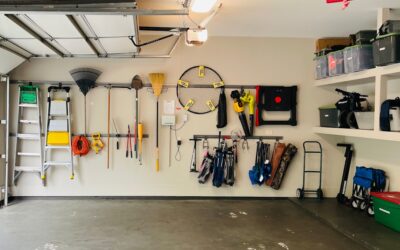
Most garages do not run out of floor space. They run out of usable wall space, because pegboard sags, shelves collect clutter and nails in studs only hold one thing each. Garage slatwall storage fixes that with horizontal grooved panels that accept hooks, baskets, bins and shelves you can slide or relocate in seconds. The short answer for most homeowners: PVC panels are the best all-around choice for a garage because they shrug off moisture and clean with a hose, steel wins for heavy tools and commercial-style loads, and MDF only makes sense in a dry, conditioned space.
How much a wall holds depends less on the panel than on how it is fastened. A slatwall system screwed into every stud with the right spacing can carry several hundred pounds across a section. The same panels hung on drywall anchors will pull loose the first time you hang a loaded ladder. Material choice, hook ratings, layout and installation all matter, and each is covered in turn here.
What Garage Slatwall Storage Actually Is
Slatwall is a panel with continuous horizontal channels, usually spaced 3 inches on center, that lock in accessories with a T-shaped or hooked back. Garage slatwall storage is different from the decorative wood slat walls you see in living rooms and offices, which are vertical battens for looks rather than load. It also differs from pegboard: pegboard hooks sit in individual holes and tend to pop out, while slatwall accessories ride a full-width groove and resist twisting.
Panels typically come in 4 foot or 8 foot lengths, 12 to 16 inches tall, and they interlock top to bottom so you can cover anything from a single strip to a full wall. Most homeowners buying a garage slatwall organizer are choosing among three materials, each with a different weight limit, look and price.
PVC vs Steel vs MDF Panels
The right panel depends on your climate, what you plan to hang and how the garage is used. A detached, unheated garage in a humid region asks for something very different than a climate-controlled hobby room.
| Panel type | Strengths | Weak points | Typical panel cost |
|---|---|---|---|
| PVC | Waterproof, rot-proof, wipes clean, many colors | Can bow in extreme heat if poorly fastened | About $3 to $7 per sq ft |
| Steel | Highest load capacity, fire resistant, rigid | Heavier, can dent, may rust if coating is scratched | About $8 to $15 per sq ft |
| MDF (melamine faced) | Lowest cost, smooth finish | Swells and crumbles with moisture, weaker grooves | About $2 to $4 per sq ft |
PVC Slatwall
For most people asking about the best slatwall for garage use, PVC slatwall panels are the practical default. They are hollow-core extrusions, light enough for one person to lift, and they do not care about snowmelt dripping off a car or a humid summer. Look for panels with thicker walls and internal ribs; budget versions flex under load and let hooks rock forward. A pvc slatwall garage install also looks finished, since the panels act as a wall covering over bare studs or unpainted drywall.
Steel Slatwall
Steel panels, often powder coated, carry the most weight and keep their shape when loaded with power tools, compressors or bike racks. They suit shops and anyone who hangs heavy gear. The tradeoff is cost, weight and noise: steel rings when you drop a tool into a basket, and a scratched coating near a garage door can start to rust in coastal climates.
MDF Slatwall
Retail-style MDF slatwall is inexpensive, but garages are a poor match. Concrete slabs wick moisture, doors open to rain, and temperature swings cause condensation. Once MDF absorbs water, the groove lips soften and accessories pull out. Reserve it for a finished, conditioned space.
Hook and Accessory Load Ratings
Every hook, basket and shelf has its own rating, and the weakest link sets the real limit. A quality PVC panel properly screwed to studs might be rated around 50 to 75 pounds per square foot, but a light-duty single hook could be rated at only 10 to 25 pounds. Heavy-duty hooks for ladders, hose reels and bikes often carry 50 to 100 pounds each, and steel systems with metal brackets can go higher.
- Short and long single hooks: rakes, brooms, extension cords, small tools. Usually 10 to 35 pounds.
- Double hooks and J hooks: hoses, garden tools, folding chairs. Often 25 to 50 pounds.
- Bike hooks and ladder hooks: 40 to 100 pounds depending on design.
- Wire baskets and bins: sports balls, gloves, spray bottles. Typically 15 to 40 pounds.
- Shelves: paint cans, storage totes. Ratings vary widely; check whether the rating assumes even distribution.
Two habits keep accessories secure. First, match the accessory profile to your panel brand or groove style; mixing systems can leave a hook that seems seated but only catches half the lip. Second, spread heavy items across the wall instead of stacking them on one panel. If several heavy items must sit together, place them low and near the fastening line of each panel.
Full Wall vs Strip Install
You do not have to cover an entire wall. Many of the best garage slatwall system layouts combine a few panels in the zones you actually reach, which keeps cost down.
Full-Wall Coverage
Covering a wall floor to ceiling, or from about 12 inches off the slab up to 8 feet, gives maximum flexibility and a clean finished look. It works well in garages with bare studs, since the panels replace drywall in that zone (check local code first: walls shared with living space often need fire-rated drywall left in place behind any panel). Expect to buy a little more than the wall area to cover cuts and trim pieces.
Strip or Zone Install
A band of two to four panels, roughly 24 to 48 inches tall, mounted between about 36 and 84 inches off the floor, handles most everyday storage. Add a second band higher up for seasonal gear. Strips also suit rental homes or garages where you want to keep shelving units below. Finish exposed panel edges with the manufacturer’s end caps or J-trim so groove ends do not chip.
How to Install Slatwall Into Studs
Here is the general process for PVC or steel panels in a standard wood-framed garage. Always follow the panel maker’s spacing and fastener specs where they differ.
Tools and Materials
- Stud finder and pencil
- 4 foot level and chalk line or laser level
- Drill/driver with bits
- Fine-tooth circular saw, miter saw or jigsaw for cutting panels
- Corrosion-resistant screws per the panel instructions (often #8 or #10, long enough to penetrate the stud at least 1 inch)
- Starter strip or J-trim, end caps and outside corner trim if needed
- Safety glasses and hearing protection for cutting
Steps
- Plan the layout. Measure the wall, mark the bottom and top of your slatwall zone and decide where heavy items will live. Plan cuts so you do not end with a sliver panel at one end.
- Locate and mark every stud. Most garages have studs 16 inches on center. Snap a vertical line on each so screws land in solid wood, not drywall alone.
- Set a level base line. Snap a level horizontal line for the bottom of the first panel. Garage slabs often slope toward the door, so never reference the floor.
- Install the starter trim if used. Screw it to the studs along the base line.
- Mount the first row. Set the first panel on the line, check level and drive screws through the designated fastening flange or groove into each stud. Use every stud the panel crosses.
- Stack and interlock. Press the next panel into the tongue of the one below, check that the joint closes fully, then fasten it. Stagger vertical end joints between rows so seams do not line up.
- Cut around outlets and switches. Turn off the breaker before working near an outlet, then trace the box and cut the opening. Use box extenders so the outlet or switch sits flush with the new panel face.
- Trim the edges. Add end caps, top trim and corner pieces.
- Load gradually. Hang accessories and check after a few days that nothing has shifted or bowed.
Screws should not be overdriven into PVC; crushing the flange reduces holding power and can crack the panel in cold weather. Leave a slight expansion gap at ends of long PVC runs, typically about 1/8 inch, especially in garages that swing between freezing and summer heat.
Structural Safety and Anchoring
Slatwall puts loads in shear and pull-out on every fastener, so anchoring is the part you cannot shortcut. Fasten into wood studs or solid blocking, not drywall alone. On masonry or concrete block walls, first attach furring strips with masonry anchors rated for the load, then mount the panels to the strips. For metal studs, use the self-tapping screws specified by the panel maker and stay well within published ratings.
Keep the heaviest items, such as ladders, bikes and loaded shelves, between roughly 3 and 6 feet off the floor so they are easy to lift on and off without climbing. If a wall shows cracked studs, water damage or soft spots, repair it before installing. Any time you plan to open walls, add blocking or alter framing, check with your local building department about permits, and in an HOA community confirm whether exterior-wall work has rules. Avoid hanging anything over the garage door tracks or near the opener’s moving parts.
Cost per Square Foot
Budget depends on material, coverage and how many accessories you need. As general ranges:
- DIY PVC panels: about $3 to $7 per sq ft for panels and trim, so a 16 by 4 foot strip runs roughly $200 to $450 before accessories.
- DIY steel panels: about $8 to $15 per sq ft.
- Accessories: often $5 to $40 per piece, with a starter kit of 20 to 30 hooks and baskets adding $150 to $500.
- Professional installation: commonly $12 to $25 per sq ft installed, including materials, depending on region and system grade.
Spending more on the panel only pays if you also buy accessories rated for what you plan to hang. A premium wall with flimsy hooks will disappoint.
Troubleshooting Common Problems
- Panels bowing outward: usually missed studs or too few screws. Add fasteners at every stud and check that panels were not forced tight end to end.
- Hooks falling out: the accessory profile may not match the groove, or the hook is overloaded. Swap to compatible or heavier-rated hooks.
- Gaps between rows: the tongue was not fully seated. Loosen the upper panel, press it home and refasten.
- Cracking in winter: PVC gets brittle in deep cold. Cut and fasten panels when the garage is above about 50°F if possible.
- Rust spots on steel: clean, touch up the coating and keep wet items away from scratched areas.
When to Call a Pro
Hire an installer if your walls are masonry, you need framing repairs or blocking, you want a full multi-wall system with integrated cabinets, or you plan to store very heavy items overhead. Electrical changes, such as moving outlets or adding new circuits behind the panels, belong with a licensed electrician. A pro garage organization slatwall install also usually comes with a workmanship warranty, which matters if you plan to load the wall heavily.
Frequently Asked Questions
Is PVC or steel slatwall better for a garage?
PVC is better for most garages because it is waterproof, light and affordable. Steel is worth the extra cost if you hang heavy tools, compressors or several bikes and want the highest load rating.
How much weight can garage slatwall hold?
Quality panels screwed into every stud are often rated around 50 to 75 pounds per square foot, but each hook has its own limit. Always use the lower of the panel rating and the accessory rating.
Can you install slatwall over drywall?
Yes, as long as the screws pass through the drywall and into the studs. Never rely on drywall anchors alone to carry the load.
Is slatwall better than pegboard?
For most garages, yes. Slatwall accessories lock into a full-width groove and stay put, while pegboard hooks tend to slip out and the board can sag under weight.
How high should slatwall be mounted?
A common zone runs from about 36 to 84 inches off the floor for everyday items, with heavy gear kept between about 3 and 6 feet. Leave space near the slab for wet boots and to avoid splash.