Garage storage drawers are the upgrade that finally ends the ritual of digging through five plastic bins to find one socket. Shelves and pegboards work for bulky items you can see, but small parts, hand tools, hardware, and gear disappear on open shelving. Drawers put everything at fingertip height, organized and dust-free, and a well-planned drawer system can transform a chaotic garage into a workspace that actually functions. The trick is matching the drawer type and weight rating to what you store, because a drawer that sags or jams under a load of wrenches is worse than no drawer at all.
Why Drawers Beat Shelves for Small Stuff
Open shelving forces you to stack and re-stack, and anything behind the front row is effectively lost. Drawers pull the whole contents out to you, so the back of the drawer is as accessible as the front. That single ergonomic difference is why professional mechanics work out of drawers, not shelves — you see everything at a glance and reach it without moving anything else.
Drawers also protect what is inside. In a garage full of dust, sawdust, and road grime, an enclosed drawer keeps tools clean and rust-free far better than an exposed shelf. Add a foam or rubber liner and your precision tools stay put and protected instead of sliding into a jumbled pile every time you open the drawer.
Steel Versus Plastic Versus Wood
Material dictates durability, weight capacity, and price. Pick based on what you actually store and how much abuse the drawers will take.
Steel
The gold standard for garages. Powder-coated steel cabinets and tool chests handle heavy loads, resist impacts, and last decades. Best for hand tools, power tools, and hardware. Heaviest and most expensive, but the most durable by a wide margin.
Plastic and Resin
Lightweight, rust-proof, and cheap. Good for lighter items — garden supplies, cords, painting gear, kids’ outdoor toys. Drawers can flex or crack under heavy metal tools, so keep the loads modest.
Wood and MDF
Often found in workbench-integrated drawer units. Attractive and strong for a workshop, but vulnerable to moisture and humidity in an unconditioned garage unless well sealed.
Weight Ratings and Drawer Slides
This is the spec that separates good units from junk, and it is easy to overlook. The drawer slide mechanism determines how much weight a drawer holds and how smoothly it moves under load. Cheap units use friction slides that stick and sag; quality units use ball-bearing slides rated for real weight.
- Light-duty slides: 35-75 lbs per drawer — fine for supplies and light gear
- Medium-duty ball-bearing: 100 lbs per drawer — good for hand tools
- Heavy-duty ball-bearing: 100-200+ lbs per drawer — for power tools, heavy hardware, and full mechanic loads
Look for full-extension slides, which let the drawer pull all the way out so you can reach the very back. Partial-extension slides leave several inches of the drawer buried under the cabinet top — a small annoyance that becomes a daily frustration. For any drawer holding metal tools, ball-bearing full-extension slides are worth the premium.
Cabinet Systems Versus Tool Chests
There are two broad approaches to garage drawer storage, and many people use both. Understanding the difference helps you plan.
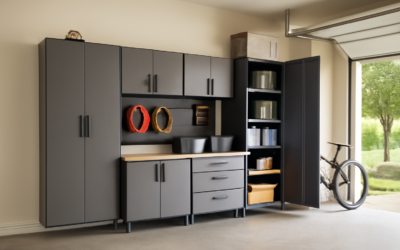
Modular garage cabinet systems — from brands like Gladiator, NewAge, and Husky — combine drawer bases with tall cabinets and wall units to build a wall of coordinated storage. They anchor to the wall, often ride on the same rail system, and give you a clean, built-in look with a mix of drawers, doors, and countertops. This is the route for whole-garage organization.
Rolling tool chests are self-contained drawer units on casters, ideal if you want your tools mobile — roll the chest to the car, the workbench, or the project. They pack many drawers into a compact footprint and are the classic mechanic’s solution. Many garages end up with a wall of cabinets for bulk storage plus a rolling chest for the tools in active use.
Planning Your Layout
Before buying, take inventory and group items by frequency of use and weight. A little planning prevents the common mistake of buying drawers that are the wrong depth for what you own.
- Shallow drawers for sockets, bits, small hardware, and hand tools where you want everything visible in one layer.
- Deep drawers for power tools, cordless drills, and bulkier gear.
- Waist-height drawers for daily-use items; reserve high and low spots for seasonal or rarely used things.
- Drawer dividers and foam inserts to keep contents from sliding into a heap and to create a spot for every tool.
Measure your wall space and your vehicle clearance before committing to a large cabinet run. Nothing is more deflating than assembling a beautiful bank of cabinets only to find you can no longer open the car door.
What It Costs
Garage drawer storage spans a huge range depending on material and scale. Set a budget based on how much you store and how heavy it is.
- Single plastic drawer cabinet: $40-$120
- Steel rolling tool chest: $150-$800
- Modular steel drawer base cabinet: $200-$500 each
- Full modular garage wall system: $1,500-$5,000+
You do not have to buy it all at once. Modular systems are designed to grow — start with a drawer base and a couple of cabinets, then add units as your budget allows. Watch for holiday sales, when major brands routinely discount cabinet sets 20% or more.
Organizing the Drawers Themselves
Buying drawers is only half the battle; how you organize the inside determines whether they actually save you time. The goal is one glance, one reach. Group tools by task rather than by type — a drawer for cutting and measuring, another for fastening, another for automotive — so you open one drawer and everything for the job is there. Reserve the top, waist-height drawers for daily-use tools and push seasonal or rarely-touched items to the high and low drawers.
- Foam tool organizers (shadow boards) give every wrench and screwdriver a cutout, so you see instantly what is missing.
- Adjustable dividers keep hardware, sockets, and bits from sliding into a jumble.
- Non-slip drawer liners stop contents from shifting every time you open and close.
- Small bins or trays corral loose screws, nuts, and washers within a deeper drawer.
Label the drawer fronts, especially in a shared garage. A ten-minute labeling session saves you and everyone else in the household from opening five drawers to find the tape measure.
Assembly and Installation Tips
Most modular garage cabinets ship flat and require assembly, so budget an afternoon and a second set of hands for the larger units. Read the weight ratings during assembly and do not overtighten cam locks on particleboard-backed units. For wall-mounted systems, locate and mark your studs first — cabinets loaded with tools are heavy, and anchoring into drywall alone invites a dangerous collapse.
Tall cabinets should be secured to the wall with the included anti-tip brackets even if they seem stable empty. A fully loaded upper cabinet carries a lot of weight up high, and a child pulling on a drawer or an accidental bump can tip an unanchored unit. Level the base cabinets with their adjustable feet so drawers close square and flush; an out-of-level cabinet has drawers that drift open or refuse to latch.
Countertops and Work Surfaces
Many drawer base cabinets are designed to support a work surface on top, and adding one dramatically increases the unit’s usefulness. Popular options include stainless steel for durability and easy cleanup, solid hardwood or butcher block for a workbench feel, and bamboo or laminate for budget builds. A countertop over a bank of drawers turns storage into a functional workstation where you can wrench on parts, pot plants, or run a project with your tools in the drawers right beneath your hands.
If you go this route, choose a surface rated to handle the abuse a garage dishes out — impacts, solvents, and grease. Stainless and sealed hardwood shrug off spills and hits far better than particleboard laminate, which swells the first time it gets soaked. Anchoring the countertop to the cabinets and, where possible, to the wall keeps it from shifting when you lean into a task.
Making It Last
To get decades out of steel drawers, keep the garage as dry as you reasonably can — a small dehumidifier in humid climates prevents surface rust on both the cabinets and their contents. Do not overload a drawer past its slide rating; a sagging drawer that no longer closes flush is almost always an overloaded one. Anchor tall cabinets to wall studs so a fully loaded upper cabinet cannot tip.
Well chosen and well loaded, garage storage drawers pay for themselves in time saved and tools no longer lost or replaced. Match the material and slide rating to your gear, plan the layout around what you actually own, and you will finally have a garage where every tool has a home you can open with one hand.