Installing garage tile transforms a bare concrete slab into a durable, attractive workspace that resists chemicals, supports heavy loads, and cleans up easily. Whether you use your garage as a workshop, gym, showroom for a classic car, or simply a place to park and store, the right tile system protects the concrete underneath while giving the space a finished look that raw concrete never provides. Our team has been installing and recommending garage flooring solutions for over three decades, and tile systems have consistently proven to be the best balance of durability, appearance, and practicality.
Part of our Tile & Grout guide — explore the full guide →
This guide covers the three main types of garage tile, their load ratings and chemical resistance, installation requirements, cost comparisons, and design options so you can choose the right product for your specific garage use.
If you’re running out of room even with a clean garage floor, a backyard shed takes the overflow — seasonal gear, tools, lawn equipment. And if you’re parking outside while the garage doubles as a workshop, a carport keeps your car covered without needing a second garage.
We may earn a commission when you purchase through our links.
Types of Garage Tile
Interlocking Polypropylene Tiles
Interlocking polypropylene tiles are the most popular garage tile option for residential use. Brands like RaceDeck, Swisstrax, and TrueLock snap together without adhesive, creating a floating floor over the concrete slab. They are available in solid and vented (perforated) designs, with the vented style allowing water and debris to drain through to the concrete below.
Polypropylene tiles are lightweight, UV-stable, and resist most automotive chemicals. They install in hours without any special tools, and individual damaged tiles can be replaced without disturbing the surrounding floor. Typical tile size is 12×12 inches with a thickness around 5/8 inch.
Porcelain Garage Tiles
Full-body porcelain tiles rated for garage use offer the most premium, permanent flooring option. These are the same type of tile used in commercial and industrial settings, with a PEI rating of 5 (highest durability) and a water absorption rate below 0.5 percent. Porcelain is extremely hard, scratch-resistant, and available in designs that replicate stone, concrete, and metallic finishes.
The drawback is installation complexity. Porcelain requires a clean, level concrete surface, proper thinset mortar, and experienced tile installation skills. It is also a permanent solution that cannot be easily removed or reconfigured.
PVC Interlocking Tiles
PVC (polyvinyl chloride) tiles are softer and more flexible than polypropylene. They provide better cushioning underfoot, making them popular for garage gyms and workshops where you stand for long periods. PVC tiles also dampen sound and vibration more effectively. Brands like Perfection Floor Tile and IncStores offer PVC tiles in coin-top, diamond-plate, and smooth textures.
PVC is less resistant to extreme heat than polypropylene or porcelain. Hot exhaust pipes or welding sparks can damage PVC tiles, so they are not ideal for garages with heavy mechanical work. They are, however, the most comfortable option for general-purpose garages.
Load Ratings and Weight Capacity
Load capacity is a critical factor when choosing garage tile, especially if you park vehicles on the surface or use heavy equipment.
Interlocking polypropylene tiles: Most quality brands support 40,000 to 80,000 pounds per square foot of static load. This easily handles passenger vehicles, SUVs, and light trucks. Premium products like RaceDeck Pro support rolling loads from floor jacks and tool carts without cracking.
Porcelain tiles: When properly installed over a solid concrete slab, porcelain has virtually unlimited compressive strength for residential garage loads. It handles heavy vehicles, lifts, and equipment without deformation. The weak point is impact resistance, as dropping a heavy wrench from height can chip or crack the surface.
PVC tiles: Typically rated for 10,000 to 25,000 pounds per square foot. This is sufficient for most passenger vehicles but may show compression marks under jack stands or heavy point loads left in place for extended periods. If you use a floor jack regularly, place a plywood pad under the jack to distribute the load.
For garages that house heavy trucks, RVs, or professional-grade lifts, porcelain or high-end polypropylene tiles are the safest choices. PVC works well for lighter-duty garages and gym spaces.
Chemical Resistance
Garages expose flooring to motor oil, transmission fluid, brake fluid, gasoline, antifreeze, and various cleaning solvents. Chemical resistance varies significantly by tile type:
Polypropylene: Resists most automotive fluids including oil, antifreeze, and gasoline. It is not affected by road salt or de-icing chemicals, making it a strong choice in cold climates. Battery acid and certain aggressive solvents can cause discoloration over time, but the tile itself remains structurally intact.
Porcelain: Offers the best chemical resistance of any garage tile option. The dense, non-porous surface does not absorb any chemicals. Porcelain is essentially impervious to oil, gas, brake fluid, and every common garage chemical. The grout lines between tiles can absorb chemicals, so epoxy grout is recommended for garage porcelain installations.
PVC: Resists most common automotive fluids but can be damaged by gasoline, brake cleaner, and acetone-based solvents. If your garage work involves regular contact with these chemicals, PVC may discolor or soften in the affected areas. For general parking and light maintenance, PVC performs adequately.
Drainage Considerations
Water management matters in garages. Rain drips off vehicles, snow melts off tires, and cleaning involves hose water. The drainage approach depends on which garage tile you select.
Vented interlocking tiles: Perforated polypropylene tiles let water pass through to the concrete slab below, where it follows the existing floor drainage slope. This is the best approach for garages in wet climates because moisture does not pool on the tile surface. The downside is that debris can collect underneath, requiring periodic tile removal for cleaning.
Solid interlocking tiles: Water stays on top and needs to be squeegeed or blown toward the garage door. Many homeowners with solid tiles use a leaf blower for quick cleanup. A slight slope toward the garage door opening aids natural drainage.
Porcelain with grout: Water stays on the surface and must be managed through the garage’s existing slope and drain. Porcelain itself will not absorb moisture, but standing water on grouted porcelain in freezing temperatures can cause grout damage. Ensure your garage has adequate drainage before choosing porcelain.
PVC tiles: Most PVC garage tiles have a raised pattern on the bottom that creates a small air gap. Water can migrate underneath but does not drain as freely as through vented polypropylene. In humid climates, this trapped moisture can promote mildew on the concrete surface, so periodic lifting and cleaning is advised.
Installation Guide
Installation complexity varies dramatically between tile types. Here is what each option requires:
Interlocking polypropylene and PVC: These are true DIY installations. Sweep the garage floor clean, start in one corner, and snap tiles together by hand or with a rubber mallet. No adhesive, no special tools, and no subfloor preparation beyond basic cleaning. Most two-car garages can be completed in three to five hours by one person. Edge and corner pieces with finished borders create a clean perimeter.
Porcelain tile: This is a professional installation. The concrete slab must be clean, level (within 1/8 inch over 10 feet), and free of moisture problems. Cracks in the concrete should be repaired and a crack isolation membrane may be needed. The tile is set in modified thinset mortar, spaced with grout joints, and grouted with epoxy grout. Expect two to four days for a two-car garage including curing time.
For all tile types, measure your garage carefully and order 5 to 10 percent extra material. Interlocking tiles can be cut with a utility knife, jigsaw, or circular saw to fit around posts, wall irregularities, and floor drains.
Cost Comparison
Pricing for a standard two-car garage (approximately 400 square feet) in 2026:
- Polypropylene interlocking tiles: $2.50 to $6.00 per square foot for materials. Total cost: $1,000 to $2,400 for a two-car garage. No installation labor cost if DIY.
- PVC interlocking tiles: $3.00 to $7.00 per square foot for materials. Total cost: $1,200 to $2,800 for a two-car garage. No installation labor cost if DIY.
- Porcelain tile (installed): $8.00 to $18.00 per square foot including materials, labor, and grout. Total cost: $3,200 to $7,200 for a two-car garage.
Compared to epoxy coating ($3 to $7 per square foot professionally applied), interlocking garage tiles cost slightly more but offer easier installation, better repairability, and no curing time. Compared to polyaspartic coatings ($5 to $10 per square foot), tiles are competitive on price while being removable if you sell the home or change your mind.
Design Options and Patterns
One of the major advantages of garage tile over coatings is the ability to create patterns and color combinations.
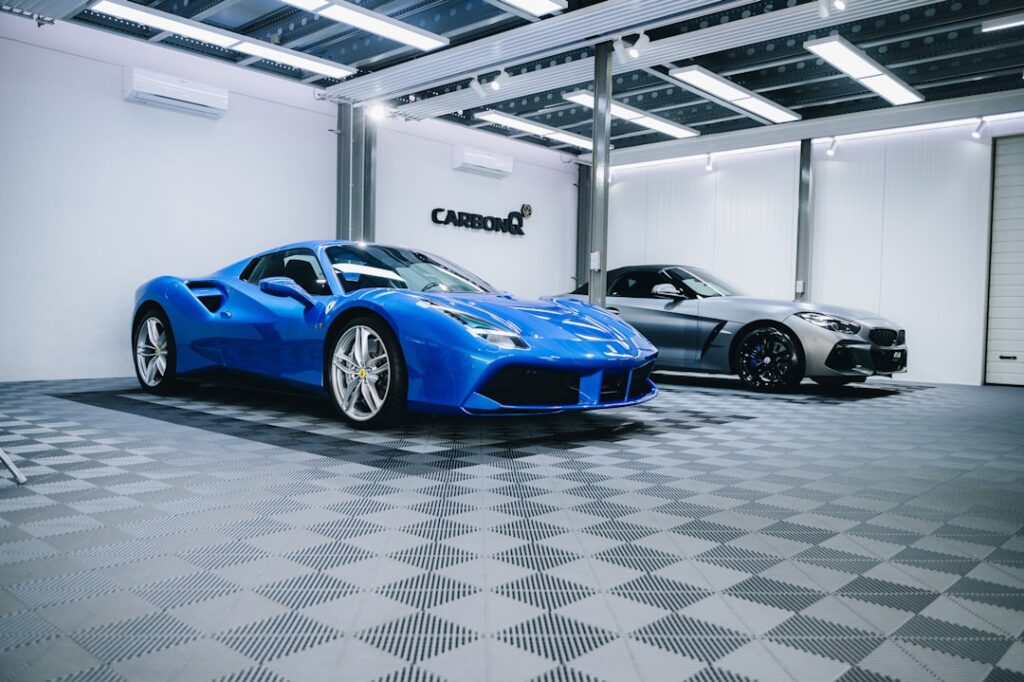
Checkerboard: The classic two-color checkerboard pattern (typically black and silver, or black and red) remains the most popular design for garage tile. It creates a clean, professional look that evokes vintage service stations and car showrooms.
Border and field: Use one color for the main floor area and a contrasting color for a one-tile-wide border around the perimeter. This frames the space and adds visual definition, especially effective when the border follows the lines of parked vehicles.
Racing stripes: Rows of alternating colors running the length of the garage create a dynamic, motorsport-inspired aesthetic. This works particularly well in garages dedicated to car enthusiasts.
Zone delineation: Use different tile colors to define parking zones, workbench areas, and storage sections. This is functional as well as decorative, helping family members park in the correct position and keeping work areas organized.
Solid color: A single color throughout creates a clean, unified surface. Graphite, silver, and slate grey are the most popular solid-color choices because they hide tire marks and dust well.
Porcelain offers more subtle design options, including tiles that replicate polished concrete, terrazzo, and industrial metal surfaces. These create a sleek, modern garage aesthetic that blends seamlessly with contemporary home design.
Maintenance and Longevity
All three garage tile types are low-maintenance compared to bare concrete or coated floors:
Routine cleaning: Sweep or blow off debris regularly. For deeper cleaning, mop with warm water and a mild degreaser. Interlocking tiles can be pressure-washed in place or individually removed and cleaned.
Stain removal: Oil and chemical spills on polypropylene and PVC tiles wipe up easily with a rag and degreaser. On porcelain, spills sit on the surface and cannot penetrate. For grout stains on porcelain, an alkaline tile cleaner applied with a stiff brush restores the original color.
Repairs: Damaged interlocking tiles can be individually replaced in minutes. This is a significant advantage over epoxy coatings, which require grinding and recoating to repair chips or peeling. Cracked porcelain tiles can also be replaced individually, though it requires chipping out the damaged tile and resetting a new one.
Expected lifespan: Quality polypropylene tiles last 15 to 20 years. PVC tiles last 10 to 15 years. Porcelain is essentially permanent, lasting the lifetime of the home if properly installed. All interlocking tiles carry manufacturer warranties ranging from 10 years to lifetime.
Frequently Asked Questions
Can you park a car on interlocking garage tiles?
Yes. Quality polypropylene interlocking tiles are specifically designed to support vehicle loads. Most products handle 40,000 to 80,000 pounds per square foot, which is far more than any passenger vehicle weighs. Hot tire pickup, where hot tires lift or stain the surface, is not an issue with polypropylene as it is with some epoxy coatings.
Do garage tiles get slippery when wet?
Most garage tiles are designed with textured surfaces for slip resistance. Coin-top, diamond-plate, and textured patterns all provide traction when wet. Vented tiles drain water quickly, reducing the risk of standing water. For additional safety, choose tiles with a high coefficient of friction rating, especially if your garage doubles as a gym.
Can you install garage tiles over a cracked concrete floor?
Interlocking tiles can be placed over minor cracks because they float above the concrete without adhesive. Major cracks with vertical displacement should be repaired first to prevent the tiles from sitting unevenly. Porcelain tile requires crack repair and possibly a crack isolation membrane before installation.
How do garage tiles handle temperature extremes?
Polypropylene tiles are rated for temperatures from -40 to 220 degrees Fahrenheit and handle freeze-thaw cycles without cracking. PVC tiles perform well in cold but can soften slightly in extreme heat above 150 degrees. Porcelain is unaffected by any temperature a residential garage will experience.
Are garage tiles better than epoxy coating?
Each has advantages. Garage tiles install faster, require no concrete preparation, are easily repaired, and can be removed and taken with you if you move. Epoxy costs less per square foot and creates a seamless surface with no joints. Tiles outperform epoxy in garages with moisture issues, cracked concrete, or homeowners who want a DIY installation without curing downtime.
Prefer to explore on your own?
See how new flooring looks in your actual room in seconds — free, no signup.
Try the free Floor Studio →