Ask a furniture-flipping forum which waterborne stain to buy and one brand dominates the answers. General Finishes water based wood stain has built a near-cult reputation among refinishers for rich pre-mixed colors, a thicker consistency that resists drips, and predictable results on difficult woods. It also costs roughly double what big-box stain does. After working through the line’s strengths, quirks, and honest weaknesses, here’s the full review: what’s in the lineup, how it applies, where it beats Minwax and Varathane, and where it doesn’t.
The Product at a Glance
- Type: acrylic waterborne pigment stain, pre-mixed colors (no store tinting needed)
- Sizes/price: pints around $18-25; quarts around $28-38 depending on retailer
- Dry time: 1-2 hours to recoat; topcoat after 2-4 hours in normal conditions
- Coverage: roughly 100-125 sq ft per quart on sanded wood
- Cleanup: soap and water; VOC well under conventional oil stains
- Where sold: Woodcraft, Rockler, independent paint stores, Amazon — generally not at Home Depot or Lowe’s
The Color Lineup
General Finishes keeps the waterborne stain range tight and curated rather than sprawling. Core colors include:
| Color | Character | Closest big-box equivalent |
|---|---|---|
| Antique Walnut | Neutral-warm medium brown | Minwax Special Walnut (near) |
| Espresso | Deep neutral dark brown | Minwax Espresso |
| Java | Dark coffee, slight red (WB cousin of the famous gel) | Minwax Jacobean (near) |
| Gray | True neutral gray | Minwax Classic Gray (cooler, truer) |
| Whitewash | Soft translucent white | Minwax Pickled Oak |
| Black | Rich neutral black | Minwax True Black |
| Honey Maple / Light Brown | Warm golden tones | Golden Pecan territory |
Because the binder is water-clear acrylic, cool colors are the line’s standout: the Gray stays genuinely gray and the Black stays neutral, with none of the amber drift oil binders introduce — the chemistry advantage explained in our water based wood stain guide. Colors are inter-mixable, so a pint each of Antique Walnut and Gray effectively buys you a whole greige spectrum.
Application: How It Actually Behaves
The first thing you notice out of the can is viscosity — GF waterborne stain is noticeably thicker than Minwax’s watery oil stains, closer to a thin cream. That thickness is the line’s signature usability feature: it doesn’t run down vertical surfaces, it doesn’t flood into end grain as aggressively, and it gives a beginner meaningfully more control on cabinet faces and table legs.
- Prep: sand to 150-180, then pre-raise the grain (damp wipe, dry, light 220 pass). This step is mandatory with any waterborne stain; skip it and the first coat leaves fuzz.
- Working time: honest 3-5 minutes per section — longer than most waterborne rivals thanks to the thicker body, shorter than oil. GF sells an Extender for hot rooms and big panels; a 10% addition visibly slows the skin-over.
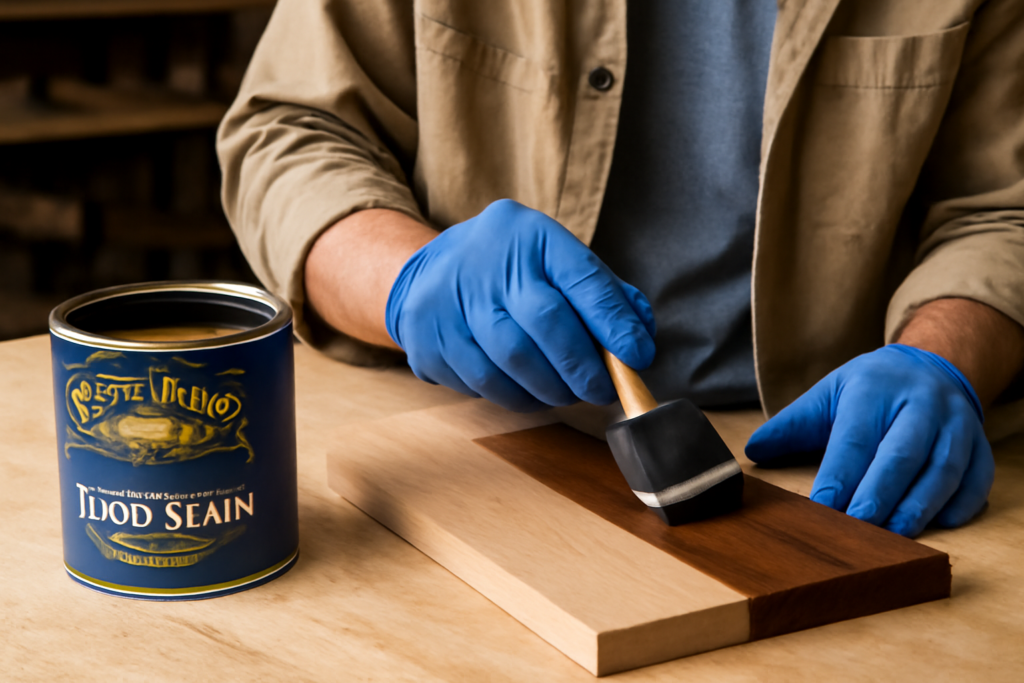
- Application: rag, foam brush, or synthetic bristle; flood on, wipe off with the grain within a couple of minutes. Liberal application then thorough wiping is the official and correct method — thin dry-brushed coats streak.
- Building depth: second coat after 1-2 hours adds real darkness (more than oil second coats do, since the acrylic film stacks). Java in two coats reaches genuine espresso territory even on stingy woods.
- Topcoat: pairs naturally with GF High Performance water-based poly, one of the most-recommended DIY topcoats on the market ($25-30/qt). Any quality water-based poly works; oil poly re-warms the color.
Where It Beats the Big-Box Brands
- Difficult woods. On maple, birch, and pine, the surface-riding acrylic delivers dramatically more even color than penetrating oil stain — the blotch problem that ruins dark wood stain projects on these species largely disappears. Many refinishers use GF waterborne on maple specifically because nothing cheaper works as well short of gel stain.
- Cool colors. Gray, Whitewash, and Black are truer than anything in an oil lineup, and they stay true for years.
- Vertical and detailed work. The no-drip body makes cabinet refinishing far less messy.
- Indoor use. Low odor means kitchen-cabinet jobs can happen while the family stays home.
Honest Weaknesses
- Price. At $18-25 a pint you’re paying 2-3x Minwax per ounce. For a one-off pine shelf, that premium buys little.
- Availability. No big-box distribution; if you run short mid-project on a Sunday, the nearest Woodcraft may be an hour away. Buy 20% more than you think you need.
- Less depth on open-grain oak. Oil stain soaking deep into red oak produces contrast the surface-riding acrylic can’t fully match. If you want maximum grain drama on oak, oil still wins.
- Fast edge on big panels. A dining tabletop in a dry 78°F room will test you; keep the Extender on hand.
- Chalky look before topcoat. The dried stain reads flat and pale; inexperienced users panic and over-apply. Trust the sample: the topcoat restores full depth.
GF Waterborne Stain vs GF Gel Stain
The brand’s own gel line (Java Gel especially) is even more famous than the waterborne stains, so the internal comparison matters. Gel is oil-based, sits almost entirely on the surface, and can go over existing finishes after scuff-sanding — the refinish-without-stripping product. The waterborne stain needs bare wood but dries faster, smells less, and holds cool colors. Simple sorting: refinishing over an old finish → gel; bare-wood projects indoors, cool colors, or quick turnaround → waterborne. If you’re choosing a stain-plus-topcoat strategy in one product instead, that’s a different category covered in our wood stain and sealer guide.
Real-World Test Notes by Wood Species
On red oak, Antique Walnut in one coat lands close to a Minwax Special Walnut result with slightly less pore contrast and a more even field — attractive, though oil devotees will notice the grain doesn’t “pop” quite as hard. On pine, the difference is dramatic and in GF’s favor: where oil-based dark stains blotch without conditioner, Java and Espresso go on with only mild mottling on raw pine, and near-perfect evenness over a quick washcoat. On maple — the acid test — two coats of Java produced usable, even espresso color where liquid oil stain produces streaks; this alone justifies the brand for anyone refinishing maple dressers, which describes half the vintage furniture on Facebook Marketplace. On oak-veneer plywood, thin coats matter: the waterborne stain can swell loose veneer edges if flooded, so wipe promptly and keep coats lean. Across all species, the chalky pre-topcoat appearance was consistent — and consistently misleading. Judge nothing until the poly goes on.
Working Tips From the Field
- Decant working amounts into a cup and keep the can closed; the acrylic skins in an open can over a long session.
- Refold rags constantly — the thicker body loads rags faster than oil stain, and a saturated rag stops wiping evenly.
- In rooms under 65°F, warm the can indoors first; cold thickens it enough to drag.
- Intermix colors freely: 3:1 Antique Walnut to Gray is a proven mushroom-brown; Whitewash cut into any color makes a pastel cerused effect for open-grain oak.
- Between coats, resist sanding unless you feel roughness — you’ll cut through color. If you must, 400-grit, featherweight pressure.
Verdict
General Finishes water based wood stain is the enthusiast’s waterborne stain for good reason: the thick-bodied control, curated true colors, and blotch resistance on hard species justify the premium for furniture and cabinetry you care about. Rating it against the field: 4.5/5 for cabinet and furniture refinishers; 3.5/5 for casual one-project DIYers, who will get 90% of the result from a $13 quart of big-box waterborne stain on easy woods like oak. If your project is maple, your color is gray or black, or the piece is a keeper — buy the GF.
FAQ
Do I have to use General Finishes topcoat over it? No — any water-based polyurethane adheres fine once the stain is dry. GF High Performance is simply a proven pairing.
Can I spray it? Yes; it sprays well through HVLP thinned per the label, and spraying is the pro route on cabinet doors.
Is it food-safe? The stain needs a cured topcoat; most modern finishes, including GF’s, are food-safe once fully cured (typically 21-30 days).
Does it work on oak? Absolutely — just expect slightly less pore contrast than oil. Compare the look you want on the wood stain color chart before choosing chemistry.
Shelf life? Sealed and kept from freezing, several years. Freezing ruins waterborne stain — don’t store it in an unheated garage.