
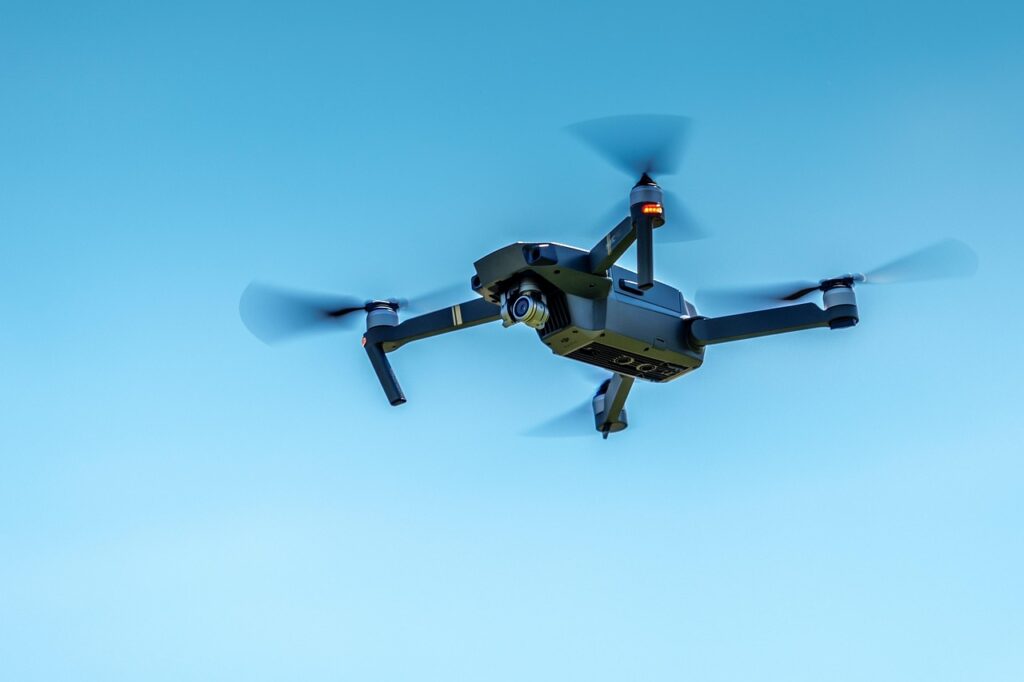
The era of burying a perimeter wire around your yard is ending, and machines like this one are the reason. The GOAT A3000 LiDAR Pro robot lawn mower from EcoFlow navigates using a spinning LiDAR sensor and vision, mapping your lawn in three dimensions without a single boundary wire to install. You set it up in an afternoon, draw virtual zones in an app, and let it mow on a schedule while you do something else entirely. This guide covers how the navigation works, the coverage area, slope handling, cut quality, and whether it justifies its premium price.
We will look at the technology behind the wire-free mapping, the app features, real-world performance, and the maintenance a robotic mower actually requires.
Wire-Free LiDAR Navigation
The headline feature is the elimination of the boundary wire. Traditional robotic mowers require you to stake or bury hundreds of feet of perimeter wire, a tedious install that fails whenever the wire breaks. The A3000 replaces all of that with a rooftop LiDAR sensor that spins to build a precise map of the yard.
LiDAR, short for light detection and ranging, fires laser pulses and measures how long they take to return, creating a centimeter-accurate 3D model of the surroundings. Combined with EcoFlow’s vision system, the mower recognizes lawn edges, obstacles, flower beds, and structures without any physical boundary. It also works reliably under tree cover and near buildings where satellite-only GPS mowers lose their signal and wander.
Coverage and Cutting Specs
The A3000 is built for medium to large residential lawns. Its specifications place it among the more capable wire-free robots on the market.
- Coverage: up to roughly 3,000 square meters, about 0.75 acre, per the model designation
- Cutting width: a wide deck for efficient passes
- Cutting height: adjustable via the app, typically 1 to 3 inches
- Slope capability: handles inclines up to around 45 percent grade
- Navigation: LiDAR plus vision, no boundary wire, no antenna required
The 45 percent slope rating is notably strong for a robotic mower. Many wire-free competitors struggle above 30 percent, so if your yard has meaningful hills, the A3000’s climbing ability is a real advantage. Its all-wheel-drive traction helps it hold a line on damp, sloped grass where lighter robots slip.
How the App Controls Everything
Setup and daily control run through the EcoFlow smartphone app, which is the command center for the entire machine. During the initial mapping, you drive or guide the mower around the yard, and it builds a digital map you then refine on screen.
From the app you can draw multiple mowing zones, set no-go areas around gardens and pools, schedule specific days and times, and adjust cutting height without touching the mower. You can also monitor the mower’s position in real time, receive alerts if it gets stuck, and track how much of the lawn it has completed. The multi-zone feature is genuinely useful for yards split by a driveway or path, letting the mower manage separate areas on its own schedule. Firmware updates arrive over the air, so the mapping and obstacle recognition improve over time.
Cut Quality and Mulching
Like most robotic mowers, the A3000 mows a little at a time, very frequently, rather than cutting a lot all at once. This approach produces a consistently manicured lawn because it trims just the top growth each session and mulches the tiny clippings back into the turf.
Those fine clippings decompose quickly and return nitrogen to the soil, acting as a gentle natural fertilizer. Over a season, lawns mowed by robots often look healthier and greener because they are never scalped and always kept at an even height. The trade-off is that a robotic mower is not designed to reclaim an overgrown lawn. If the grass gets tall, you need to cut it down with a conventional mower first, then let the robot maintain it. The robot maintains, it does not rescue.
Obstacle Avoidance and Safety
The vision and LiDAR system does more than map boundaries. It actively detects and avoids obstacles in real time, steering around toys, hoses, pets, and furniture rather than bumping into them like older robots did.
- Real-time object detection avoids collisions with people and pets
- Lift and tilt sensors stop the blades instantly if the unit is picked up
- A PIN code and app-based anti-theft lock deter theft
- GPS tracking helps locate the mower if it is moved off the property
The blade shutoff on lift is a critical safety feature, cutting the spinning blades within a fraction of a second if a child or pet lifts the machine. Combined with obstacle avoidance, it makes the A3000 reasonably safe around an active family yard, though supervision around young children is always wise when any powered blade is running.
Charging and Runtime
The A3000 returns to its charging dock automatically when the battery runs low, tops off, and resumes where it left off. This hands-off cycle means you rarely think about charging at all. A full charge covers a substantial portion of the mowing area, and for larger lawns the mower simply makes multiple trips to the dock across a session.
Because it mows on a frequent schedule rather than in one marathon session, total daily runtime matters less than reliable dock-and-resume behavior. The lithium battery is designed for years of daily cycling, and like any lithium pack it will eventually need replacement after several seasons of use.
Is It Worth the Price?
Wire-free LiDAR robotic mowers like the GOAT A3000 LiDAR Pro command a premium, generally landing in the $1,500 to $2,500-plus range depending on the coverage model. That is a significant investment compared to a $400 push mower or even a $1,000 wired robot.
The value case rests on time and convenience. If you spend an hour or more each week mowing and value getting that time back, a reliable wire-free robot pays for itself in freed weekends over a few seasons. The A3000’s strong slope handling, wire-free install, and obstacle avoidance make it one of the more capable options for a homeowner with a medium-to-large, moderately complex yard. For a small, simple lawn, the price is harder to justify, and a basic robot or a good push mower makes more sense.
Setup and First-Day Mapping
Getting the A3000 running is dramatically simpler than the wire-burying ordeal of older robots, but it still takes an afternoon of attention. The process centers on building an accurate map that the mower will rely on all season.
- Position the charging dock on level ground with a clear approach and a nearby power outlet
- Charge the mower fully before the first mapping run
- Guide the mower around the yard perimeter so the LiDAR builds its base map
- Open the app and refine the map, marking mowing zones and no-go areas
- Set no-go boundaries around gardens, ponds, pools, and delicate landscaping
- Program the schedule and cutting height, then run a supervised first mow
Take time to get the no-go zones right during setup. A few extra minutes drawing careful boundaries around your flower beds prevents the mower from trimming your prized plantings later. Watch the first full mow to confirm it respects every boundary before you leave it unsupervised.
Weather Resistance and Seasonal Care
Robotic mowers live outdoors, so weather handling matters. The A3000 carries an IP-rated weatherproof design that tolerates rain, and many owners let it mow in light showers, though a rain sensor can pause mowing in heavy downpours to avoid clumping wet clippings and tracking mud.
Seasonal care is minimal but real. Clean grass buildup from under the deck and around the blades periodically, and replace the small pivoting blades every one to two months during heavy use, since sharp blades keep the cut clean and reduce battery drain. Before winter in cold climates, bring the mower and its battery indoors to a dry, above-freezing space, and store the lithium pack at a partial charge. Wipe down the LiDAR sensor and vision lenses so dirt does not degrade navigation accuracy. With this light upkeep, a wire-free robot delivers many seasons of hands-off mowing.


