Choosing the best robot lawn mower 2026 comes down to matching your yard to the right navigation system, because the technology has split into distinct camps and the wrong choice means a machine that wanders, misses strips, or refuses to climb your back slope. This year the big story is the near-total shift away from buried boundary wires toward RTK-GPS, LiDAR, and camera vision, which means you can now set up a robot in an afternoon with an app instead of spending a Saturday trenching perimeter wire. On tight urban lots and rambling half-acre yards alike, the difference between a good match and a bad one is night and day.
Below, the standout residential models are broken down by category so you can find the one that fits your grass, your budget, and your patience.
- Best Overall: Husqvarna Automower 450X and 430X
- Best Wire-Free RTK: Segway Navimow and Mammotion Luba 2
- Best Vision and LiDAR Navigation: Mammotion Yuka and EcoFlow Blade
- Best Budget: Worx Landroid
- Best for Large Yards: Husqvarna 450X and Mammotion Luba 2 5000
- Best for Slopes: Mammotion Luba 2 AWD
- How the Navigation Systems Compare
- Setup, Maintenance, and What to Expect
- Features That Actually Matter
- Matching a Model to Your Yard
Best Overall: Husqvarna Automower 450X and 430X
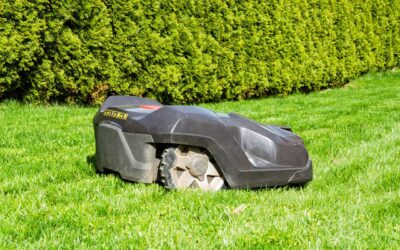
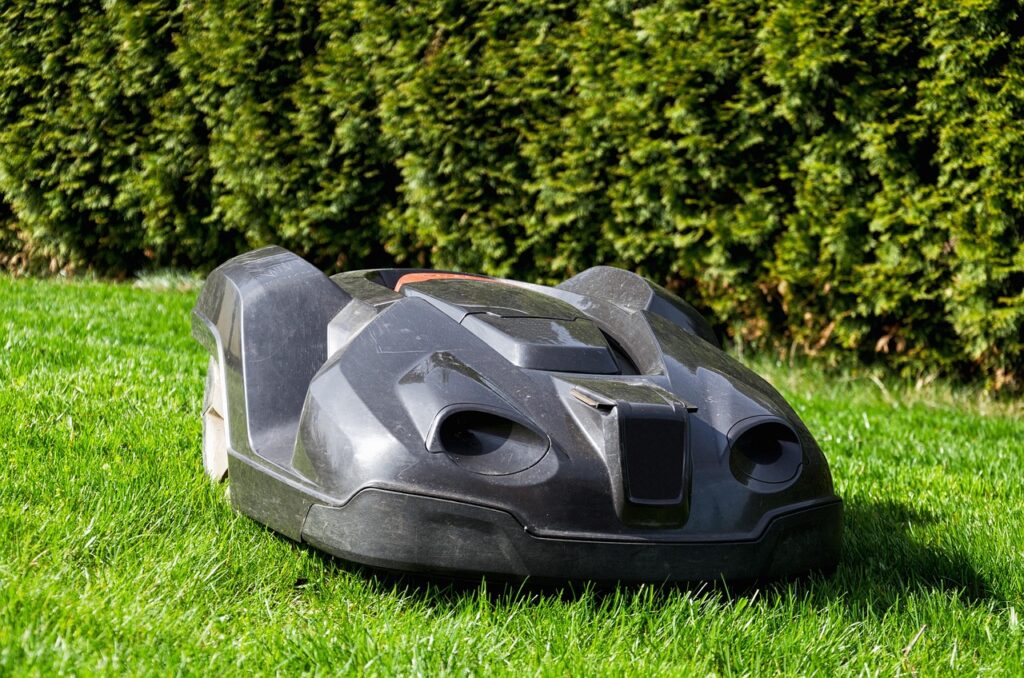
Husqvarna remains the benchmark for reliability, and the Automower 450X and 430X earn the overall pick for homeowners who want a proven machine. The 430X handles roughly 0.8 acres and the 450X pushes to about 1.25 acres, both with excellent slope handling near 45 percent and genuinely all-weather operation. These are refined, quiet, and backed by a real dealer network for service, which matters when a robot lives outdoors year-round.
The trade-off is that classic X-series units rely on a boundary wire, though Husqvarna’s EPOS and newer wire-free options exist higher in the lineup. If you value a long track record and don’t mind a one-time wire install, this is the safe, do-everything choice. Expect pricing from roughly $2,500 to $4,000 depending on model and coverage.
Best Wire-Free RTK: Segway Navimow and Mammotion Luba 2
For homeowners who refuse to bury wire, RTK-GPS models are the headline category of 2026. The best robot lawn mower 2026 in this class depends on your yard’s exposure to satellites and trees.
- Segway Navimow i-Series and X3 pair RTK with vision assist to hold precise virtual boundaries. The i-Series suits small to mid yards, while the X3 scales up to larger properties with stronger obstacle avoidance and a higher cut. Setup is app-driven and fast.
- Mammotion Luba 2 AWD is the enthusiast favorite, an all-wheel-drive RTK robot that climbs slopes up to around 75 percent on top trims and covers multiple mowing zones, making it a strong pick for yards that defeat two-wheel-drive robots.
RTK shines on open lawns. If your yard is heavily canopied, look for models that add vision or LiDAR to bridge satellite dropouts, or plan antenna placement carefully.
Best Vision and LiDAR Navigation: Mammotion Yuka and EcoFlow Blade
A newer wave of robots leans on cameras and LiDAR rather than pure RTK, which helps under trees and around complex obstacles. The Mammotion Yuka combines RTK with vision and even offers a sweeping accessory for light debris, while the EcoFlow Blade uses LiDAR plus GPS and stands out with its clean design and app. These systems recognize objects, people, and pets and route around them intelligently, which reduces the false stops that plague wire-only robots.
Vision-based units generally land in the $1,500 to $3,000 range and reward yards with irregular shapes, garden beds, and frequent foot traffic. The one caveat is that dense obstacles and low light can still challenge cameras, so read recent owner reports for your conditions.
Best Budget: Worx Landroid
Not every yard needs a $3,000 robot. The Worx Landroid line remains the value leader, with capable models covering a quarter to half an acre for well under $1,000, often around $800 to $1,200. It uses a boundary wire and a compact chassis, and its Power Share battery works with other Worx tools, which is a nice bonus for existing owners.
The Landroid won’t match the polish or slope prowess of premium RTK units, but for a modest, relatively flat, obstacle-light lawn it delivers hands-free mowing at the lowest entry cost in the category. Add-on modules for anti-collision and cellular tracking let you tailor it without paying for features you don’t need.
Best for Large Yards: Husqvarna 450X and Mammotion Luba 2 5000
Big residential lots demand capacity and battery endurance. The Husqvarna 450X and the larger-coverage Mammotion Luba 2 configurations handle roughly one to one-and-a-quarter acres, running multiple sessions daily and returning to the dock to recharge automatically. For these properties, prioritize models with multi-zone support so the robot can service the front and back without you carrying it across the driveway.
Larger yards also benefit from RTK’s efficient, systematic mowing pattern, which covers ground in neat rows rather than the random bounce pattern of older wire robots. That efficiency shortens total runtime and keeps the lawn evenly cut.
Best for Slopes: Mammotion Luba 2 AWD
If your property has real grade, all-wheel drive is non-negotiable. The Mammotion Luba 2 AWD is the standout for steep terrain, rated to climb slopes around 75 percent on its top trim where most two-wheel-drive robots stall near 35 to 45 percent. Its low center of gravity and aggressive tires hold traction on wet inclines that would defeat lighter units.
For moderate slopes up to about 45 percent, the Husqvarna X-series and several Navimow models cope well. Beyond that, AWD is the feature that decides success or failure, so measure your worst slope before you buy.
How the Navigation Systems Compare
Since navigation is the deciding factor in 2026, it helps to understand what each approach does well and where it stumbles. Boundary-wire robots are the old guard: reliable and cheap, but they need a wire buried around the perimeter and mow in a somewhat random pattern that can miss strips and take longer. Wire is also a maintenance liability, since aeration, digging, or frost heave can sever it.
RTK-GPS replaces the wire with satellite positioning and a fixed reference antenna, delivering tidy, systematic mowing lines and easy app-based zone edits. Its weakness is sky visibility; heavy tree canopy or tall structures block satellites and cause the robot to pause or drift. Vision and LiDAR systems read the world with cameras and lasers, which handles canopy and obstacles gracefully but can be challenged by low light, glare, and very complex scenes. The strongest 2026 models blend approaches, pairing RTK with vision so one covers for the other’s blind spots.
Setup, Maintenance, and What to Expect
Living with a robot mower is low-effort but not zero-effort. Initial setup ranges from an afternoon of wire-laying on a Landroid to a 30-minute app-guided boundary walk on an RTK unit like the Navimow or Luba 2. Once running, expect to swap blades every one to two months depending on lawn size and grass toughness, clear the underside of clippings periodically, and keep the charging contacts clean.
Winterize the robot by charging the battery to a moderate level and storing it indoors below room temperature, then update firmware each spring. Set a sensible schedule rather than mowing around the clock, since daily short sessions keep grass at a steady height and produce the fine mulch that feeds the lawn. With that light routine, a quality robot runs for years and keeps your turf more consistent than weekly mowing ever could.
Features That Actually Matter
Beyond navigation, a few specs separate a good buy from a regret. Watch for these:
- Cut height range typically spans about 0.8 to 4 inches; taller ranges suit warm-season grasses and shadier lawns.
- Anti-theft and GPS tracking with PIN locks and alerts, since an unsecured robot is a target.
- Rain sensors that pause mowing in wet conditions to protect turf and traction.
- App quality for scheduling, zone editing, and firmware updates, which you will use constantly.
- Obstacle avoidance via bumpers, vision, or LiDAR to spare your garden hose and the family dog.
Matching a Model to Your Yard
The right pick is the one that fits your specific lawn. Measure your total area, identify your steepest slope, count separated zones, and note how much tree canopy blocks the sky. Open, sunny, mid-size lawns are ideal for RTK models like Navimow and Luba 2. Canopied or obstacle-heavy yards favor vision and LiDAR units like Yuka and EcoFlow Blade. Tight budgets and simple lawns are well served by the Worx Landroid, while anyone wanting a proven all-rounder should start with Husqvarna. Get those measurements right and any of these robots will hand you back your weekends for years.