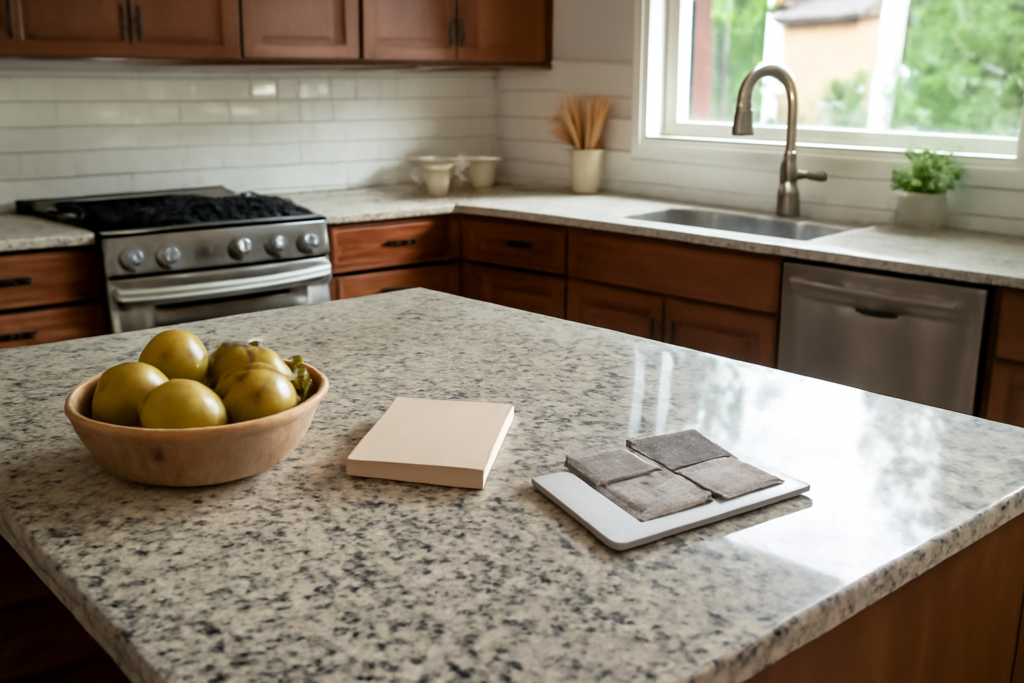
Few surfaces have earned their reputation quite like natural stone. Granite stone countertops have anchored kitchens for decades because they combine genuine, one-of-a-kind beauty with the toughness to handle real cooking and daily life. If you are weighing granite for your kitchen or bath, this guide covers everything you need to know: what granite is, its colors and looks, the pros and cons, what it costs, how to care for it, and how it stacks up against quartz.
Part of our Countertops guide — explore the full guide →
- What Are Granite Stone Countertops
- Colors and Looks
- The Advantages of Granite
- The Drawbacks to Weigh
- What Granite Costs
- Sealing and Everyday Care
- Granite Versus Quartz
- Is Granite Right for Your Kitchen
- Choosing the Right Edge Profile
- Buying Granite Without Regret
- Final Thoughts on Granite Stone Countertops
What Are Granite Stone Countertops
Granite is a natural igneous rock formed deep in the earth from cooled magma, made up primarily of quartz, feldspar, and mica. It is quarried in large blocks, sliced into slabs, polished, and fabricated to fit your kitchen. Because it is entirely natural, every granite slab is unique, with its own pattern of speckles, veins, and color variation. This authenticity is a big part of granite’s enduring appeal: no two kitchens with granite counters are ever exactly alike, and the stone carries a depth and character that manufactured surfaces work hard to imitate.
Colors and Looks
Granite spans an enormous range of colors and patterns, which is one reason it suits so many styles.
- Blacks and dark greys for bold, dramatic, modern kitchens.
- Whites and light greys with soft speckling or veining for a bright, airy feel.
- Warm browns, golds, and tans that pair beautifully with wood cabinetry.
- Blues, greens, and reds for those wanting genuine color and character.
- Marble-like veined granites that offer flowing movement with granite durability.
Because color and pattern vary from slab to slab, always select your actual stone in person and view the full slab to plan how the pattern falls across your counters and island.
The Advantages of Granite
- Exceptional durability. Granite is very hard and resists scratches, chips, and everyday wear.
- Heat resistance. Natural granite tolerates hot cookware better than resin-based surfaces, though trivets remain wise.
- Unique beauty. Every slab is one of a kind, giving your kitchen genuine character.
- Adds value. Natural stone counters remain a desirable feature for buyers.
- Long lifespan. Properly cared for, granite can last the life of your home.
The Drawbacks to Weigh
Granite is superb, but it is not maintenance-free, and honesty here helps you plan.
- Porosity. Granite needs periodic sealing to resist stains, unlike non-porous quartz.
- Variation. The slab you see is what you get, so you must choose in person rather than from a photo.
- Weight. Granite is heavy and requires sturdy cabinets and professional installation.
- Potential for chips. Very hard stone can chip at an exposed edge under a sharp, heavy impact.
- Seams. Large layouts require seams, which are visible to varying degrees depending on the pattern.
What Granite Costs
Granite spans a wide price range depending on the rarity of the color, the slab thickness, the edge profile, and your region. Common granites can be quite affordable, while exotic colors and dramatic patterns command a premium. Many homeowners see installed costs in the range of roughly 40 to 100 dollars per square foot, with rare stones climbing higher. Always request an itemized quote that includes templating, fabrication, edge work, sink and cooktop cutouts, sealing, and installation, so you can compare the full cost rather than the slab price alone. Buying all your material from one lot keeps color and pattern consistent.
Sealing and Everyday Care
Caring for granite is simple once you build a light routine around its one real need: sealing. Because granite is porous, a quality penetrating sealer helps it resist stains, and most fabricators seal the stone at installation. Reseal periodically, often about once a year, using the water-drop test as your guide: if water beads on the surface, the seal is intact; if it soaks in and darkens the stone, it is time to reseal. For daily cleaning, use warm water with a pH-neutral stone cleaner or mild dish soap and a soft cloth. Avoid acidic cleaners, vinegar, and abrasive pads, which can dull the polish, and wipe spills promptly, especially oil, wine, and coffee.
Granite Versus Quartz
The most common question homeowners face is granite versus engineered quartz. Both are excellent, and the right choice depends on your priorities. Granite offers authentic, natural, one-of-a-kind beauty and superior heat resistance, but it requires sealing and varies from slab to slab. Quartz offers a non-porous, no-seal surface with consistent color and strong stain resistance, but it is more sensitive to heat and has a more uniform, manufactured look. If you value natural character and heat tolerance, granite wins; if you prioritize predictable appearance and zero sealing, quartz may suit better. Neither is objectively superior, they simply serve different preferences. A helpful way to decide is to be honest about how you cook and live: if you regularly set down hot pans and love the idea of a truly unique surface, granite rewards you, whereas if you want a set-and-forget counter that always looks exactly as expected, quartz may bring more peace of mind. Many kitchens even use both, choosing granite where heat and character matter most and quartz where consistency and easy care are the priority.
Is Granite Right for Your Kitchen
Granite suits homeowners who love authentic natural stone, want excellent durability and heat resistance, and do not mind a simple annual sealing routine. It is ideal for busy, cook-heavy kitchens and for anyone who appreciates the individuality of a unique slab. If you would rather never think about maintenance and prefer a perfectly uniform look, quartz may be a better fit, but for genuine, lasting natural beauty, granite remains a benchmark.
Choosing the Right Edge Profile
The edge you select subtly shapes the whole personality of a granite counter. A straight or eased edge, with just a softened corner, reads as clean and contemporary and suits modern kitchens. A beveled edge adds a crisp, angled facet that catches the light, while a bullnose or half-bullnose rounds the edge for a softer, family-friendly feel that hides chips well. More elaborate ogee and waterfall profiles bring a traditional, ornate character and a sense of substance. Thicker mitered edges are trending on statement islands, giving the counter a bold, architectural presence. Edge work adds to fabrication cost, with more complex profiles costing more, so balance the look you want against your budget. Ask to see samples of each profile on your actual stone, since the way light plays across a bullnose versus a bevel can be surprisingly different in person.
Buying Granite Without Regret
Because granite is a natural product bought slab by slab, a smart buying process protects you from disappointment. Always visit the stone yard and select your actual slabs rather than choosing from a small sample or a photo, since color and veining vary considerably. View the full slab under good light and, if your project needs more than one, confirm they come from the same lot so the pattern stays consistent. Check for any natural fissures or soft spots and ask the fabricator to explain them, since some are normal in granite and not defects. Get an itemized written quote covering templating, fabrication, edge work, cutouts, sealing, and installation, and confirm the timeline. Taking these steps turns a big, permanent purchase into a confident decision you will be happy with for decades.
Final Thoughts on Granite Stone Countertops
Granite stone countertops have stayed popular for good reason: they deliver authentic, one-of-a-kind natural beauty alongside the durability and heat resistance a working kitchen demands. Yes, granite needs periodic sealing and must be chosen slab by slab, but in return it offers genuine character, remarkable longevity, and lasting value that manufactured surfaces struggle to match. Choose your stone in person, keep it sealed and gently cleaned, and granite will reward you with a countertop that looks stunning and performs beautifully for the entire life of your home.