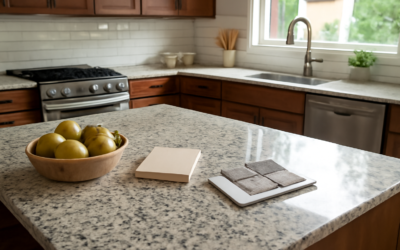
Building an outdoor kitchen is a serious investment, and the countertop you choose has to survive conditions that would destroy an indoor surface: blazing summer sun, freezing winter nights, driving rain, and the direct heat of a grill. This is exactly why outdoor kitchen granite countertops remain the gold standard for al fresco cooking spaces. Granite is a natural igneous stone forged under heat and pressure, which makes it uniquely suited to shrug off UV rays, temperature swings, and the hot pots and grill grates that come with outdoor cooking. Before you commit, though, it pays to understand how granite behaves outdoors and what it takes to keep it looking great for the long run.
Part of our Countertops guide — explore the full guide →
Why Granite Excels Outdoors
Not every countertop material can live outside, and many popular indoor choices fail quickly in the elements. Quartz, for instance, is engineered with resins that yellow and break down under direct sunlight, which is why manufacturers void warranties for outdoor use. Granite has no such weakness. As a natural stone, it is extremely hard, heat-resistant enough to set a hot pan directly on it, and its color will not fade under UV exposure the way engineered or manufactured surfaces do. It handles rain, humidity, and temperature extremes without warping or degrading, and it is dense enough to resist the scratches and chips of everyday outdoor use. That combination of heat resistance, UV stability, and durability is what makes granite the default recommendation for outdoor kitchens.
Choosing the Right Granite for Outdoors
All granite is durable, but a few choices make it perform even better outside.
- Darker colors: Blacks, deep browns, and dark grays hide dirt, pollen, and water spots better, but they absorb more heat and can get hot in direct sun.
- Lighter colors: Whites, tans, and light grays stay cooler underhand in the sun but show dust and spills more readily.
- Leathered or honed finish: Strongly recommended outdoors. These matte finishes hide water spots, fingerprints, and etching far better than a high-gloss polish, and they are less slippery when wet.
- Dense, low-porosity slabs: Ask your fabricator to steer you toward tighter-grained granites that absorb less water, which matters in freeze-thaw climates.
The finish choice is the one homeowners most often overlook. A polished granite that looks stunning indoors can show every water droplet and mineral spot outdoors, while a leathered or honed surface stays looking clean with far less fuss and suits the relaxed feel of an outdoor space.
What Outdoor Granite Countertops Cost
Pricing is comparable to indoor granite, with some added cost for the sturdier support an outdoor structure requires. Rough figures:
- Granite material and fabrication: $40 to $100 per square foot installed, depending on the stone.
- Exotic or premium slabs: $100 to $200 per square foot.
- A typical outdoor kitchen counter (30 sq ft): roughly $1,500 to $4,500 installed.
- Sealer: $25 to $50, reapplied periodically.
Because outdoor countertops sit on masonry, block, or metal-framed bases rather than standard cabinets, factor in the cost of a properly built and drained support structure. Granite is heavy, so the base must be engineered to carry it, and good drainage under and around the counter prevents water from pooling and freezing.
Sealing and Weather Protection
Granite is durable but not maintenance-free, and outdoors the sealing routine matters more than it does inside. Granite is porous, so it must be sealed to keep out water, grease, and stains, and outdoor granite generally needs resealing more often than indoor granite, typically every six months to a year, because sun and rain break the sealer down faster. A good impregnating stone sealer soaks into the stone and repels moisture without changing the look. Test whether the seal is holding by dripping water on the surface; if it beads, you are protected, and if it soaks in and darkens the stone, it is time to reseal.
In cold climates, freeze-thaw is the main concern. Water that seeps into an unsealed or poorly drained granite surface can, over many cycles, contribute to surface damage, so diligent sealing and good drainage are your best defense. Some homeowners in harsh winter areas cover their outdoor counters or the whole kitchen during the off-season to extend the life of the stone and hardware.
Everyday Care and Cleaning
Keeping outdoor granite in shape is simple with the right habits. Wipe it down with warm water and a mild, pH-neutral stone cleaner, avoiding acidic cleaners, vinegar, and bleach, which can etch and dull the surface over time. Rinse off pollen, leaves, and bird droppings promptly, since organic debris can stain porous areas if left to sit. After cooking, clean up grease and food splatter before it bakes on in the sun. A quick rinse and wipe after each use, plus the periodic reseal, is really all granite asks in exchange for decades of outdoor service.
Granite vs. Other Outdoor Countertop Materials
It helps to see where granite lands against the alternatives. Concrete is a popular outdoor option and can be beautiful, but it needs sealing, can crack, and stains more easily. Porcelain slab countertops are increasingly popular outdoors because they are UV-stable, nonporous, and never need sealing, though they can chip on edges and lack granite’s natural depth. Tile is affordable but leaves grout lines to maintain. Quartz, as noted, simply does not belong outdoors. Against this field, granite offers the best all-around blend of natural beauty, heat and scratch resistance, and proven longevity, which is why it remains the most trusted choice for serious outdoor kitchens.
Are Granite Countertops Right for Your Outdoor Kitchen?
For a durable, heat-proof, sun-stable surface that looks like natural stone because it is natural stone, outdoor kitchen granite countertops are hard to beat. Choose a dense slab with a leathered or honed finish to hide water spots and reduce glare, build a solid, well-drained support base to carry the weight, and commit to sealing it a couple of times a year. Do that, and your outdoor granite counter will stand up to years of grilling, weather, and gatherings while still looking as rich and handsome as the day it was installed, giving your outdoor kitchen a centerpiece worthy of the investment.