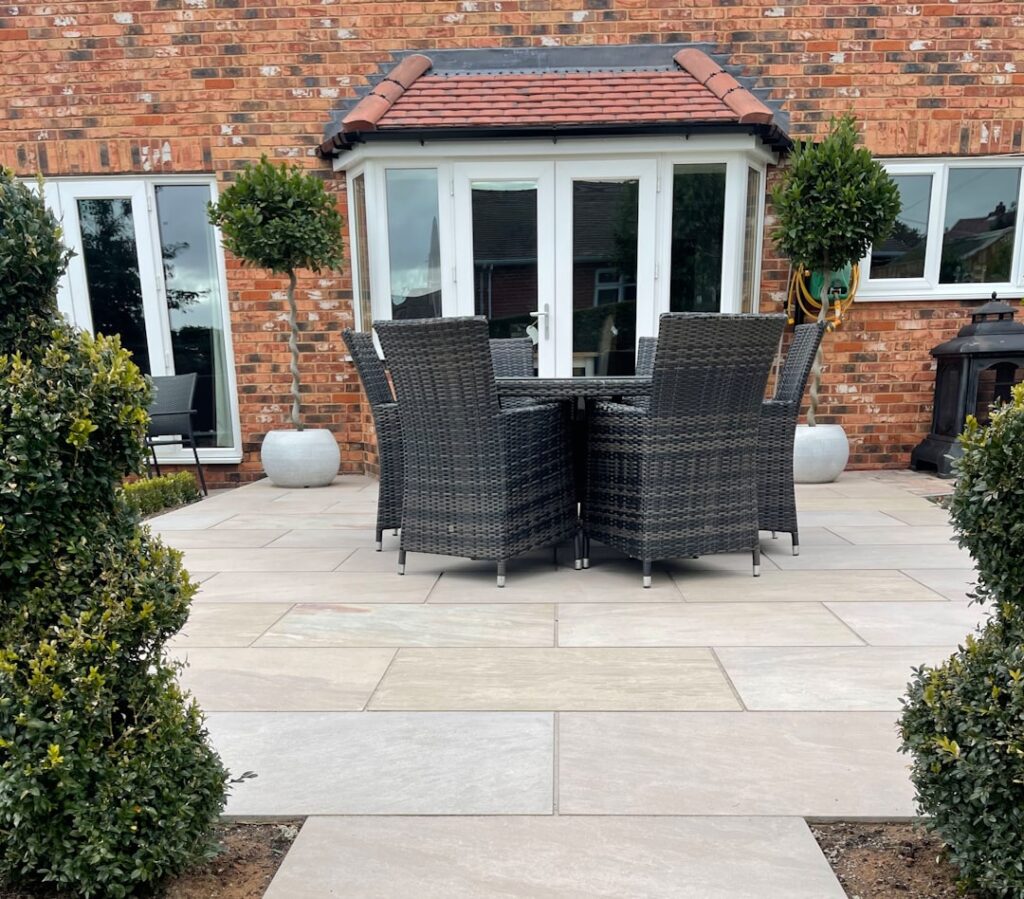
Set a hot grill grate on most engineered surfaces and you’ll scorch them — but granite shrugs it off. That heat tolerance is one big reason outdoor granite countertops have become the default choice for serious outdoor kitchens. As a dense, natural stone formed under heat and pressure, granite handles sun, rain, freeze-thaw cycles, and direct contact with hot cookware better than nearly any other countertop material. If you’re building a grilling station, an outdoor bar, or a full alfresco kitchen, granite belongs at the top of your list.
Part of our Countertops guide — explore the full guide →
This guide covers why granite suits the outdoors, the colors and finishes that perform best in sun, sealing requirements, cost, and the care routine that keeps an outdoor slab looking sharp for decades.
Why Granite Excels Outdoors
Granite’s natural durability is the headline. It’s one of the hardest countertop materials, resists scratches from grilling tools, and won’t melt, blister, or discolor when a hot pot lands on it. Unlike engineered quartz, whose resin binders can fade or yellow under prolonged UV exposure, natural granite holds its color in full sun.
It also stands up to weather. A properly sealed slab sheds rain, tolerates temperature swings, and resists the freeze-thaw cracking that destroys lesser materials in cold climates. That combination of heat tolerance and weather resistance is exactly what an outdoor surface needs.
Choosing Colors and Finishes for Sun
Color choice matters more outdoors than indoors. Dark granites — deep blacks and rich browns — look striking but absorb heat and can become uncomfortably hot to touch under direct midday sun. Lighter grays, tans, and speckled patterns stay cooler and hide pollen, dust, and water spots better.
- Lighter speckled granites — stay cooler, mask debris, and reflect sun.
- Mid-tone grays and tans — versatile and forgiving of outdoor grime.
- Dark granites — dramatic but heat-absorbing; best for shaded areas.
Finish affects performance too. A flamed or leathered finish provides better grip when wet and hides etching and water marks far better than a high-gloss polish, which can show every droplet. For outdoor use, textured finishes are often the smarter pick.
Sealing for Outdoor Conditions
Even though granite is dense, it’s still porous enough to absorb liquids if left unsealed. Outdoors, that means rain, spilled marinade, and grease can stain over time. A high-quality penetrating sealer is essential, and outdoor surfaces need it more often than indoor ones because weather wears the barrier down faster.
Plan to reseal an outdoor slab every six months to a year, depending on exposure. Test by dripping water on the surface — if it soaks in and darkens the stone, it’s time to reseal. Choose a sealer rated for exterior use and apply it on a dry day with temperatures in the manufacturer’s recommended range.
Cost of Outdoor Granite
Installed granite generally runs between $40 and $100 per square foot, with exotic colors and complex edge profiles pushing higher. Outdoor installations can cost a bit more than indoor ones because of site access, the need for a sturdy weatherproof support structure, and longer slab spans for islands.
Other budget factors include the masonry or steel base that supports the stone, cutouts for a grill or sink, and the edge profile you choose. A simple eased edge costs less than a decorative profile. Always confirm the quote includes fabrication, delivery, sealing, and installation so there are no surprises.
Building a Proper Support Structure
Granite is heavy — a typical 3 cm slab weighs around 18 to 20 pounds per square foot — so the base beneath it must be solid and weatherproof. Outdoor cabinetry framed in stainless steel, masonry block, or a cement-board-clad metal frame holds up far better than standard wood cabinetry, which rots and warps when exposed to the elements.
Make sure the structure is dead level and fully cured before the stone goes on. An uneven base puts stress on the slab and can lead to cracking, especially over a grill cutout where the stone is already weakened. This is one area where cutting corners isn’t worth it.
Cleaning and Year-Round Care
Routine cleaning is simple: warm water, a few drops of mild dish soap, and a soft cloth. Skip acidic cleaners, vinegar, and harsh degreasers, which can break down the sealer and dull the surface over time. Wipe up grease and food spills promptly so they don’t sit on the stone.
- Rinse off pollen, dust, and debris regularly with water.
- Clean grease splatter after each grilling session.
- Reseal on schedule based on your climate and exposure.
- In freezing climates, keep the surface clear of standing water that could work into any micro-fissures.
For winter, an outdoor cover or simply keeping the surface dry helps protect both the stone and the cabinetry beneath it.
How Granite Compares to Other Outdoor Surfaces
Granite isn’t the only option for an outdoor counter, but it stacks up well against the alternatives. Concrete is highly customizable and handles heat, but it’s porous, prone to hairline cracks, and needs regular sealing. Tile is affordable and cool underfoot, yet the grout lines stain and the edges can chip. Engineered quartz, despite its indoor popularity, is a poor outdoor choice because its resins can fade and discolor under sustained UV.
Stainless steel is durable and easy to clean but gets blazing hot in direct sun and can look industrial. Soapstone is naturally nonporous and heat-resistant, making it another strong natural-stone candidate, though it’s softer and scratches more easily than granite. Weighing these trade-offs, granite’s combination of heat tolerance, UV stability, and longevity is why it remains the benchmark for serious outdoor kitchens.
Planning Your Outdoor Layout
A successful outdoor counter starts with smart layout planning. Position the grill, prep space, and any sink so you have landing room on both sides of the cooking zone — at least 18 to 24 inches of counter beside the grill makes a real difference in usability. Account for overhangs where you’ll seat people at a bar, typically allowing about 12 inches of overhang for comfortable knee room.
Think about traffic flow and shade as well. Placing the counter where it gets some afternoon shade keeps a dark slab cooler and makes the space more pleasant to use. Plan for the slab’s weight on any cantilevered sections and add support brackets where overhangs exceed what the stone can span unsupported. Mapping all this out before fabrication prevents costly changes once the heavy stone is on site.
Is Granite the Right Outdoor Surface?
If you want a countertop that handles real heat, full sun, and years of weather without fading or failing, granite is the proven choice. It costs more than tile or concrete in many cases, but its longevity and low fuss make it worth it for a kitchen you’ll actually use. Outdoor granite countertops reward you with a tough, natural surface that ages gracefully — pick a lighter textured slab, build a solid weatherproof base, and keep up with sealing, and it’ll anchor your outdoor kitchen for decades.