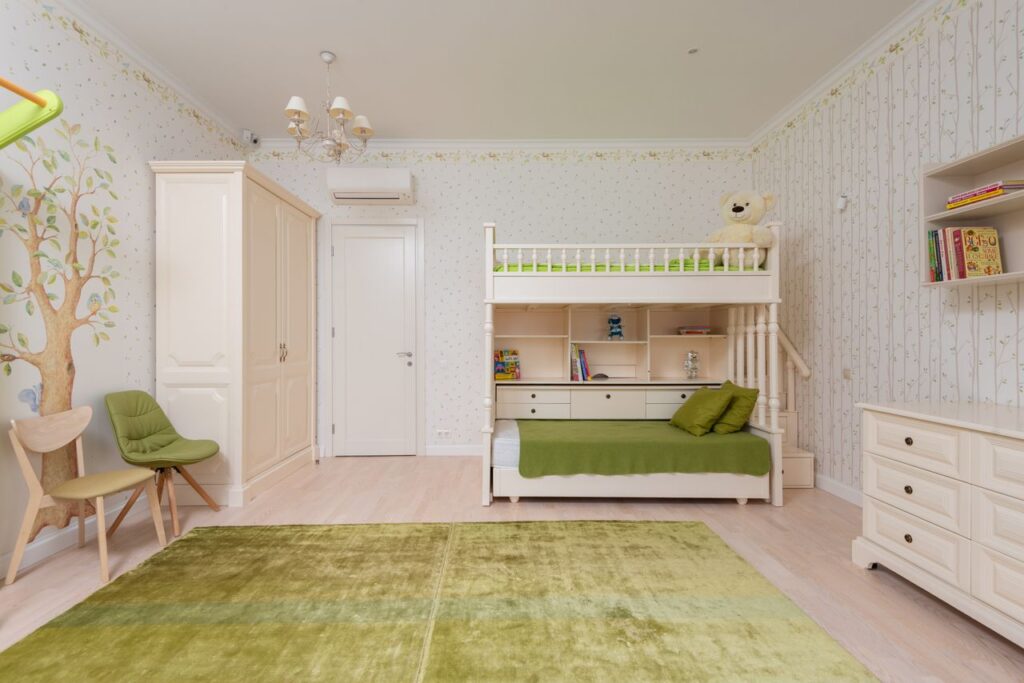
A long, narrow strip of carpet can do more for a hallway than almost any other quick upgrade, and a green carpet runner in particular has surged in popularity as homeowners move away from safe grays and beiges toward richer, more grounded color. Green reads as calm and natural, pairs beautifully with wood tones, and hides everyday soil better than pale neutrals. Whether you are protecting hardwood stairs, softening a tiled entry, or adding a jolt of color to a plain corridor, choosing the right runner comes down to shade, material, size, and how you secure it. Here is how to get all four right.
Why Choose Green?
Color psychology aside, green is one of the most forgiving carpet colors for a busy pathway. Mid-tone and darker greens disguise dirt, dust, and the occasional muddy footprint far better than cream or light gray, which show every mark. Green also happens to be a natural partner for the warm browns of oak and walnut flooring, the whites and creams of trim, and the blues and terracottas common in patterned area rugs.
Because a runner covers only a narrow strip, you can be bolder with color than you would with wall-to-wall carpet. A saturated emerald or forest green that might overwhelm an entire room reads as a tasteful accent when limited to a two-and-a-half-foot-wide runner down a hallway. Green also bridges warm and cool palettes, so it plays nicely whether your trim leans creamy and traditional or crisp and modern. That flexibility is part of why designers reach for it when a beige hallway needs personality without a full renovation.
Choosing the Right Shade of Green
Green spans an enormous range, and the shade you pick sets the entire mood of the space. Match the tone to your existing palette and the amount of natural light the area gets.
- Sage and olive: Muted, earthy greens that work in almost any room and read as a soft neutral. Excellent for traditional and farmhouse interiors.
- Forest and hunter: Deep, moody greens that add drama and hide soil best. Ideal for stairs and dimly lit halls.
- Emerald: A vivid jewel tone that makes a bold statement in entryways and modern spaces.
- Moss and fern: Warmer mid-greens with a natural, organic feel that suit rooms with lots of wood and plants.
Test a sample in the actual space at different times of day. Green shifts noticeably under warm incandescent bulbs versus cool daylight, and an olive that looks perfect in the store can turn muddy or gray under your hallway lighting.
Runner Materials Compared
The material determines how the runner feels, how well it wears, and how easy it is to clean. Match the fiber to how much traffic the runner will take.
- Wool: The premium natural choice, prized for durability, softness, and rich color depth. Runs $8 to $25 per square foot but lasts decades and resists crushing.
- Nylon: The most durable synthetic, resilient and stain-resistant, ideal for stairs and busy halls at $3 to $8 per square foot.
- Polyester: Soft and richly colored with good stain resistance, affordable at $2 to $5 per square foot, but crushes faster in heavy traffic.
- Polypropylene (olefin): Budget-friendly and moisture-resistant, good for entryways and casual spaces, though less plush underfoot.
- Jute and sisal: Natural fibers with a textured, organic look, best in low-moisture areas since they stain easily.
Sizing a Runner Correctly
A runner that is the wrong size looks like an afterthought, so measure carefully before you buy. Standard runners come in widths of 2 to 3 feet and lengths from 6 to 14 feet, with custom cuts available by the linear foot.
For a hallway, leave 4 to 5 inches of bare floor exposed on each side so the runner looks intentional and centered rather than wall-to-wall. In length, aim to stop 6 to 12 inches short of each end wall. For a staircase, measure the tread depth and riser height of a single step, add them together, and multiply by the number of steps, then add roughly 10 percent for the curve over each nosing. Most standard stairs need about 1.5 linear feet of runner per step.
Patterned vs Solid Green
Deciding between a solid green and a patterned runner comes down to how much the surrounding space already has going on. A solid sage or forest runner reads as calm and architectural, letting bold wallpaper or gallery walls take center stage. A patterned runner, such as a green Persian, a botanical print, or a subtle geometric, becomes the focal point itself and hides soil and footprints even better than a solid.
For narrow, high-traffic halls, a small-scale repeating pattern is the most forgiving choice because it disguises everyday wear and the occasional stain. Save large, dramatic medallion patterns for wider entryways where you can actually see the full design rather than a sliver of it. When in doubt, pick a runner that pulls its green from a color already present in an adjacent room so the whole floor plan feels connected.
Keeping It in Place
A runner that slides is both annoying and dangerous, so never lay one on a hard floor without securing it. The method depends on your subfloor.
- Non-slip pad: A gripper pad cut slightly smaller than the runner works on hardwood, tile, and laminate. The most common and least invasive option, costing $10 to $30.
- Double-sided carpet tape: Holds well on hard floors but can leave residue; best for low-pile runners.
- Stair rods or tackless strips: For stair runners, professional installers use tackless strips in the crotch of each step, sometimes paired with decorative rods for a finished look.
On a staircase especially, a securely fastened runner is a genuine safety feature. Loose runners on stairs are a leading cause of household falls, so this is not a step to skip.
What It Costs
A ready-made green runner for a hallway typically costs $40 to $150 for a synthetic option in a standard 2.5-by-8-foot size, while wool runners of the same dimensions run $150 to $600 or more. Stair runners priced by the linear foot land at $20 to $75 per foot installed, so a standard 13-step staircase totals roughly $400 to $1,500 depending on material and whether you hire an installer.
Budget for the pad and any tape or rods on top of the runner price. Spending an extra $20 on a quality non-slip pad protects both the runner and your floor, and it keeps the runner from bunching, which is the fastest way to wear out the fibers along the fold lines.
Styling and Care Tips
Once your runner is down, a few habits keep it looking sharp. Vacuum weekly using a suction-only setting or a low pile height so the beater bar does not fray the edges. Rotate the runner end to end every few months if it runs through a sun-lit hall, since even colorfast green fades unevenly where light hits hardest. Blot spills immediately with a clean cloth and mild detergent rather than rubbing.
For styling, echo the green elsewhere in the space with a plant, a piece of art, or throw pillows so the runner looks like part of a plan rather than an isolated splash of color. Paired with warm wood floors and simple trim, a well-chosen green carpet runner turns an overlooked hallway or staircase into one of the most inviting parts of the house.