
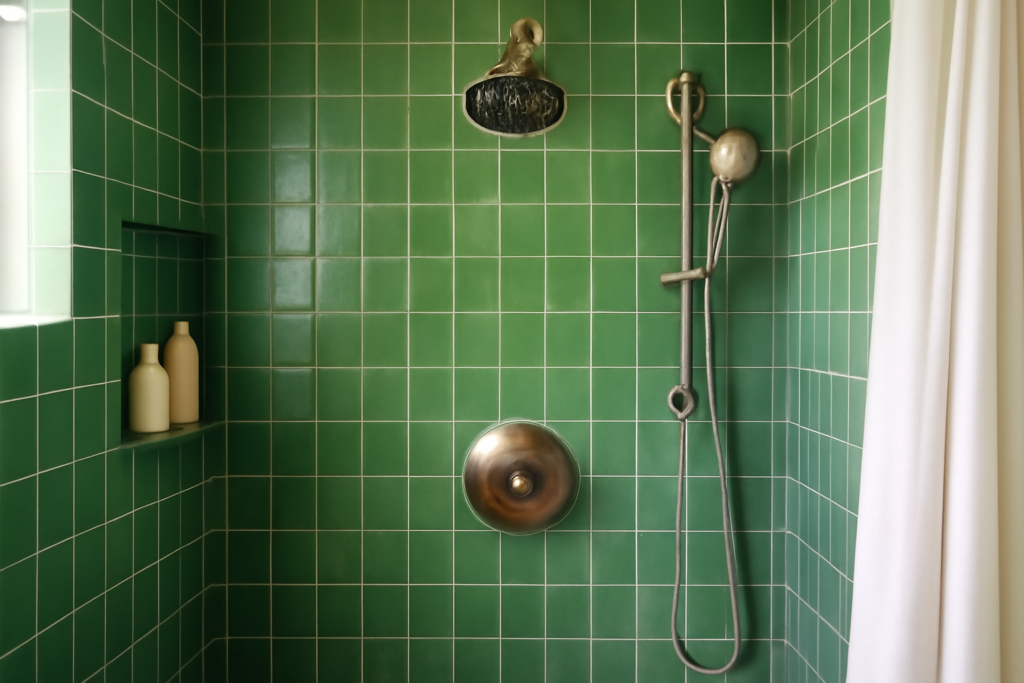
Green has quietly become the most requested color in bathroom design, and for good reason. A wall of green shower tile reads as fresh and spa-like without the cold sterility of all-white tile or the heaviness of dark stone. Whether you lean toward a barely-there sage or a saturated emerald, green is one of the few colors that flatters natural light and warm wood tones equally.
Part of our Bathroom Remodeling & Flooring guide — explore the full guide →
The challenge is choosing the right shade, finish, and layout so the result feels intentional rather than dated. This guide walks through the shades that work, the materials worth buying, and the design moves that make green shower tile look expensive.
- Why Green Works So Well in a Shower
- Choosing the Right Shade of Green
- Tile Materials That Suit a Shower
- Popular Shapes and Layouts
- Pairing Green Tile With the Rest of the Bathroom
- Grout, Sealing, and Upkeep
- Using Green Tile as an Accent Versus a Full Wall
- Lighting and How It Changes Green
- Is Green Shower Tile a Lasting Choice?
Why Green Works So Well in a Shower
Green sits in the middle of the visible spectrum, which is part of why it feels restful to the eye. In a shower, that translates to a space that reads as calm and clean. Green also bridges the gap between neutral and bold; a muted olive can act almost like a neutral, while a glossy emerald becomes a true statement.
Because green pulls from nature, it pairs effortlessly with the materials people already want in bathrooms: brass and gold fixtures, white oak vanities, marble accents, and matte black hardware.
Choosing the Right Shade of Green
Shade selection makes or breaks the project. Consider the size of your bathroom and how much natural light it gets before committing.
- Sage and celadon: Soft, grayed greens that brighten small or windowless bathrooms and feel timeless.
- Forest and hunter: Deep, moody greens best used in larger showers or as an accent so the space does not feel closed in.
- Emerald and jewel tones: High-drama colors that shine in glossy finishes under good lighting.
- Olive and sea glass: Earthy, slightly warm greens that complement wood and natural stone.
If you are nervous about commitment, order sample tiles and tape them to the wall for a few days. Green shifts noticeably between morning daylight and evening LED light.
Tile Materials That Suit a Shower
Inside a wet enclosure, material matters as much as color. Glazed ceramic and porcelain are the most practical picks. They are nonporous, easy to clean, and available in nearly every green shade and finish. Glass tile, especially in sea-glass greens, adds depth and a luminous quality but shows water spots more readily.
For a high-end look, zellige and handmade ceramic tiles deliver subtle color variation and a glossy, irregular surface that catches the light. Natural stone such as green marble is stunning but porous, so it demands sealing and gentle, pH-neutral cleaners. Budget roughly $4 to $15 per square foot for quality ceramic and porcelain, with handmade and glass options climbing well above that.
Popular Shapes and Layouts
The same green can feel modern or traditional depending on the tile shape. Classic subway tile in sage with a thin grout line keeps things clean and bright. Vertical stacking elongates a small shower, while a herringbone layout adds movement and a custom feel.
Square zellige and fish-scale tiles lean artisanal and work beautifully as an accent wall behind the showerhead. For floors inside the shower, smaller mosaics improve slip resistance because the extra grout lines provide grip.
Pairing Green Tile With the Rest of the Bathroom
Let the tile lead and keep the supporting cast simple. White or cream walls outside the shower keep the eye from feeling crowded. Warm metals like brushed brass and unlacquered gold flatter almost every shade of green; matte black offers a sharper, more contemporary contrast.
For grout, a tone-on-tone green or a soft greige reads seamless, while a crisp white grout creates a graphic, tailored grid. Wood-tone vanities and woven accents reinforce the natural, grounded feeling green already provides.
Grout, Sealing, and Upkeep
Whatever green you choose, the grout you pair it with does a surprising amount of work. Use a quality cementitious or epoxy grout rated for wet areas, and seal cementitious grout after it cures. In a shower, mildew is the enemy of any light grout, so wipe the walls down after use and run the exhaust fan.
Glazed tile cleans with a simple pH-neutral spray. Skip abrasive pads on glossy and handmade tiles, since they can dull the glaze over time. Natural stone greens need resealing every one to two years to stay water resistant.
Using Green Tile as an Accent Versus a Full Wall
You do not have to tile the entire shower in green to get the effect. One of the smartest design moves is to use green as an accent while keeping the main field tile neutral. A green-tiled niche, a single accent wall behind the showerhead, or a horizontal band at eye level introduces color without overwhelming a small bathroom. This approach also keeps costs down, since handmade and specialty green tiles are pricier than plain white field tile.
A full green shower, on the other hand, makes a bold, immersive statement and works beautifully in larger or well-lit bathrooms. If you go all in, balance the color with plenty of white or natural light so the space stays bright. For renters or anyone unsure about commitment, the accent route is the low-risk way to enjoy the trend.
Lighting and How It Changes Green
Green is unusually sensitive to light, which is why two people can look at the same tile and describe it differently. Cool LED bulbs push green toward blue and can make warm olives look muddy, while warm bulbs bring out the yellow undertones and soften the color. Natural daylight gives the truest reading. North-facing bathrooms get cooler light that mutes green, so a slightly warmer or more saturated tile compensates well there.
Before you buy a full order, live with samples in the actual bathroom for a few days and view them morning, afternoon, and at night under your own fixtures. Pairing the tile with quality, warm-toned lighting almost always flatters green and makes the finished shower feel inviting rather than clinical.
Is Green Shower Tile a Lasting Choice?
Trends come and go, but green has a long history in bathroom design and shows no sign of fading. Muted sages and earthy olives are especially safe bets that will still look current in a decade. If you want the look without a permanent commitment, confine the bold greens to an accent strip or niche and keep the field tile neutral. Either way, green shower tile gives a bathroom personality that plain white simply cannot match.
Prefer to explore on your own?
See how new flooring looks in your actual room in seconds — free, no signup.
Try the free Floor Studio →

